
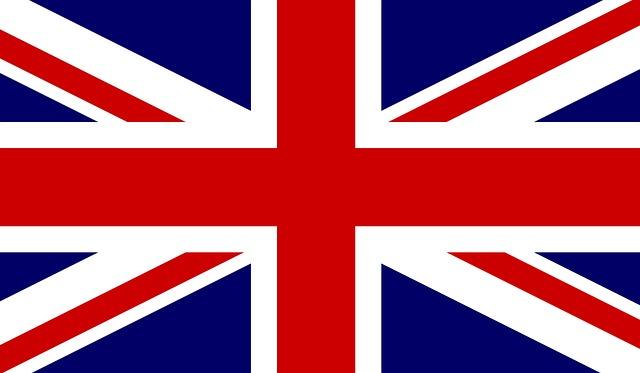
What we now know as the history of the Union Jack flag is a 3-layered cake consisting of the (1) English Cross of Saint George, (2) the blue and white Scottish Saltire Cross of Saint Andrew, and (3) the red and white Irish Cross of Saint Patrick.
The Union Jack flag represents more than national pride—it’s a layered historical document that genealogists and family historians must understand when researching British or Irish ancestry. Each element of this iconic flag marks a specific political union: England and Scotland in 1707, then Ireland in 1801, creating the United Kingdom we know today.
Why Understanding the Union Jack Flag Matters for Family History:
- Your ancestor’s nationality designation (“British” vs “English” vs “Scottish” vs “Irish”) depends on when and where they lived
- Records are held in different archives based on whether your ancestor was from England, Scotland, Wales, or Ireland
- The timing of political unions (1707, 1801, 1922) determines which legal system applied to your ancestors
For genealogists researching British roots, understanding this flag isn’t trivia—it’s essential context. If you’re just starting your British ancestry journey, begin with my comprehensive guide on Genealogy Research Online to master the fundamental research skills you’ll need.
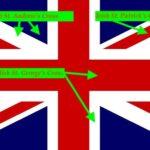
The UNION JACK flag came into its current and final form in 1801 with the Kingdom of Ireland’s ‘union’ with the Kingdom of Great Britain. This historic addition changed the name of the nation to its present United Kingdom of Great Britain and Northern Ireland. See overlay image below.
Table of Contents

A Short History of England
In order to understand the history of the Union Jack flag, one must learn a bit about the history of England. The current idea of “Great Britain” has its origins in the ancient Anglo-Saxon English crowns and their conquest of the outlying territories of Wales and Scotland. Although the Anglo-Saxons did battle against the Welsh, it was the Plantagenets that ultimately subdued the Welsh, Scots, and Irish.
Ironically though, the Welsh would later gain regnal control during the Tudor Dynasty and the Scots during (and somewhat before) the Stewart Dynasty. It must be said that the kings and queens of Scotland had been intermarrying with English royalty since before the conquest in 1066.
In essence the Union Jack is a leggo-like interpretation of history woven into the fabric of this iconic flag. This is where vexillology meets history.
The history of the Union Jack started out with England alone and subsequently added each conquest (union) into its design: Scotland in 1707 and Ireland in 1801, and then Northern Ireland in 1922. Let’s look at them one-by-one. “Union” may be a more apt and politically correct term as the flag is certainly not called the Conquest Jack.
The English Flag of St. George
The interior core of the Union Jack is the English flag, represented by the Cross of St. George the patron saint of England. This flag of England is still a symbol of national and cultural heritage.
Who Was Saint George? (Historical Facts)
Saint George was a Roman soldier of Greek origin who lived around AD 280-303 under Emperor Diocletian. He was martyred for refusing to renounce his Christian faith, likely in Palestine. His remains were taken to Lydda (now Lod, Israel), where his tomb became a pilgrimage site.
Important Facts About St. George:
- He never visited England, despite being England’s patron saint
- The dragon legend is symbolic—in medieval times, dragons represented the devil, so the story symbolizes spiritual warfare, not a literal creature
- He became England’s patron saint gradually, not instantly
- Before St. George, England’s patron saint was St. Edmund (an actual English king)
The Timeline of St. George’s Rise:
- 8th century: George known in England through returning Crusaders
- 1222: St. George’s Day appointed a lesser holiday by Synod of Oxford
- 1348: King Edward III founded the Order of the Garter under St. George’s patronage
- 1415: Archbishop Chichele declared St. George’s Day (April 23) a feast of the highest rank, to be observed like Christmas
- 1552: During Edward VI’s reign, all saints’ banners except George’s were abolished in the English Reformation
For Genealogists: If your ancestors were English soldiers, knights, or clergy from the 14th-17th centuries, the Cross of St. George was their standard. Understanding this helps interpret military records, regimental histories, and heraldic symbols in family documents. For deeper context on this era, see my Plantagenet Dynasty Reading List.
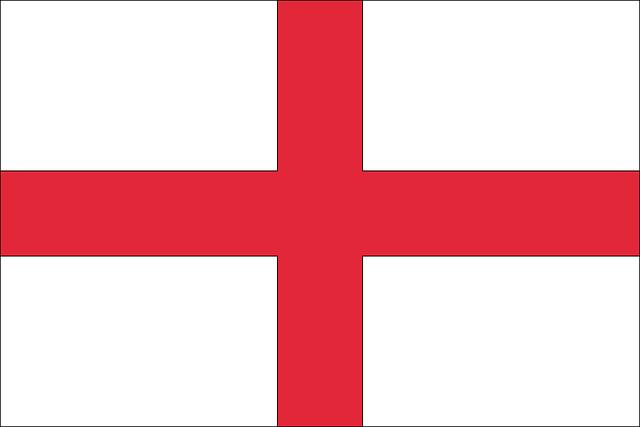
After years of war against its western and northern neighbors England never entirely subdued the wild Scots.
Rather, through acts of usurpation and attrition via the Tudors, the Scottish king James I eventually took over the English throne after the death of Queen Elizabeth. James I was a claimant to the throne as the son of the legendary Mary Queen of Scots. It is for Queen Elizabeth that the state of Virginia is named (she was the “Virgin Queen”) and for James I that the first permanent English settlement in the Americas is named: Jamestown.
The Path to the Union Jack: 1603 to 1707
The union of crowns in 1603 didn’t immediately create the Union Jack flag. James ruled England and Scotland as separate kingdoms with separate parliaments for over 100 years. The first version of the Union Jack appeared in 1707 when the Acts of Union merged the two kingdoms politically, creating the Kingdom of Great Britain.
Key Timeline for Genealogists:
- Before 1603: Separate English and Scottish royal houses
- 1603-1707: “Personal union” under one monarch, but separate governments
- After 1707: “Political union” with one Parliament and one nation called “Great Britain”
This distinction critically affects how you search records. Scottish parish registers, land records, and legal documents function differently before and after 1707. The Scotland’s People database is essential for Scottish research, but understanding political context helps you interpret what you find.
For deeper understanding of the medieval roots that led to these unions, explore my Anglo-Saxon History Reading List covering the foundations of English identity.
The Scottish Flag of Saint Andrews
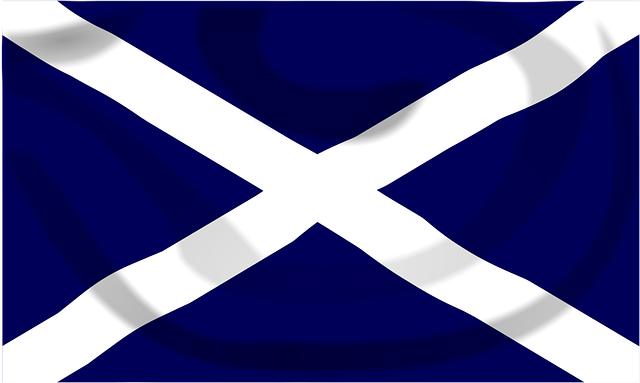
The blue background and white saltire of the Union Jack is the Scottish flag, represented by the Saltire cross of Saint Andrews the patron saint of Scotland. A saltire is a heraldic element represented as a diagonal cross or X-shaped symbol.
Who Was Saint Andrew? (Historical Facts)
Saint Andrew was one of Jesus Christ’s twelve apostles and the brother of St. Peter. Born around AD 5-10 in Bethsaida on the Sea of Galilee, Andrew was a fisherman before being called by Jesus. His Greek name means “manly” or “brave.” Andrew is known in Orthodox tradition as “Protokletos” (first-called) because he was among the first disciples.
Andrew’s Martyrdom: Around AD 60, Andrew was martyred in Patras, Greece, by order of the Roman governor Aegeas. According to tradition, Andrew requested crucifixion on an X-shaped cross (saltire) because he felt unworthy to die on the same type of cross as Jesus Christ. He was bound with ropes, not nailed, and preached for three days before his death.
How Andrew Became Scotland’s Patron Saint:
Legend #1 – St. Rule’s Relics (4th century):
A monk named Regulus (Rule) is said to have brought Andrew’s relics—a tooth, kneecap, arm bone, and three fingers—to Scotland after a divine vision. However, historians believe Bishop Acca of Hexham, a renowned relic collector, more likely brought them to Fife around AD 732.
Legend #2 – King Óengus’s Vision (832 AD):
King Óengus II led his outnumbered army of Picts and Scots against the Saxons near modern-day Athelstaneford in East Lothian. Before battle, Óengus prayed to St. Andrew for victory, vowing to make Andrew Scotland’s patron if victorious. On battle morning, white clouds formed a saltire cross against the blue sky. Interpreting this as divine intervention, the Scots won, and Óengus honored his vow.
Historical Reality:
St. Andrew’s formal adoption as Scotland’s patron saint came with the 1320 Declaration of Arbroath—Scotland’s declaration of independence from England sent to Pope John XXII. The document invoked St. Andrew’s protection. This was politically strategic: Andrew was the brother of St. Peter (founder of the Catholic Church), giving Scottish appeals to Rome considerable weight during conflicts with England.
For Genealogists: The 1320 Declaration of Arbroath essentially defined Scottish national identity as separate from England. If your Scottish ancestors appear in medieval records, this political context explains why they might be designated “Scotti” versus “Angli” (English). Understanding the Wars of Scottish Independence helps interpret why your ancestors migrated, changed allegiances, or faced persecution.
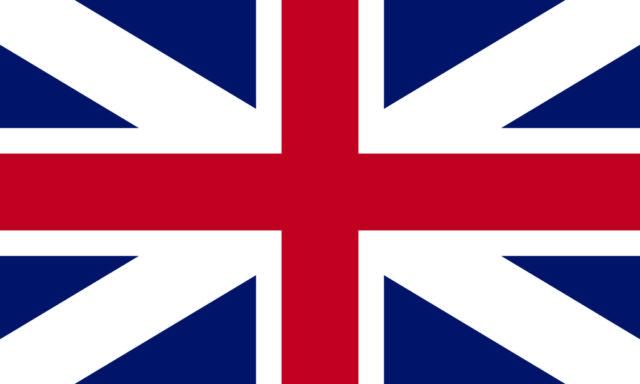
When the English flag was combined with the Scottish Saltire flag of St. Andrews, it created the following version of the Union Jack which was the official flag of Great Britain from 1707 until 1801.
Both of the original English and Scottish flags are still flown in their individual forms as a matter of national and cultural pride! The transitory flag below was discontinued when the Kingdom of Ireland was added to the mix in 1801. It’s easy to see how the Union Jack that we all recognize is built upon these 2 flags.
The Irish Flag of St. Patrick
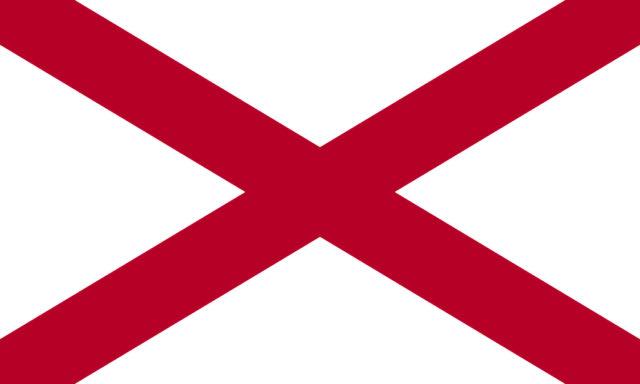
The red saltire of the Union Jack is the Irish flag, represented by the Saltire Cross of St. Patrick the patron saint of Ireland.
Who Was Saint Patrick? (Setting the Record Straight – FACT-CHECKED)
Saint Patrick is one of history’s most misunderstood figures. Let’s separate fact from fiction using Patrick’s own writings (Confessio and Letter to Coroticus):
FACT #1: Patrick Was NOT Irish
Patrick was born in Roman Britain (most likely Wales or southwestern Scotland) around AD 385-390. His father, Calpurnius, was a Romano-British deacon and tax collector. Patrick described himself as “a Roman and a Briton.”
FACT #2: He Was Kidnapped and Enslaved
At age 16, Irish pirates raided Patrick’s family estate and captured him. He spent six years enslaved in Ireland, likely in County Mayo or County Antrim, tending sheep. During captivity, Patrick’s Christian faith deepened.
FACT #3: He Escaped and Returned
After escaping on a trading ship, Patrick returned to Britain. He later experienced a vision of Irish voices calling him back: “We beg you, holy boy, to come and walk again among us.” Patrick studied for the priesthood (over 15 years) and returned to Ireland as a missionary.
FACT #4: He Died in Ireland
Patrick died on March 17, around AD 460-461, probably in Saul, County Down, where he had built his first church.
DEBUNKING COMMON MYTHS:
❌ MYTH: “Patrick drove snakes out of Ireland”
✅ FACT: Ireland has never had snakes due to its island geography after the Ice Age. This was noted as early as the 3rd century by Roman writer Solinus—200 years before Patrick was born. The “snakes” symbolize pagan beliefs or demons, not literal reptiles. The legend first appears in 12th century writings by Jocelyn of Furness.
❌ MYTH: “Patrick was a heavy drinker”
✅ FACT: Patrick was a Christian bishop and devoted missionary. Modern St. Patrick’s Day drinking traditions are cultural inventions with no historical basis. For the full debunking, read my article on the lore of St. Paddy’s Day.
❌ MYTH: “Patrick used the shamrock to explain the Trinity”
✅ FACT: Patrick never mentions shamrocks in his writings. This legend appears much later and is disputed by historians. Some scholars note Ireland had many triple deities in pagan religion, which may have made trinity concepts familiar, but there’s no evidence Patrick specifically used shamrocks.
❌ MYTH: “Patrick was formally canonized”
✅ FACT: Patrick was never formally canonized by the Catholic Church. He lived before formal canonization processes existed (pre-12th century). He was declared a saint by “popular acclaim.”
The St. Patrick’s Cross Controversy:
The red saltire cross associated with St. Patrick presents historical complications. Unlike the well-documented flags of St. George and St. Andrew, the “Cross of St. Patrick” as Ireland’s official symbol is contentious:
- It was adopted primarily when Ireland joined Great Britain in 1801 to create a heraldic symbol for Ireland
- Many Irish historians note this cross was never widely used by the Irish themselves before 1801
- It was essentially imposed to include Ireland in the Union Jack design
- The modern Republic of Ireland uses the tricolor (green, white, orange), not the red saltire
For Irish Genealogists: This political complexity is CRITICAL for research. Your ancestor’s records depend entirely on when they lived:
- Pre-1801: Ireland had its own Parliament under English rule
- 1801-1922: Ireland was part of the United Kingdom
- 1922-present: Island split between Republic of Ireland (independent) and Northern Ireland (UK)
The archives you contact, records you search, and naming conventions differ dramatically across these periods. If you’re hitting brick walls in Irish research, see my guide on Breaking Brick Walls for specific Irish strategies.
The flag above represented the islands of Ireland yet is no longer a viable cultural flag as the islands are now split into The Republic of Ireland and Northern Ireland (which belongs to the United Kingdom). Essentially all of Ireland is Irish, it’s just their political associations that divide the islands themselves as the Republic of Ireland seceded in 1922.
This red cross saltire flag is the flag of St. Patrick, the patron saint of the Irish. Saint Patrick is hugely misunderstood as he was not Irish (he was English) and he never drank as he was a monk => learn more about the lore of St. Paddy’s Day!
Interestingly, this red and white saltire cross is also found in the state flag of Alabama, with a logo in the state flag of Florida, and also the state flag of the island of Jersey – think English Channel and not Jersey Shore. I’m sure there are a few more unmentioned as well. Overlay the Irish St. Patrick’s flag onto the previous 2 flags of England and Scotland and you get the modern UNION JACK flag. #unionjack
Evolution Timeline: How the Union Jack Flag Changed
Understanding when the flag changed helps you date documents, understand political contexts, and interpret your ancestors’ national identity.
1603: Union of Crowns (NO flag change yet)
- King James VI of Scotland became James I of England after Queen Elizabeth I died childless
- Two separate kingdoms under one monarch
- Separate parliaments, laws, and flags continued
- This is called a “personal union” not a political union
1606: First Joint Flag Created (Naval Use Only)
- James I commissioned a flag combining English and Scottish elements for ships
- Used at sea but NOT officially adopted as the national flag
- This proto-Union Jack was controversial and not widely used
1707: First Official Union Jack Created
- Acts of Union 1707 merged England and Scotland politically
- Created the Kingdom of Great Britain
- New flag: Red Cross of St. George overlaid on white Saltire of St. Andrew on blue field
- GENEALOGY NOTE: After 1707, Scottish records may use “British” or “Great Britain” terminology
1801: Modern Union Jack Created
- Act of Union 1800 (effective January 1, 1801) merged Great Britain with Kingdom of Ireland
- Created United Kingdom of Great Britain and Ireland
- Red Saltire of St. Patrick added to existing design
- GENEALOGY NOTE: This is why Irish records from 1801-1922 reference “United Kingdom”
1922: Irish Free State Independence (NO flag change)
- Most of Ireland became independent (later Republic of Ireland)
- Northern Ireland (6 counties) remained in the UK
- Union Jack unchanged—St. Patrick’s Cross still included
- GENEALOGY NOTE: After 1922, “United Kingdom” refers only to England, Scotland, Wales, and Northern Ireland
Why These Dates Matter for Family History Research:
If your ancestor’s document says “Kingdom of Great Britain,” it dates between 1707-1801. If it says “United Kingdom of Great Britain and Ireland,” it’s 1801-1922. If it says “United Kingdom of Great Britain and Northern Ireland,” it’s post-1922. These clues help you:
- Narrow down time periods when exact dates are missing
- Understand which legal and court system applied
- Determine which archives hold the records you need
For practical strategies on using political timelines to break through research obstacles, see my guide on Overcoming Genealogy Brick Walls.
Let’s end with parsing out a few terms, just something to have fun with.
I remember being quite taken aback by an English friend when I was making a statement about my English roots. He said: “mate, ‘British’ is a nationality and ‘English’ is both a nationality AND an ethnicity.” That phrase has always stuck with me. I don’t think I was making a claim for English nationality, but maybe he interpreted it that way.
Let’s delve a little further…
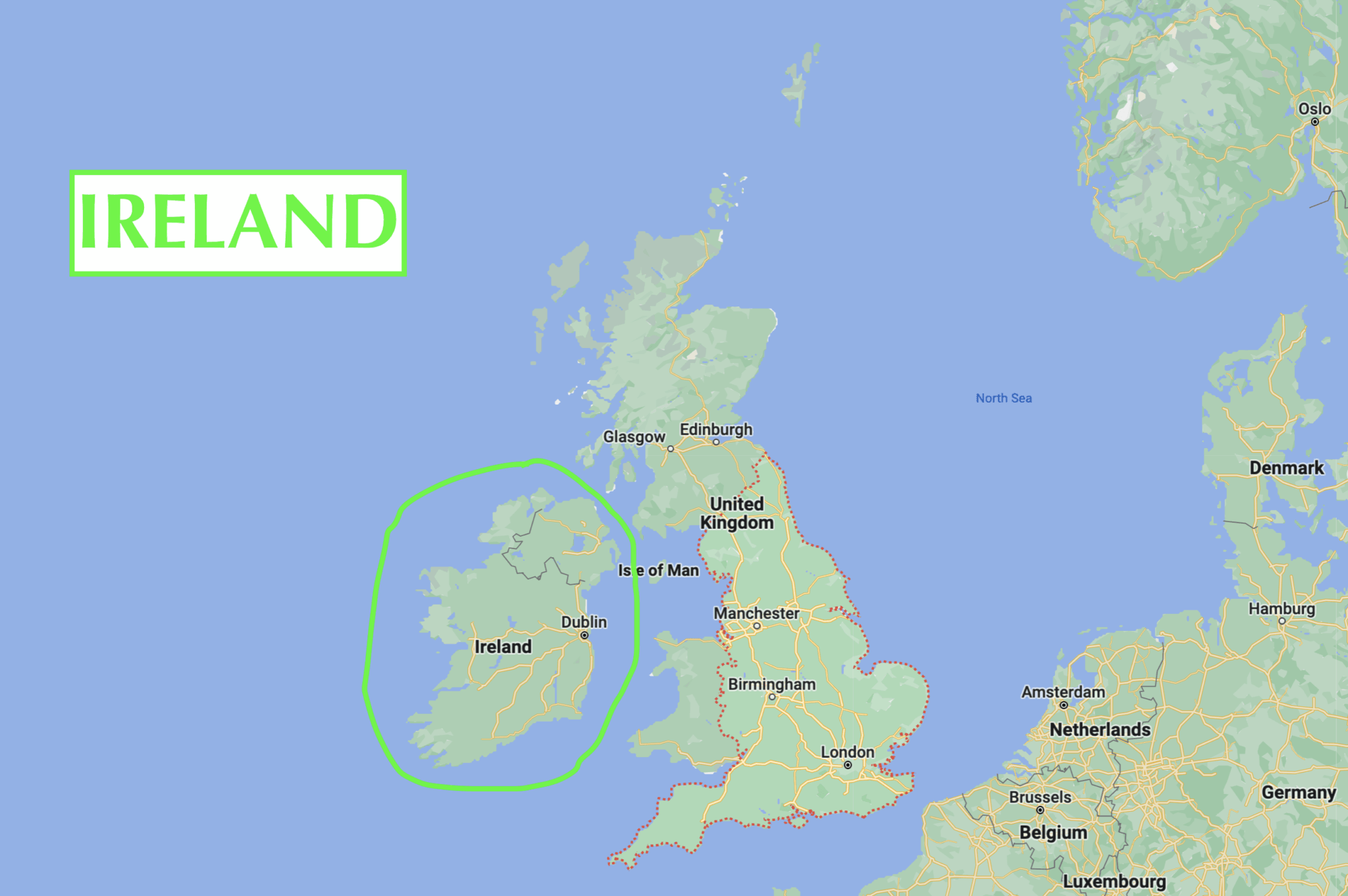
Terms of the British Isles Explained
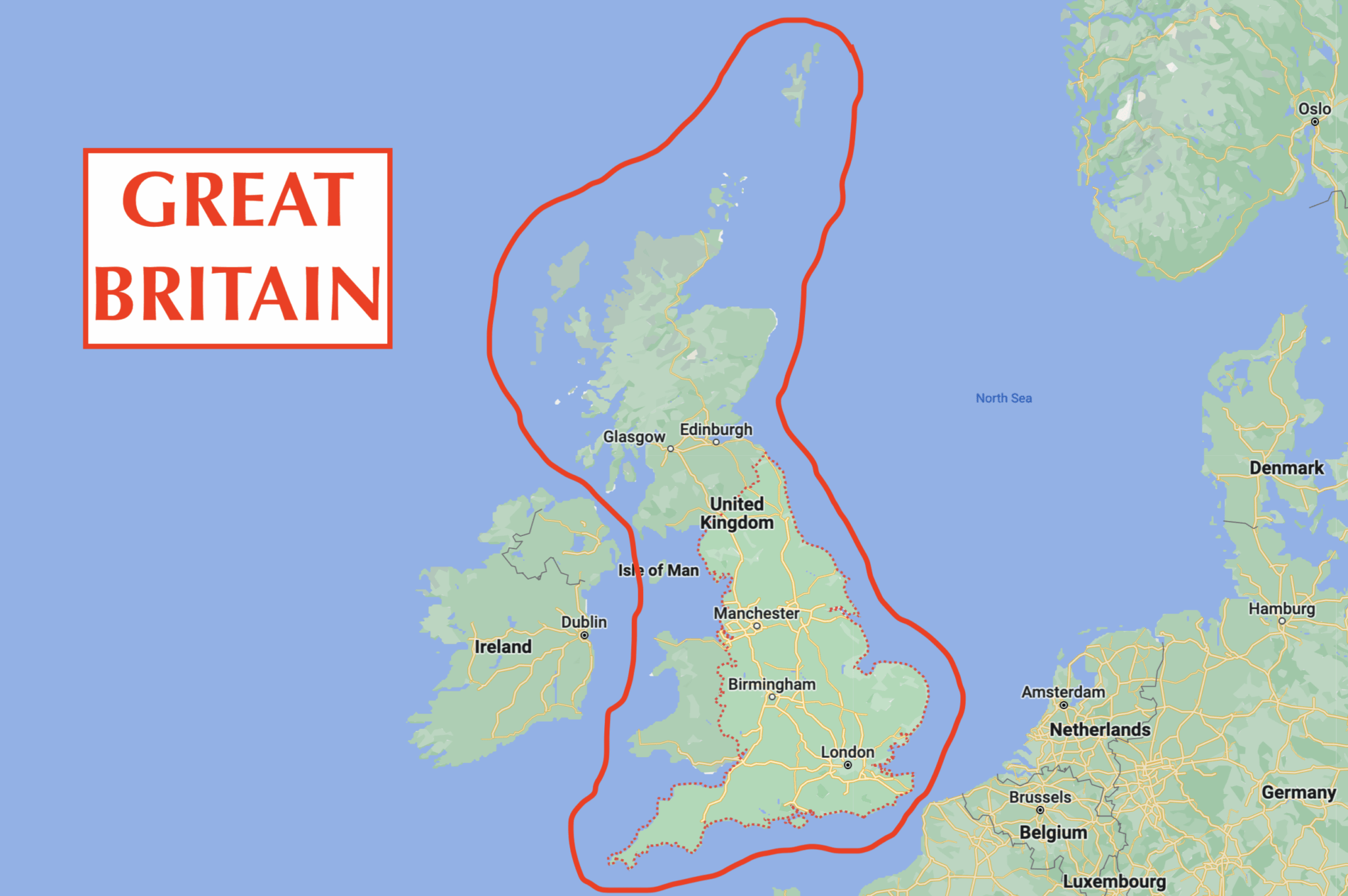
BRITAIN. This term is a bit cryptic as it can refer to: the geographic term GREAT BRITAIN; the political term UNITED KINGDOM; or just plain ENGLAND. BRITAIN is the catch-all term for when you are too lazy or indisposed to actually say “Great Britain” or “United Kingdom.”
GREAT BRITAIN. This is a geographic term referring to the singular island which includes ENGLAND, WALES, and SCOTLAND. This definition also includes its outliers such as the Isle of Wight and the Orkneys, technically Great Britain should be an island chain.
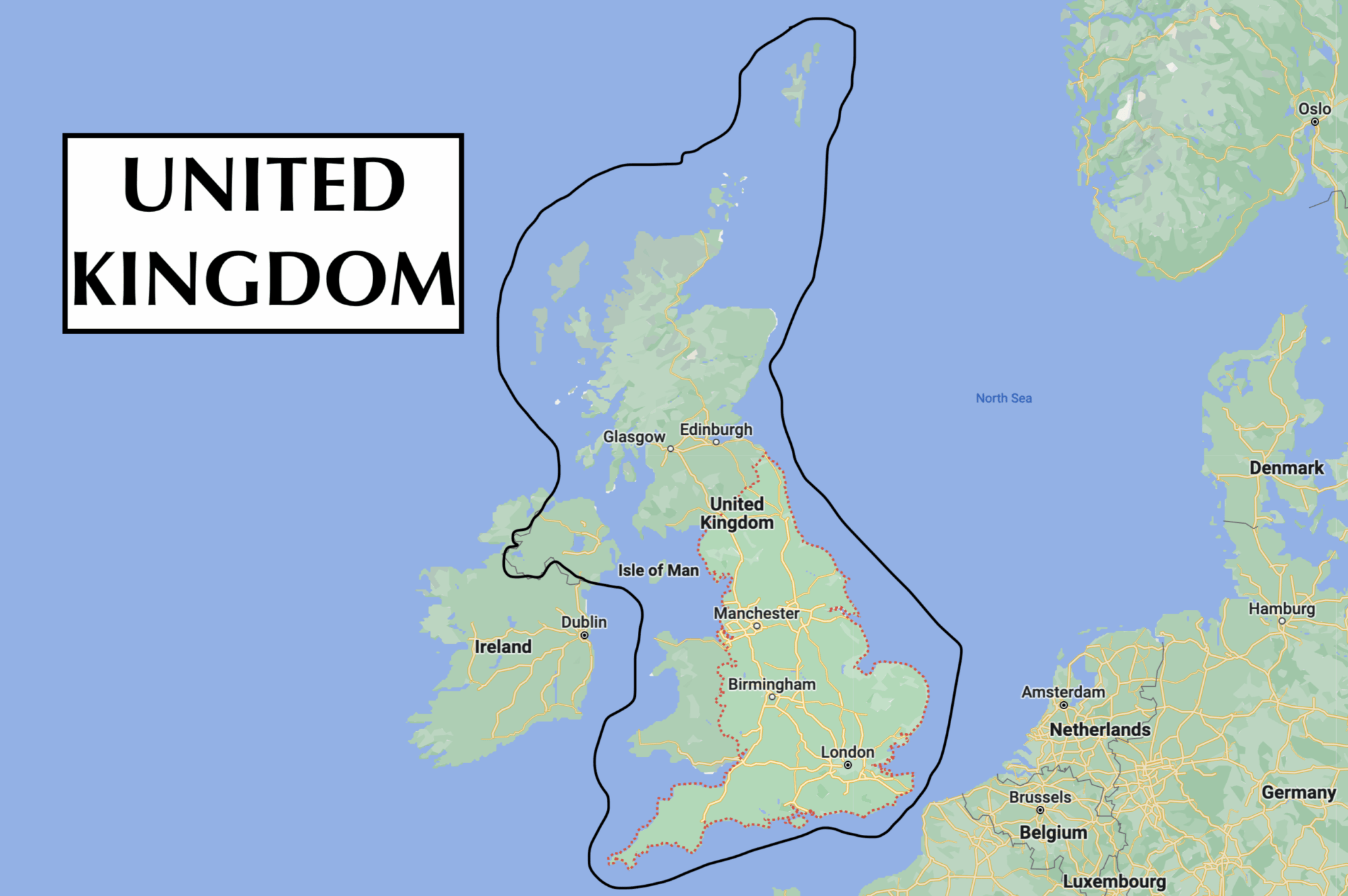
UNITED KINGDOM. This is a political term referring to THE UNITED KINGDOM OF GREAT BRITAIN AND NORTHERN IRELAND. This political amalgam includes ENGLAND, WALES, SCOTLAND, and NORTHERN IRELAND – basically both the subsets “Great Britain” and “Northern Ireland,” as its name implies. The “UK,” is an even shorter version of the already shorter version of the longer, formal variant defined above, which not even the BBC uses.
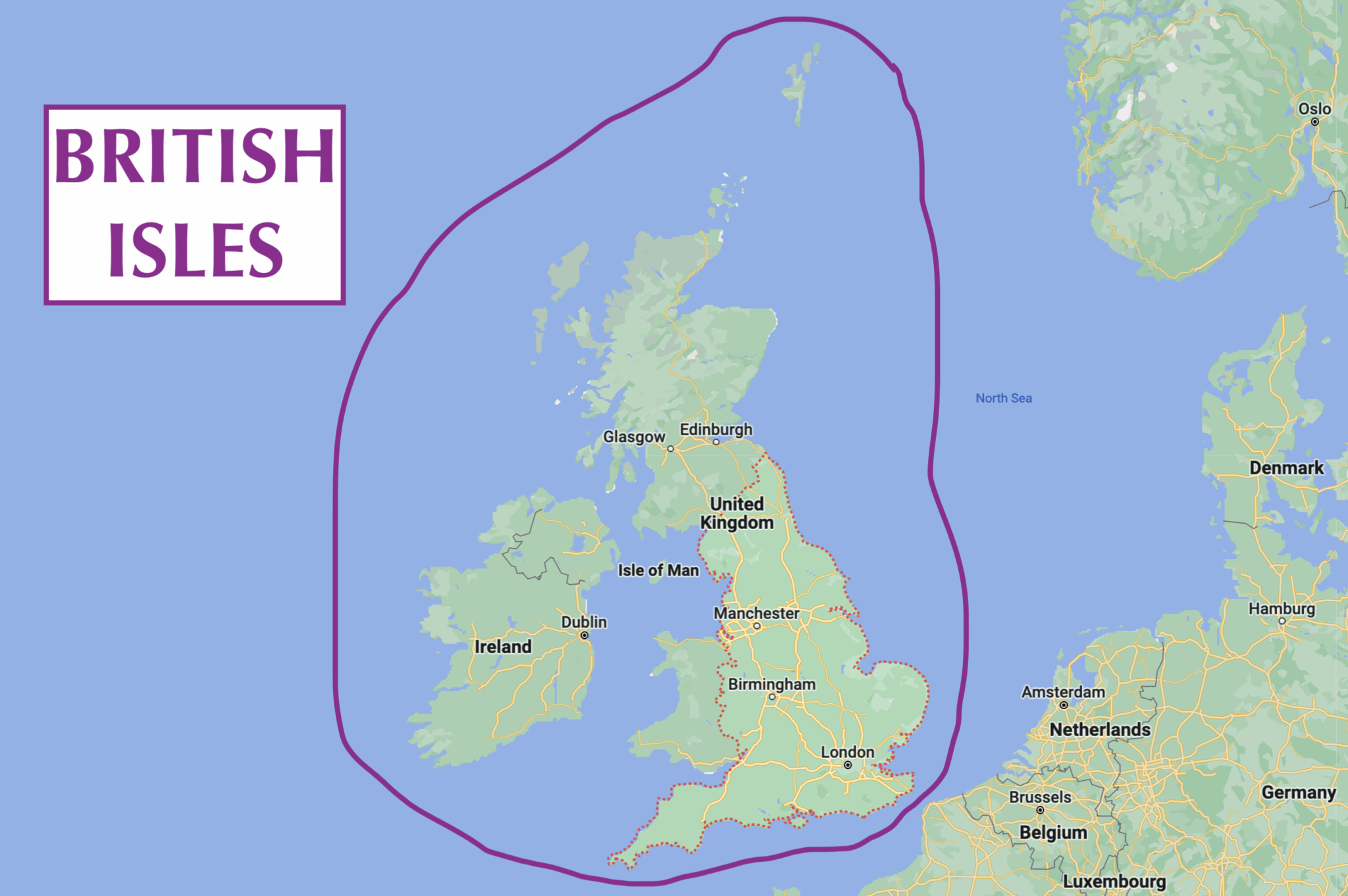
BRITISH ISLES. This is a geographic term referring to the entire set of islands which include GREAT BRITAIN and IRELAND. Another way of looking at this is politically. The BRITISH ISLES include the political compliment of the UNITED KINGDOM and the REPUBLIC OF IRELAND.
IRELAND. This is a geographic term referring to the island of Ireland. The island of Ireland includes both the REPUBLIC OF IRELAND as well as NORTHERN IRELAND, which belongs to the UNITED KINGDOM. This is also a political term, depending if you’re a ‘Unionist’ or a ‘Nationalist.’
Why the Union Jack Flag Matters for Genealogy and Family History
Understanding the Union Jack isn’t academic—it’s essential practical knowledge for anyone researching British or Irish ancestry. Here’s why:
1. Record Location and Archive Access
The political jurisdiction shown by the flag determines where records are held:
| Ancestor Origin | Primary Archives | Key Records |
|---|---|---|
| England | The National Archives (Kew), County Record Offices | Parish registers, census, civil registration |
| Scotland | National Records of Scotland (Edinburgh), ScotlandsPeople | OPRs, sasines, testaments |
| Ireland (pre-1922) | National Archives of Ireland (Dublin) AND PRONI (Belfast) | Catholic/Church of Ireland registers, Griffith’s Valuation |
| Northern Ireland (post-1922) | Public Record Office of Northern Ireland (PRONI) | Civil registration, land records |
| Republic of Ireland (post-1922) | National Archives of Ireland (Dublin) | Civil registration, church records |
Practical Example: If your 1880 ship manifest lists an ancestor “from Ireland,” you MUST determine if they were from what’s now the Republic or Northern Ireland. This affects which archives hold their birth, marriage, and death records. Don’t waste months searching the wrong archive.
2. Understanding Migration Patterns
The political unions represented by the flag drove massive migrations:
- 1707 Act of Union: Scottish Lowlanders migrated to England and colonies seeking economic opportunity
- 1801 Act of Union: Irish migration to Britain increased due to political integration
- 1840s-1850s Great Famine: Massive Irish diaspora to America, Canada, Australia (1-2 million deaths, 2 million emigrated)
- 1922 Irish Independence: Population movements between North and South Ireland
If you’re tracing immigrant ancestors, these patterns provide crucial context. My guide on Finding Immigrant Ancestors includes specific strategies for British Isles immigration research when passenger lists are missing or incomplete.
3. Interpreting Identity in Historical Documents
Your ancestors described themselves differently depending on when they lived:
- Pre-1707: “English,” “Scottish,” “Welsh,” or “Irish” (distinct nations)
- 1707-1801: “British” (if from England, Scotland, Wales) OR “Irish” (separate kingdom)
- 1801-1922: “British subject” OR “Irish” (though many Irish resisted “British” label)
- Post-1922: “British” (UK citizens) OR “Irish” (Republic citizens) OR “Northern Irish” (complicated identity)
Research Trap Example: An 1850 ship manifest might list your ancestor as “British,” but this could mean English, Scottish, OR Welsh. You need additional clues—birthplace, traveling companions, occupation—to narrow it down. “British” alone is insufficient for genealogical precision.
4. Military and Service Records Under the Union Jack
The flag was the banner under which British forces served worldwide. If you have military ancestors:
- Regimental histories reference battles where the flag was raised
- Service records indicate which territories were British at specific times
- Medals and honors from the British Crown used Union Jack imagery
- Colonial service records are organized by era (pre-1801 vs. post-1801)
Understanding flag evolution helps you interpret which conflicts your ancestors participated in and why certain regiments have St. George, St. Andrew, or combined symbols in their badges.
5. Understanding Legal Jurisdictions
The component nations of the Union Jack maintained different legal systems:
- England & Wales: Common law system (unified since 1535)
- Scotland: Separate Scots law (retained after 1707 union)
- Ireland: Mix of common law and Brehon law remnants (pre-1922)
- Northern Ireland: Separate legal system post-1922
Your ancestor’s location within the United Kingdom determined which courts had jurisdiction, how property was inherited, and which records were created. Scottish probate (“testaments”) works completely differently from English probate (“wills and administrations”).
6. Naming Patterns and Cultural Identity
Political unions affected naming traditions:
- Scottish: Patronymic names (MacDonald = son of Donald) persisted after union
- Irish: Anglicization of Gaelic names increased after 1801 (many dropped “O'” and “Mac” prefixes under pressure)
- Welsh: Welsh surnames (ap Rhys → Price, ap Howell → Powell) were anglicized
If your ancestor changed their name, understanding political pressure helps explain why. Many Irish families anglicized names to avoid discrimination in employment and housing.
For comprehensive strategies on navigating these complexities:
- Genealogy Research Online – Master the fundamentals
- Understanding Census Records – Interpret British census entries correctly
- Finding Female Ancestors – Navigate maiden name challenges in British records
- Heraldic Lion Positions in Heraldry – Understand the hidden meanings of Coats of Arms and Lion Variations
The Union Jack flag isn’t just a symbol—it’s a visual index to understanding where your ancestors fit in British political history, which directly impacts HOW and WHERE you research them.
The Family History Foundation Newsletter
It’s Not About You, It’s About Documenting Before It Disappears
Join 500+ family historians getting Franklin’s Source Hound weekly research breakthroughs — real case studies, source hacks, and the exact strategies that turn brick walls into discoveries.
Free. No fluff. Straight from the Source Hound’s desk to yours.
Your privacy is sacred — almost as sacred as a primary source. Read our Privacy Policy.
Frequently Asked Questions About the Union Jack Flag
Q: Is it “Union Jack” or “Union Flag”?
A: Both terms are correct and officially acceptable. “Union Flag” is technically the proper heraldic term, but “Union Jack” has been used for so long that it’s now officially recognized. The term “Jack” may derive from the “jack staff” on naval ships where the flag was flown, or from King James I (nickname “Jack”) who initiated the first union. Even the UK Parliament uses “Union Jack” in official contexts.
Q: Why isn’t Wales represented on the Union Jack flag?
A: Wales was already legally incorporated into England by the Laws in Wales Acts of 1535 and 1542—centuries before the first version of the flag in 1707. Therefore, Wales was considered part of the Kingdom of England rather than a separate nation requiring representation. The dragon (Y Ddraig Goch) is Wales’s national symbol, but it has never been added to the Union Jack. Many Welsh people today find this historical erasure problematic, and there have been campaigns to redesign the flag to include Welsh representation.
Q: Did the Union Jack change after Irish independence in 1922?
A: No. Although most of Ireland became independent (Irish Free State, later Republic of Ireland), Northern Ireland remained part of the UK, so the flag remained unchanged. The Cross of St. Patrick still represents Northern Ireland in the current design, even though the majority of the island of Ireland is no longer part of the United Kingdom.
Q: How can you tell if the Union Jack is upside down?
A: Look at the white diagonal stripes (part of St. Patrick’s Cross). On the hoist side (left when viewing the flag), the wider white stripe should be above the red diagonal in the upper canton (top left quarter). If the wider white portion is below the red, the flag is upside down. Flying a flag upside down is traditionally a distress signal.
Q: What’s the difference between being “English” and “British”?
A: This is crucial for genealogy:
•English: Specifically from England (the geographic region and ethnic/cultural identity)
•British: National identity encompassing English, Scottish, Welsh, and (historically) Northern Irish people
Someone from Scotland is British but NOT English. All English people are British (after 1707), but not all British people are English. In genealogical records, this distinction matters because it affects where you search for documents and how you interpret your ancestor’s origin.
Q: What does “Great Britain” mean vs. “United Kingdom”?
A:
Great Britain: Geographic term for the large island containing England, Scotland, and Wales
United Kingdom: Political term for the nation that includes Great Britain + Northern Ireland (full name: “United Kingdom of Great Britain and Northern Ireland”)
In genealogical documents:
•”Kingdom of Great Britain” = 1707-1801 (England, Scotland, Wales)
•”United Kingdom of Great Britain and Ireland” = 1801-1922
•”United Kingdom of Great Britain and Northern Ireland” = 1922-present
Q: Where can I see historical uses of the Union Jack in my family records?
A: The flag appears in:
Ship manifests and maritime records (common on British vessels)
Military service records (regimental flags, medals, discharge papers)
Passport and naturalization documents (especially British Empire colonies)
Emigration and immigration documents (stamped with Union Jack or royal seals)
Business letterheads (companies operating under British charter)
Colonial records (the flag flew over British territories worldwide)
Understanding the flag helps you date undated documents and verify their authenticity.
Further Reading: Deepen Your British History Knowledge
Want to explore the political and military history behind the Union Jack flag? These comprehensive guides will help you understand the context of your British ancestors’ lives:
Medieval Foundations:
- Anglo-Saxon History Reading List – 16 unforgettable books covering England’s foundations (before the Norman Conquest)
- Plantagenet Dynasty Reading List – 41 inspiring books in historical order covering the medieval kings who shaped England, Wales, and attempted to conquer Scotland (1154-1485)
Colonial Connections:
- Early American History: Colonial Beginnings to the War of 1812 – Essential for understanding British colonial records and why your ancestors emigrated under the Union Jack flag
Practical Genealogy Guides:
- Genealogy Research Online: The Ultimate Beginner’s Guide – Start here if you’re new to family history research
- Overcoming Genealogy Brick Walls – Specific strategies for when research stalls
- Understanding Census Records – How to interpret British census documents correctly
- Finding Female Ancestors – Navigate maiden name challenges in British records
- Finding Immigrant Ancestors Without Passenger Lists – Alternative strategies when standard immigration records are missing
Personal Family History:
- James Toone of Virginia: Origins of the TUNE Surname in the U.S. – My own British immigrant ancestor story showing how these historical contexts apply to real genealogical research
These resources will help you understand not just WHAT the Union Jack represents, but HOW that knowledge helps you find your ancestors in British records.
Hey, did you know, you can watch this post on YouTube!
The Family History Foundation Newsletter
Our Family History Is Disappearing Every Day!
Join the quest with 500+ family historians getting Franklin’s Source Hound weekly research breakthroughs — real case studies, source hacks, and the exact strategies that turn brick walls into discoveries.
Free. No fluff. Straight from the Source Hound’s desk to yours.
Your privacy is sacred — almost as sacred as a primary source. Read our Privacy Policy.
About the Author
Hi there, my name is Franklin, the founder and author of The Family History Foundation.
Our family stories are disappearing every day and it’s crucially important that the next generation is able to learn and appreciate their family history. It is up to you to take up the mantle of responsibility to ensure that how you research today will be passed on tomorrow with the highest standards possible.
I believe that genealogy is not just about names and dates, it’s about your stories and how those stories inform your identity.
With a penchant for storytelling and a background in research, the insights and techniques you learn on The Family History Foundation will help you uncover the incredible stories and identities hidden within the tapestry of your ancestry.
My mission is “Let’s make Family History a household word.”
My motto is “The Past ‘Relative’ to the Future.”



Visitor Rating: 5 Stars
Visitor Rating: 5 Stars
Visitor Rating: 5 Stars