
Welcome to The Family History Foundation, the place for all things genealogy. Whether you’re an adoptee searching for biological family, a beginner building your first family tree, or an experienced researcher refining your methodology, my Source Hound method will set you up for success.
This isn’t just another genealogy blog. It’s a complete educational system for discovering, documenting, and preserving your family’s unique narrative.
I publish comprehensive guides on genealogy research, DNA analysis, document organization, and historical context, each designed to be immediately actionable for your personal research journey.
Because genealogy isn’t merely about collecting data, it’s about uncovering identity, understanding heritage, and connecting with the past that shapes your present and future, and that’s what transcends “genealogy” into “family history.”
Our family stories are being lost every day despite growing records databases and research opportunities. The ancestral voices who spoke to your parents and grandparents may not be around tomorrow and it is vital that we document those stories to preserve them for your family history.
Those stories may not be captured in genealogy documents like a census page or passenger list, so it is up to YOU to seek those stories out and record them.
At The Family History Foundation, I help people like you document their family stories by giving you the necessary tools and methodologies.
The Source Hound Method
The underlying foundation which allow those tools to work is my Source Hound method: the genealogical standards and best practices to help you avoid costly mistakes and ensure that you are accurately preserving your family history.
Being a “Source Hound” means:
- Never accepting information at face value without verification
- Always tracking back to original source documents rather than relying on secondary compilations
- Citing every fact so others can verify your work
- Questioning existing family trees on Ancestry and other platforms
- Understanding the limitations of each type of historical record
- And much more!
The Family History Foundation supports accurate and responsible genealogy research. Being a “Source Hound” isn’t just a catchy phrase, it’s a fundamental philosophy.
With technology ever-evolving, it is our responsibility to ensure that our ancestors are represented as accurately as possible in our family history. DNA testing has revolutionized genealogy, but it also requires careful interpretation and ethical handling of genetic information.
One of the most crucial components of my methodology is to underscore the importance of historical context in family history research. In short, we cannot truly know our ancestors until we understand the historical context in which they lived.
What was happening politically when your ancestor immigrated? What economic conditions forced them to move? What social norms influenced their decisions? These contextual elements transform bare facts into rich, meaningful narratives.
Whether you’re standing at the beginning of your search or you’ve hit a frustrating brick wall, the answers you’re looking for are closer than you think. I’ll help you find them.
About the Author
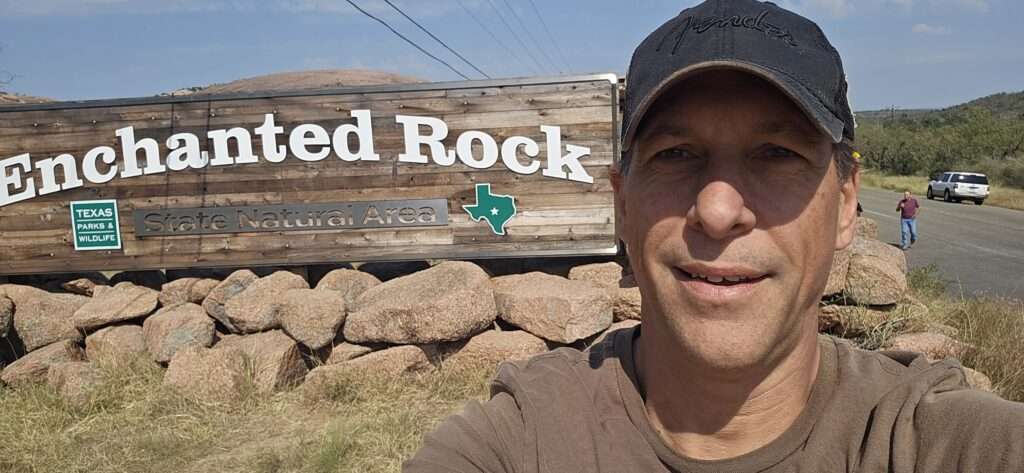
👋 Hello! I’m Franklin, the founder and writer behind The Family History Foundation. I’m a lifelong genealogist dedicated to helping others uncover the incredible stories hidden within their ancestry.
Knowledge of self is the ultimate truth. We cannot fully construct that truth without the knowledge of our family history, because there is no self without those who brought us into existence.
How I Found My Family Against All Odds
As a child who was adopted, I had no clue about my family history. I had a false birth certificate, so I literally had less than nowhere to begin researching. The document that was supposed to identify me was a legal fiction, my birth never officially happened according to government records.
This wasn’t just an inconvenience. It was an identity crisis. Who were my biological parents? Where did I come from? What medical history should I know about? Did I have siblings? These questions haunted me for years.
Over time, I developed all of my “source hound” skills in basically finding my family which did not even exist on paper. I learned to think creatively about evidence, to pursue unconventional research paths, and to never accept “there’s no record” as a final answer.
The breakthrough came with DNA testing. In 2011, I eventually did find my family. Through assiduous research and learning about genetics, I solved all of my family history mysteries. DNA gave me the leads that traditional documents couldn’t, connecting me to biological relatives who had answers I’d been seeking my entire life.
Since then I’ve met multiple lines of my family, have gone to family reunions, and adventured on family history road trips with cousins I never knew existed. The emotional journey from complete unknown to sitting at Holiday dinners with my biological family is something I never take for granted.
Why I Founded The Family History Foundation
I’ve been so blessed by discovering and researching my own family history that I am compelled to help you discover and be inspired by yours. If I can do it starting from a false birth certificate, you can do it too.
Through The Family History Foundation, I aim to empower readers to explore, organize, and preserve their heritage with confidence. The techniques that worked for my seemingly impossible case will work for yours, no matter what obstacles you’re facing.
When I’m not digging deep into my ancestral past, I’m here sharing new discoveries and creatively sharing them on YouTube, Pinterest, and Spotify (links below).
Come say hello, I’d love to hear about your own journey to find your family history!
Just know that The Family History Foundation is run by a passionate genealogy educator dedicated to helping people around the world preserve, organize, and celebrate their unique family stories.
With over 20 years of experience in archival research, document analysis, and comprehensive publishing projects, I believe organizing family documents is both an art and a science.
Understanding family history is the most crucial link to our own individual identity. Knowing where we come from and from whom we are descended is the ultimate stamp of human identity. I’m waxing deep here, I know, but it just means so much to me.
The Family History Foundation endeavors to provide the educational framework to honor our ancestors through the highest research standards.
Want to get to know me and what I’m about? Well, just read my Blog articles. 📚 💻
“You can’t have pride in your heritage if you don’t know the heritage.”
Professional Background: 20+ Years of Archival Research Experience
Just know that The Family History Foundation is run by a passionate genealogy educator dedicated to helping people around the world preserve, organize, and celebrate their unique family stories.
With over 20 years of experience in archival research, document analysis, and comprehensive publishing projects, I know the stakes involved in genealogy research and the techniques you cannot do without.
Research Specializations
My expertise covers a broad range of genealogical research areas, developed through two decades of hands-on experience with primary source documents:
U.S. Federal Census Records (1790-1950): Extracting maximum information from census entries, understanding enumeration procedures, recognizing handwriting variations, and using census data to track family migration patterns across generations.
Immigration and Naturalization Records: Working with Ellis Island ship manifests, Castle Garden records, passenger lists, Declaration of Intention documents, Petition for Naturalization files, and border crossing records. I specialize in helping researchers identify immigrant ancestors and trace them back to their countries of origin.
Military Records: Service records, pension files, draft registrations, and military histories. Understanding how to leverage military documentation to identify family relationships, track ancestors’ movements, and access otherwise unavailable biographical information.
Vital Records and Church Documents: Birth, marriage, and death certificates from multiple jurisdictions, church baptism and marriage records, cemetery transcriptions, and funeral home records. These foundational documents form the backbone of accurate genealogical research.
DNA for Adoptee Search: My specialty area focuses on helping adoptees and individuals with unknown parentage use genetic genealogy to identify biological family members, even when traditional documents don’t exist or have been altered. This includes autosomal DNA analysis, match triangulation, mirror tree construction, and ethical navigation of search and reunion.
Teaching Philosophy
Every technique taught on this blog is something I’ve personally used and verified through my own research or helping others achieve breakthroughs. I don’t just share theory, I share proven methodologies that produce results.
My goal is to empower you to become your own family historian, equipped with professional-level research skills and the confidence to tackle even the most challenging genealogical puzzles.
The Family History Foundation Motto and Mission
MOTTO: “The Past ‘Relative’ to the future.”
The Family History Foundation is a blog designed to educate people about their origins, both genealogical and historical. The motto is a catchy way of phrasing this.
MISSION: “Let’s make ‘family history’ a household word.”
The mission of my blog and the articles I publish is to promote genealogical research by endeavoring to elevate the science of GENEALOGY (data collection and genetics) into the art of FAMILY HISTORY (the telling of our family stories).
Our connection to our ancestors not only magnifies who we are in the present, it also necessarily connects us to the past and, in many ways, defines what we pass on to our families in the future. Again, it’s our motto: “the past ‘relative’ to the future” and why I my mission is to “make ‘family history’ a household word.”
The Family History Foundation: Who We Serve
Genealogy Beginners
Everyone starts somewhere, and family history research can feel overwhelming when you’re staring at a blank family tree. Where do you begin? What records should you search first? How do you know if information is accurate?
This blog provides step-by-step guidance for building your family tree from the ground up. I break down complex research processes into manageable steps, explain genealogical standards and best practices, and show you exactly which records to search for different time periods and locations.
Essential guides for beginners:
- Starting your family tree with what you already know
- Understanding U.S. Census records and how to extract maximum information
- Organizing family documents and photos systematically
- Using free templates to track your research progress
- Avoiding the most common beginner mistakes that corrupt your tree
Advanced Researchers
Experienced genealogists will find advanced methodologies, deep-dive historical context articles (like my 75 Heraldic Lion Positions Explained (Rampant, Passant, Statant & More) article), and professional-level research techniques. If you’re working on difficult cases, need to understand complex record types, or want to elevate your research to publishable standards, the blog offers sophisticated strategies.
Advanced resources include:
- Source citation methods meeting genealogical proof standards
- Reading and interpreting handwriting in historical documents
- Understanding the Genealogical Proof Standard (GPS)
- Using city directories, ship manifests, and specialized records
- Placing ancestors in proper historical and geographical context
No matter where you are in your family history journey, whether you’re just discovering genealogy exists or you’re a seasoned researcher tackling your most difficult brick wall, you’ll find actionable, research-based guidance here.
Adoptees & Those With Unknown Parentage
If you’re searching for biological family, you’re not alone, and you’re in the right place. DNA testing combined with strategic genealogical research can unlock doors that traditional records keep closed.
I specialize in helping adoptees navigate the unique challenges of genetic genealogy. Unlike traditional family historians who can simply “ask grandma,” adoptees must become genealogical detectives, using DNA matches, mirror trees, and triangulation strategies to identify biological parents and extended family.
The techniques I teach on this blog are specifically designed for people who start with limited or no information. Whether you have a closed adoption, altered birth records, or literally no starting point, the DNA-focused methodologies shared on The Family History Foundation can help you make breakthroughs.
Key resources for adoptees:
- Choosing between Ancestry vs 23andMe for maximum DNA matches
- Understanding how to cluster shared matches to identify family lines
- Building mirror trees to identify unknown biological ancestors
- Navigating the emotional aspects of search and reunion
- Understanding inheritance patterns and what DNA percentages mean
Navigating The Family History Foundation: Finding What You Need
With hundreds of articles published since this blog’s founding, finding exactly what you need can feel overwhelming. Here’s how to navigate the content based on your current research goals.
If You’re New to Genealogy
Start with our foundational guides on building your first family tree, understanding genealogical proof standards, and organizing your research from day one. The “Family” category contains step-by-step tutorials designed specifically for beginners who are just starting their genealogical journey.
These guides assume no prior knowledge and walk you through every step from interviewing living relatives to searching census records to documenting your findings properly. You’ll learn not just what to do, but why you’re doing it and how it fits into the larger research methodology.
If You’re Working With DNA
Our DNA guides cover everything from choosing the right test (Ancestry vs 23andMe, especially critical for adoptees) to interpreting ethnicity estimates and using DNA matches to identify biological relatives and break through brick walls.
DNA has revolutionized genealogy, but it’s also created confusion. What do those percentages mean? How do you interpret shared centimorgans? Why do siblings get different ethnicity results? These guides demystify genetic genealogy and show you how to use DNA as a powerful research tool, not just a novelty.
If You Need Templates & Tools
Download our free family tree templates, research logs, and documentation worksheets. These professionally designed PDFs will save you hundreds of hours and keep your research organized from the very beginning.
Proper organization is the difference between genealogy as a hobby and family history as a legacy. These templates ensure you’re capturing information systematically, citing sources correctly, and building a research foundation that future generations can build upon.
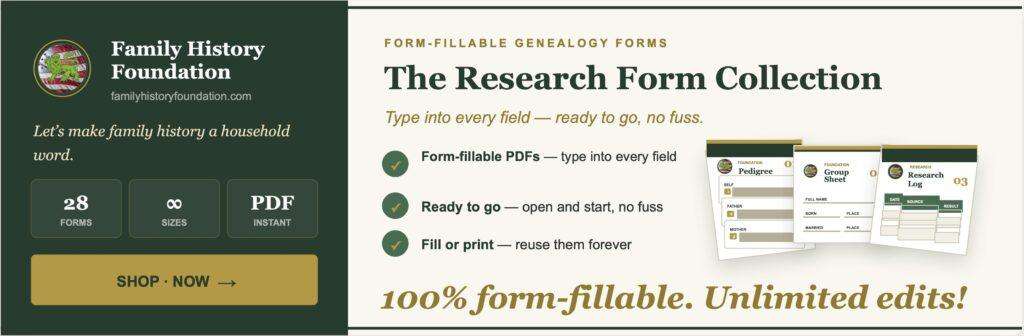
To support your research, The Family History Foundation also crafts and sells professional genealogy forms in our Online Shop.

We have 28 premium genealogy forms, all of which are 100% form-fillable and unlimited edits. They are designed to save you time and stay organized in your research.

Stop by and have a gander!
If You’re Researching Specific Record Types
Our “Features” category explores historical context and specialized record types, from census records to military archives to immigration documents. Understanding the historical period your ancestors lived in is crucial for effective research and accurate interpretation.
Every record type has quirks, limitations, and hidden information that casual researchers miss. These guides show you how to extract maximum value from each document type and avoid common misinterpretations.
Browse recent articles below, or use the search function to find specific topics. Every post includes a companion YouTube video for visual learners, and downloadable resources when applicable. New content publishes every Friday for “Family History Fridays.”
The Family History Foundation on Social Media
YouTube: In-Depth Video Tutorials

I maintain a comprehensive YouTube channel with detailed video tutorials on genealogy and history, all specifically designed for family history researchers.
Each video I create serves as a companion to a blog post published here, giving you the option to read, watch, or both depending on your learning style. Video is particularly helpful for visual demonstrations of research techniques, showing you exactly how to navigate genealogy websites, interpret DNA results, or analyze historical documents.
The videos are produced with the highest educational standards and pedagogical outcomes in mind. I don’t just show you what to do, I explain why it works and how it fits into broader research methodology. Whether you’re watching on your lunch break or following along step-by-step at your computer, these tutorials are designed with your success in mind.
Subscribe to get notified every Friday when new videos publish. The YouTube community is growing, and many subscribers share their own breakthroughs and research tips in the comments.
Pinterest: Visual Inspiration and Free Templates

My Pinterest page features infographics, research charts, family tree templates, and visual inspiration to keep you motivated in your family history journey.
Pinterest serves as a visual catalog of ideas, templates, and quick-reference guides. If you’re looking for a specific chart format, a reminder of research steps, or inspiration for documenting family stories, Pinterest makes it easy to find and save exactly what you need.
I regularly publish:
- Downloadable PDF templates for family trees and research logs
- Infographics explaining DNA inheritance patterns
- Visual guides to reading historical documents
- Cousin relationship charts and genealogical reference materials
- Historical maps and geographical research aids
Follow the board to discover new resources and get inspired to tackle your next family history project. Many users tell me they keep their favorite pins saved for quick reference during research sessions.
Whether you prefer reading detailed blog posts, watching video tutorials, or browsing visual inspiration, you can engage with The Family History Foundation content in the format that works best for your learning style. All three platforms work together to support your research journey.
Podcasts: Audio Versions of Every Genealogy Topic Relevant to You

The Family History Foundation features podcasts across several platforms, choose the one which best suits you where you already listen:
All of my podcasts are the latest genealogy content relevant to your family history research. The content is optimized from the best of my YouTube episodes and packaged for you so you can listen on the go, while at home relaxing, or to share with the rest of your family.
The Family History Foundation Newsletter
👉 Subscribe to The Family History Foundation Newsletter on our Newsletter Signup Page or with the form below, it’s full of new tips, active challenges, and deep-dive case studies. You’ll never run out of ways to capture your family’s legacy!
I posts articles on my blog every Friday for “Family History Fridays.” The YouTube video versions are also released on Fridays. If you want to stay up to date, you’ll hear it first right here on this site! 🗞️ 💻
Stay up to date with all the latest posts and genealogical news from The Family History Foundation. You can subscribe with the form below.
Through the newsletter I bring the updates right to you, and I’ll never overload your inbox 📬. Just use the Newsletter Signup Form below and you’re all set to go 📩.
The Family History Foundation Newsletter
It’s Not About You, It’s About Documenting Before It Disappears
Join 500+ family historians getting Franklin’s Source Hound weekly research breakthroughs — real case studies, source hacks, and the exact strategies that turn brick walls into discoveries.
Free. No fluff. Straight from the Source Hound’s desk to yours.
Your privacy is sacred — almost as sacred as a primary source. Read our Privacy Policy.
The Family History Foundation Blog
The Family History Foundation Blog page is where everything begins! I have so many in-depth articles on genealogy and family history to get you discovering your family history today!
The blog delivers high-quality content such as historical contexts, tips & resources, understanding DNA, as well as helpful genealogy resources that you can use today to honor your ancestors.
I only promote the highest research standards so that you can create the most immaculate family tree possible.
Through the methodologies expounded upon in the articles, you will be set up for family history success.
Help The Family History Foundation make “family history” a household word.
At the bottom of every article are comments and contact links. Use the comments to get involved or use the contact link to get in touch. Sign up to our newsletter to get even more!
Get reading right now, choose a topic from our most recent posts or visit the main blog page 😀!
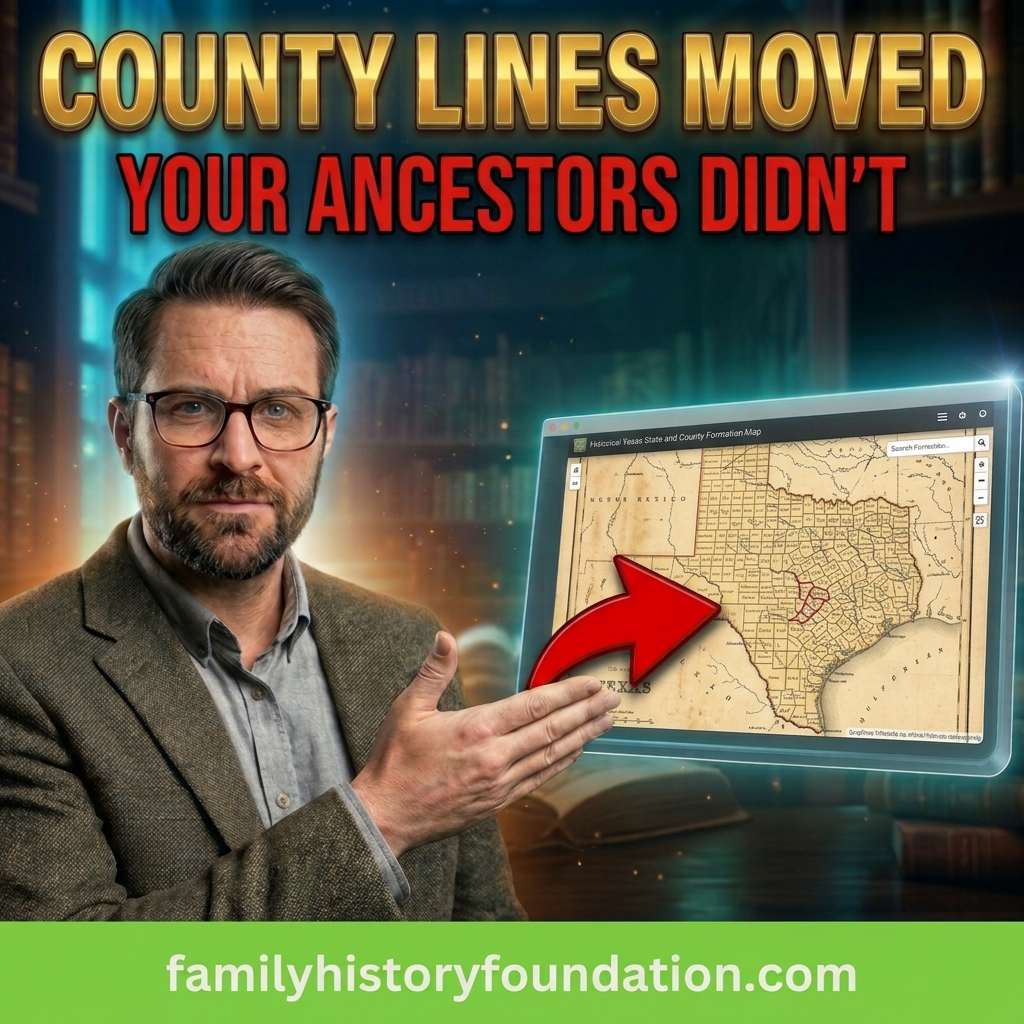
County Boundary Maps | 2 Historical Interactive Genealogy Tools
Learn how to use county boundary maps to track where your ancestors lived. This is a simple yet effective genealogy…
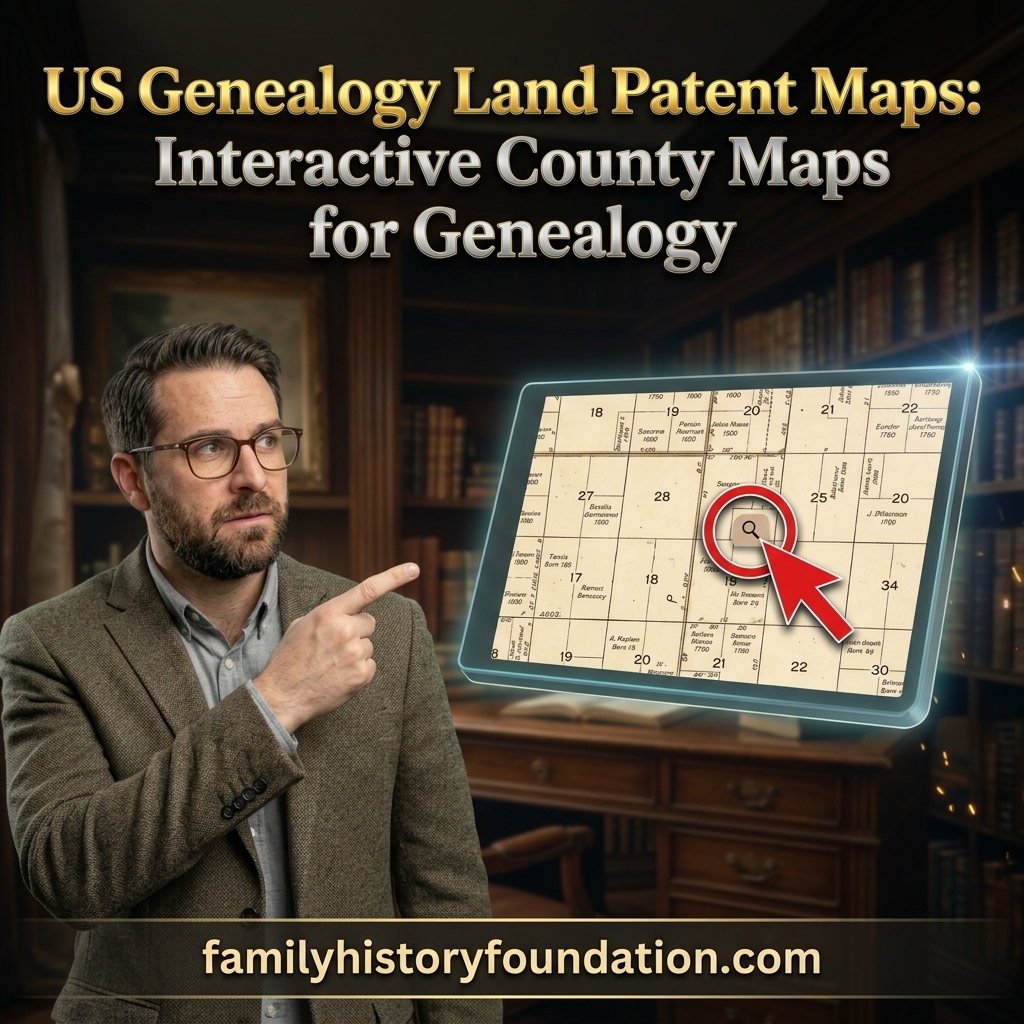
GLO Genealogy Land Patent Maps: 5 Interactive Tools | County Maps for Genealogy
The genealogy land patent maps housed on the US Government’s General Land Office (GLO) can be searched using several interactive…
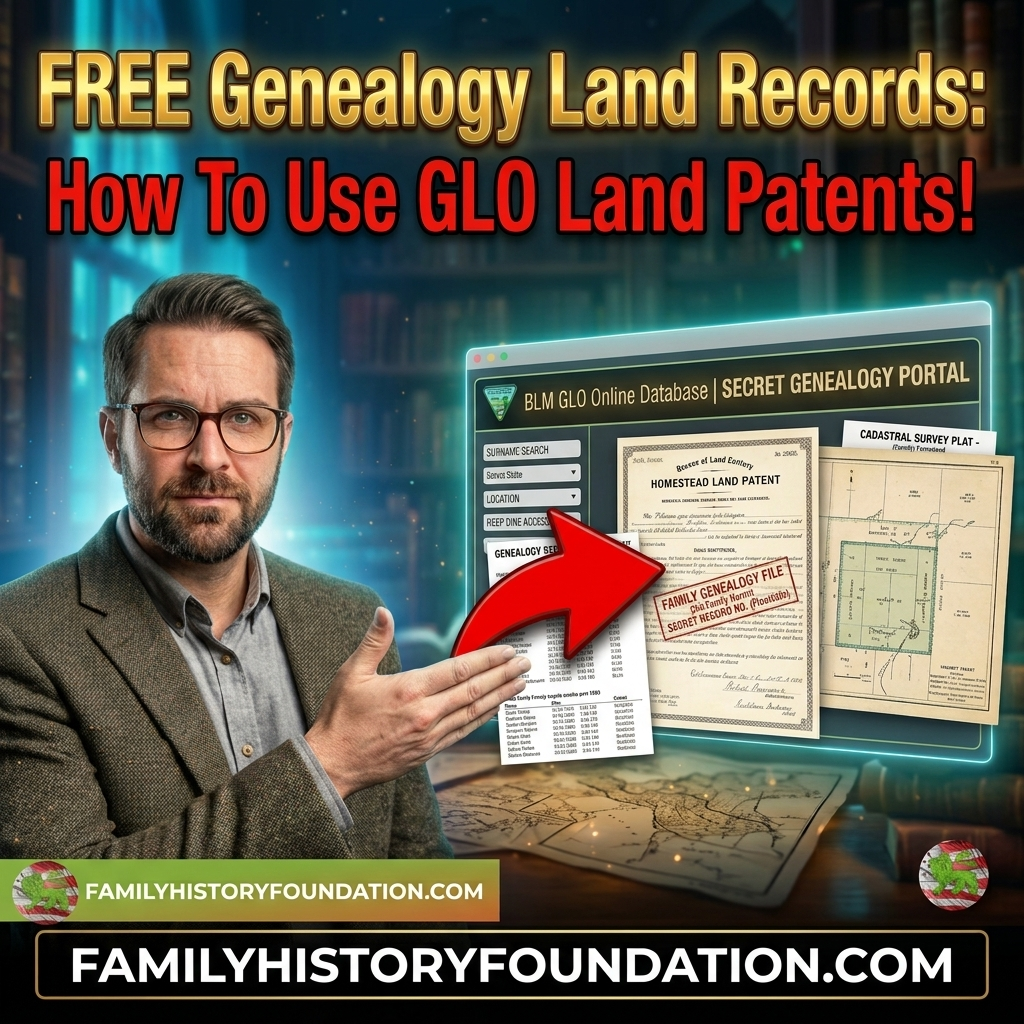
US Genealogy Land Patents: How To Use GLO Land Records!
Your ancestors’ genealogy land patents are waiting for you! The United States government’s Bureau of Land Management houses all of…
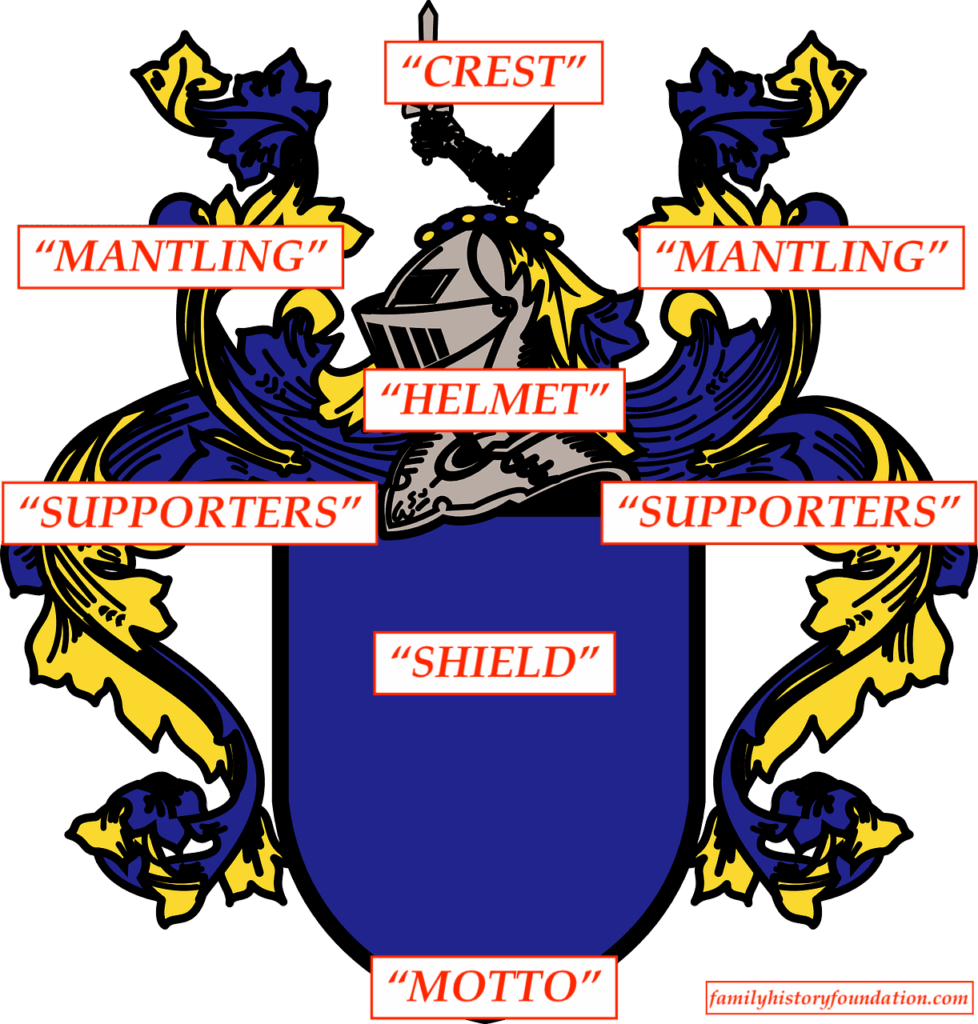
Use A Coat of Arms For A Surname? Intriguing YES and NO!
Can I use a Coat of Arms for a Surname? That is the million dollar question to which the answer…
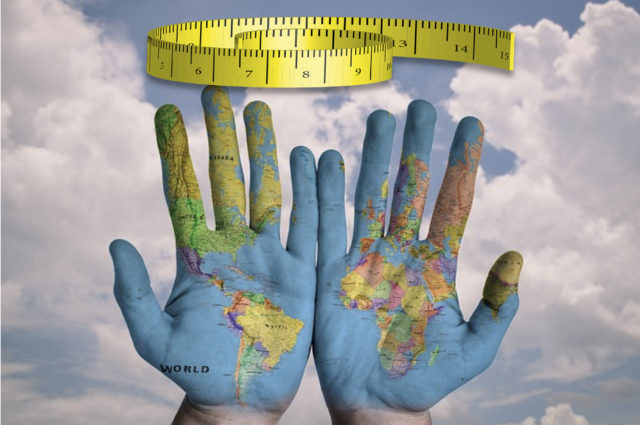
What Is Bigger Europe Or the USA? The Answer May Surprise You
Quick Answer: Yes, Europe IS bigger than the USA—but only slightly. When comparing Europe vs USA in terms of land…
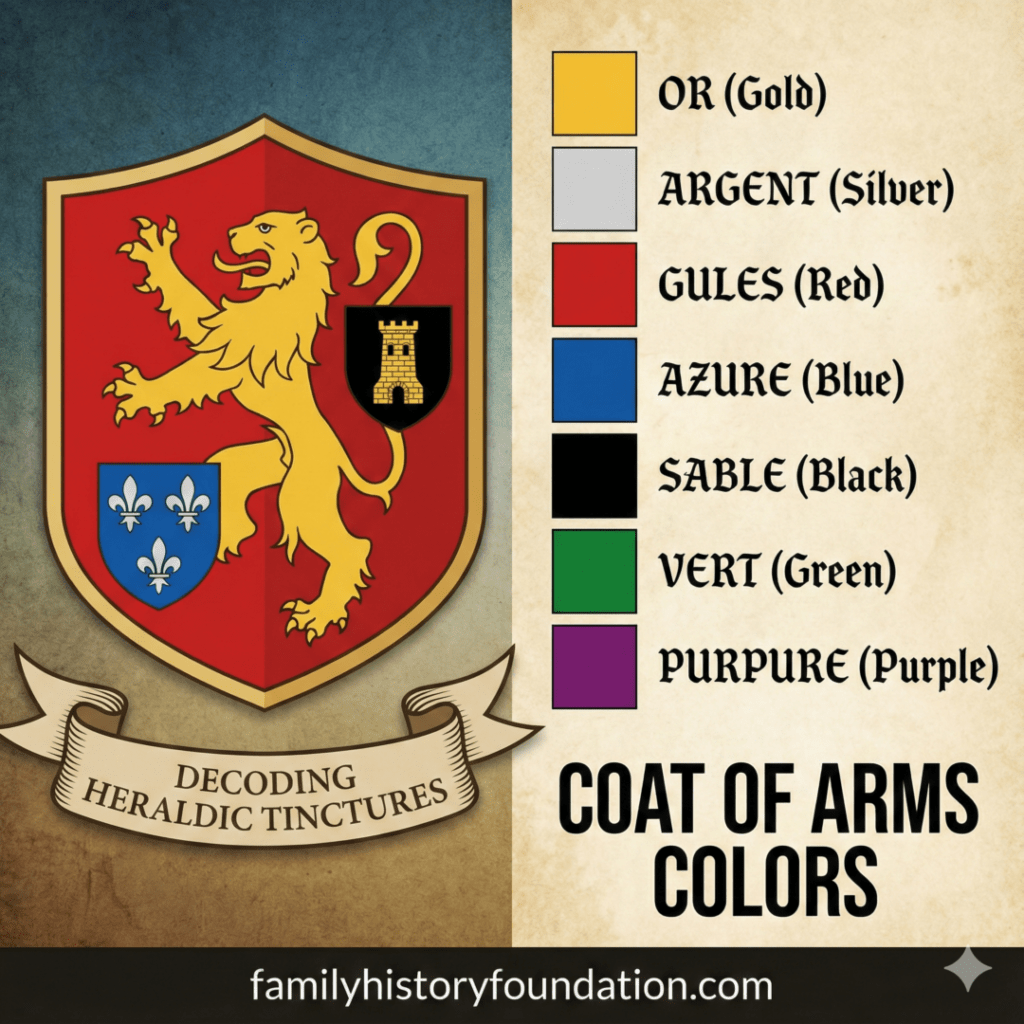
Coat of Arms Colors in Genealogy: What Every Heraldic Color Means
Coat of arms colors are often overlooked as just colors, big mistake. The colors used on various coats of arms…
