⏱️ Read Time: 10 minutes
The 1800 census introduced expanded age categories that most genealogists don’t know how to use effectively. Just like the 1790 Census, the US Marshals enumerated the 1800 census.
Even if you don’t think you may have an ancestor on the 1800 census, you just might! Read on because you don’t want to miss any possible family history clues which might be out there and just by understanding this census as it relates to the other censuses, your ancestors might just surprise you with an appearance.
Say you’ve found your ancestor listed as head of household, glanced at the tally marks, and moved on to the next record. Here’s what you missed: the 1800 federal census refined age brackets from three categories to TEN, giving you the power to estimate birth years more accurately and track family composition changes over time.
Table of Contents
This matters when you’re trying to distinguish between fathers and sons with the same name, identify when children left home, or estimate ages for ancestors who appear in multiple censuses but with inconsistent information.
I’m Franklin, the “Source Hound” behind Family History Foundation. After decades of archival research—including finding both my biological parents as an adoptee—I’ve learned that understanding subtle census changes transforms research from guessing to strategic investigation. I have several ancestors on the great 1790 and 1800 Census so follow along with my research.
For context on how the 1800 census fits into the broader evolution of federal enumeration, see our US Federal Census comprehensive guide. This post focuses specifically on the 1800 enumeration’s unique features and research strategies.
Why the 1800 Census Matters for Your Research
First of all . . . it was the law! The 1800 census not only required that every free person over the age of 16 participate, the instructions specifically state:
“That every person whose usual place of abode shall be in any family on [August 4, 1800], shall be returned as of such family, and the name of every person, who shall be an inhabitant of any district or territory, but without a settled place of residence, shall be inserted in the column of the aforesaid schedule, which is allotted for the heads of families, in that division where he or she shall be on [August 4, 1800], and every person occasionally absent at the time of the enumeration, as belonging to that place in which he usually resides in the United States.”
SOURCE: Original instructions from Congress (PDF link) – will open in new window.
The 1800 census bridges the gap between the bare-bones 1790 enumeration and later, more detailed records.
While it still only names heads of household, the refined age categories let you track household changes decade by decade. Compare 1790 to 1800 to 1810, and you’ll see children aging into adulthood, births, deaths, and marriages—all without individual names.

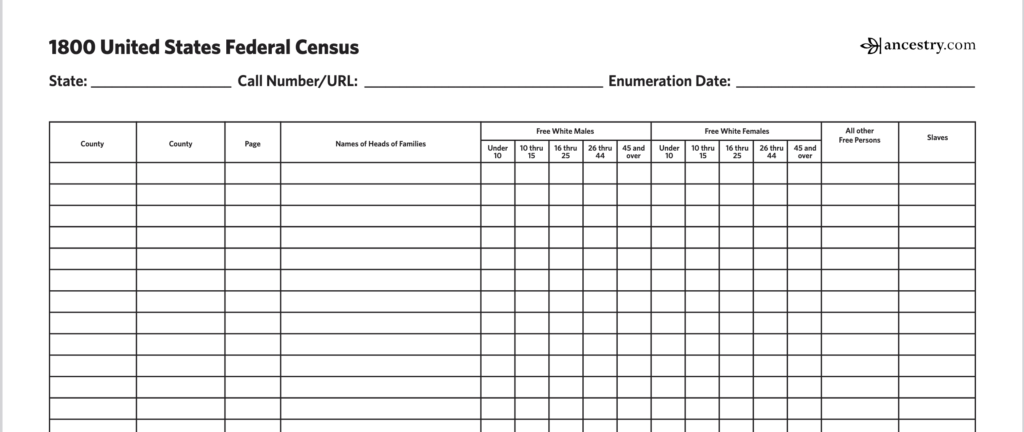
Here’s what the 1800 federal census accomplishes:
📊 More precise age estimates – TEN age brackets total, instead of TWO for males only (and none for females), give better birth year ranges
👨👩👧👦 Tracks family growth – Comparing 1790 to 1800 shows children moving between age categories
🔍 Distinguishes generations – Helps separate fathers from adult sons in same-name situations and mothers from daughters in head count.
📍 Confirms residence patterns – Can show whether families stayed put or migrated
The 1800 census records won’t give you everything you need, but they provide critical waypoints in your family’s timeline. Combined with land records and church registers, these age brackets narrow down birth years enough to find supporting documentation.
Source Hound tip: Always work forward and backward from the 1800 census. Compare it to 1790 and 1810 to verify you’re tracking the same household. Age bracket shifts should make sense based on the 10-year gap.
Also, have your ancestor’s Ancestry.com profile handy as a way of verifying what exists in their RELATIONSHIP section, listed on his/her FACTS tab, matches the headcount on the census! Easy way to cross check.
Another great Source Hound tip is that as sons grow into the age of marriage, they often will disappear on the headcount under their age category as a dependent and show up as a new Head Of Household/Family on a subsequent census! I’ve seen this happen and it’s exciting stuff!
What the 1800 Census Actually Contains
The 1800 census asked the same five basic questions as 1790, but with more detailed age breakdowns for males and female.
The Ten Categories (Expanded from Two)
Every household in the 1800 federal census was enumerated using these categories:
1. Free white males under 10
This breaks the “under 16” category from 1790 into a more specific range. Boys aged 0-9 appear here.
2. Free white males 10-15
This new middle category captures boys in their early teens—too young to be heads of household but old enough for apprenticeships or work.
3. Free white males 16-25
This includes young adult males who might be adult sons living at home, recently married men starting households, or workers/apprentices.
4. Free white males 26-44
This is typically the “household head” age range, though some older or younger men also headed households.
5. Free white males 45 and up
This lumps together everyone from middle-aged fathers to elderly grandfathers. A man could be 46 or 96—you can’t tell from the census alone.
6. Free white females under 10
This breaks the “under 16” category from 1790 into a more specific range. Boys aged 0-9 appear here.
7. Free white females 10-15
This new middle category captures boys in their early teens—too young to be heads of household but old enough for apprenticeships or work.
8. Free white females 16-25
This includes young adult males who might be adult sons living at home, recently married men starting households, or workers/apprentices.
9. Free white females 26-44
This is typically the “household head” age range, though some older or younger men also headed households.
10. Free white females 45 and up
This lumps together everyone from middle-aged fathers to elderly grandfathers. A man could be 46 or 96—you can’t tell from the census alone.
11. All other free persons
This includes free people of color (Black, Native American, mixed race) without age distinctions.
12. Slaves
In slaveholding states, this column counts enslaved people without names, ages, or any identifying details.
What’s Still Missing from the 1800 Census
The 1800 census records improved on 1790, but significant gaps remain:
❌ No individual names (except head of household)
❌ No relationships (can’t prove who’s son, wife, boarder)
❌ No birthplaces
❌ No occupations
❌ No property values
For these details, you need to wait for later censuses. The 1850 census was the first to list everyone by name—50 years away.
Watch: Searching the 1800 Census on Ancestry
Before diving into detailed strategies, watch this complete walkthrough of searching the 1800 census on Ancestry, reading tally marks, and solving common problems:
Subscribe to Family History Foundation on YouTube for more census tutorials every Friday!
How the Expanded Age Categories Help Your Research
The refined male and female age brackets in the 1800 census give you research advantages the 1790 enumeration couldn’t provide.
Estimating Birth Years More Accurately
With five male and female age categories each instead of two for males only, you can narrow birth year estimates significantly.
Example: John Smith in 1800 census shows:
- Free white males 16-25: 1
- Free white males 26-44: 1 (John as head)
- Free white males under 10: 2
What this tells you:
- John was born 1755-1774 (age 26-44 in 1800)
- One adult son was born 1774-1784 (age 16-25 in 1800)
- Two young sons were born 1791-1800 (under 10 in 1800)
This is far more specific than the 1790 categories allowed. You can now search birth/baptism records with tighter date ranges. Allow for date ranges near the cutoff years.
For example, if there was a John born c. 1782, then you may expect to see “2” in the Free white males 16-25 category. The point is not to dismiss a record just because it does not immediately conform to your first glance, suss it out a bit!
Tracking Children Aging Through Categories
Compare the same household across multiple censuses to watch children grow up.
Example: William Brown household
1790 census:
- Free white males under 16: 3
- Free white females: 4
1800 census:
- Free white males under 10: 1
- Free white males 10-15: 1
- Free white males 16-25: 2
- Free white females: 3
What happened: Two boys who were “under 16” in 1790 are now “16-25” in 1800 (ages 16-25). One boy moved from “under 16” to “10-15” category. One young boy was born after 1790. One female died or married and left the household.
This progression helps verify you’re tracking the correct family and provides context for searching marriage records, death records, and land transfers.
HINT: You can download my 15 Free Family History Forms to keep track of exactly these types of scenarios.
Distinguishing Fathers from Adult Sons
When multiple men in a county share the same name, age categories help identify which is which.
Scenario: Three “John Davis” entries appear in the same county in the 1800 federal census.
John Davis #1:
- Males 26-45: 1 (John)
- Males under 10: 3
- Females: 2
John Davis #2:
- Males 45+: 1 (John)
- Males 16-26: 1
- Females: 3
John Davis #3:
- Males 16-25: 1 (John)
- Females: 1
Analysis: John #1 is likely early 30s with young family. John #2 is older (45+) with adult son and established household. John #3 is young (16-25), possibly recently married with no children yet. If you’re looking for a John Davis born around 1770, John #1 is your best match.
While searching county US Federal Census records, always scan up and down the page, if not adjacent pages! You never know who you might see. I’ve actually found collateral family this way!!!
How to Search the 1800 Census on Ancestry
Ancestry hosts digitized 1800 census records with searchable indexes—but the search requires specific strategies for head-of-household-only records.
Step 1: Access the 1800 Census Collection
Navigate to: Search → Census & Voter Lists → 1800 United States Federal Census
The collection includes all surviving states’ 1800 enumeration records from The National Archives microfilm.
Step 2: Use Smart Search Strategies
Start with these fields:
📝 Name: Use phonetic search (Soundex) for spelling variations
📍 Location: State + County (township if known)
🔢 Age Range: If you know approximate age, use “Calculated Birth Year”
Skip these fields:
- Birthplace (not recorded until 1850)
- Parents (not named in early censuses)
- Spouse (not named as individual)
Example search:
- Last Name: “Wilson” (phonetic enabled)
- First Name: “Thomas” (exact or phonetic)
- Birth Year: 1765 +/- 5 years (if you know he was age 35 in 1800)
- Location: Virginia → Loudoun County
Step 3: Verify with the Original Image
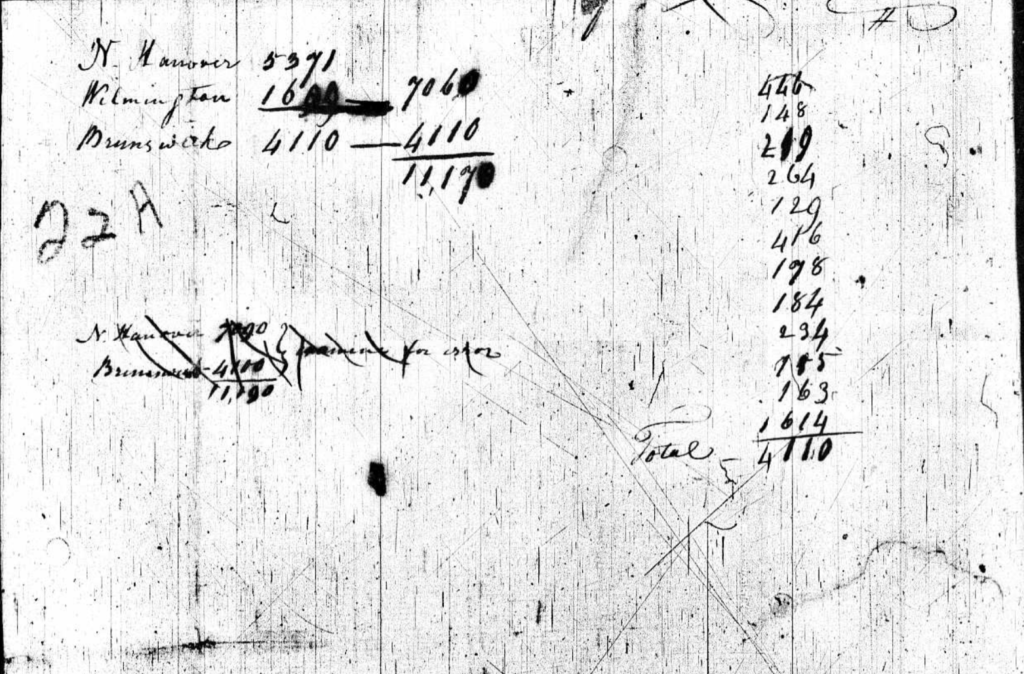
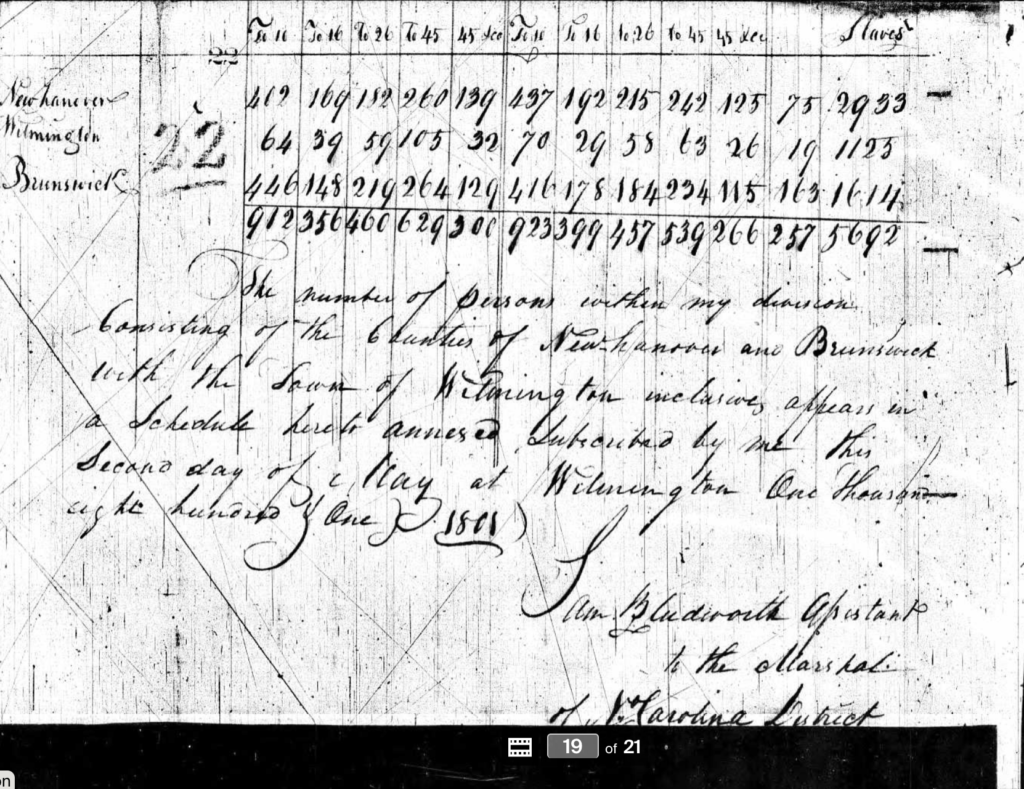
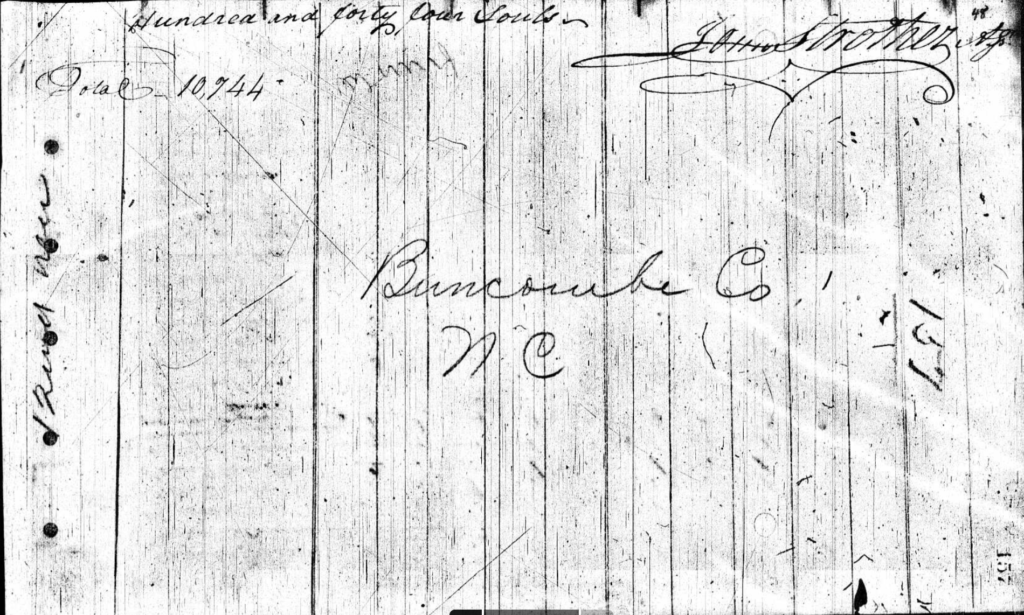
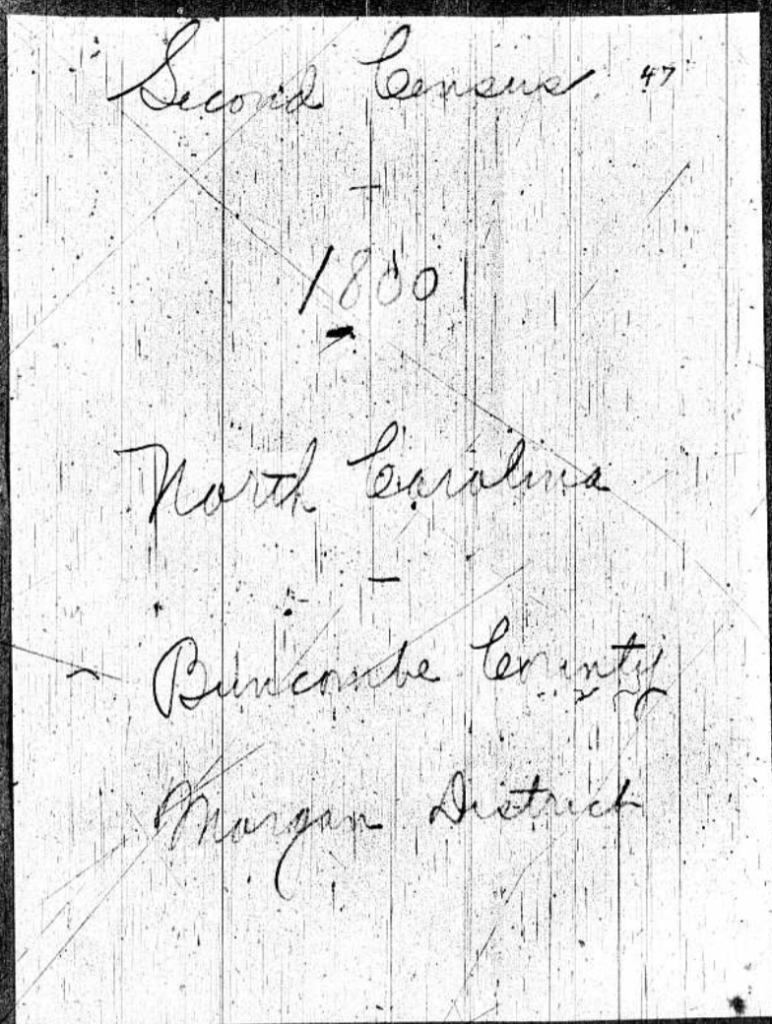
Transcription errors are common in 1800 census indexes. Always view the actual census page. Below is an example from Ancestry.com of how the source page might look, always go to “view image” or “source” and scan the original census record.
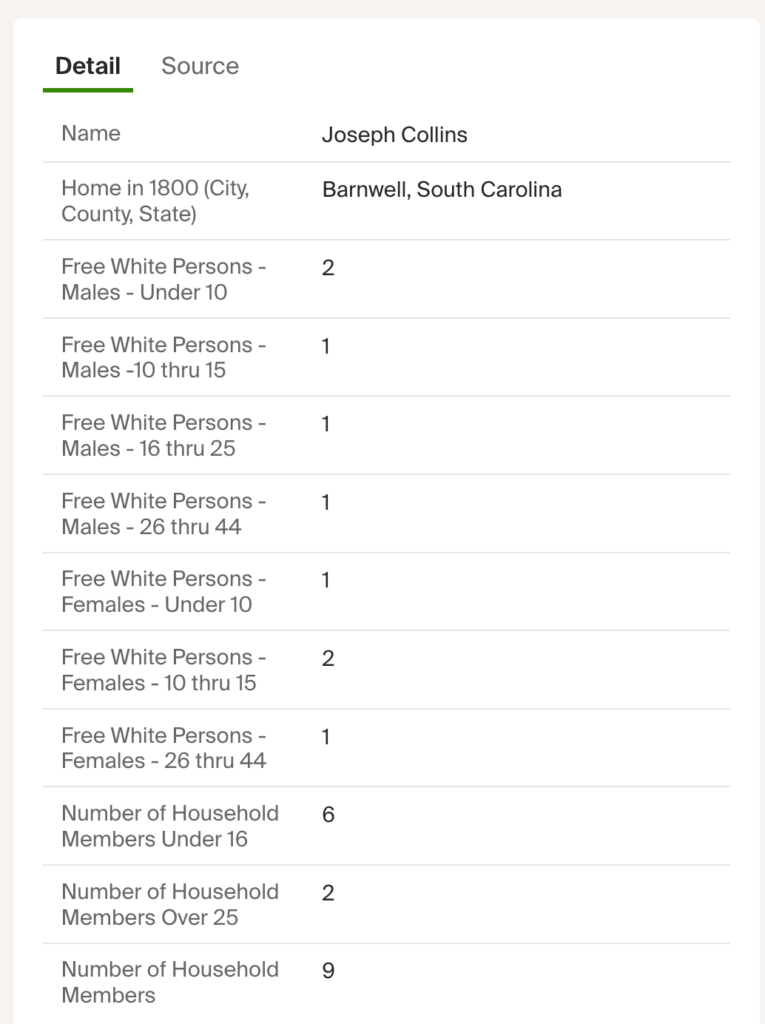
What to check:
- Does the name match (accounting for handwriting)?
- Do the age categories make sense for your family?
- Are known neighbors listed nearby?
- Does the location match land records?
If four factors align, you’ve likely found the right person—even if spelling varies or one tally mark seems off. Compare the actual Census record below which matches the index record above – quite different!

Step 4: Document the Household Composition
Record every column’s numbers. This creates a baseline for comparing to other census years.
Create a research log entry:
- Head of household: Thomas Wilson
- Location: Loudoun County, VA
- Males under 10: 2
- Males 10-15: 1
- Males 16-25: 0
- Males 26-45: 1 (Thomas)
- Males 45+: 0
- Females: 3
- Other free persons: 0
- Slaves: 0
This documentation helps when you later find Thomas in the 1810 census and need to verify household changes make sense.
☞ Get The “Family Discount” on ALL Ancestry Products

Common 1800 Census Search Problems and Solutions
The 1800 federal census presents unique challenges beyond simple name searches.
Problem 1: “The age categories don’t match what I know”
Example: You know from a baptism record that Joseph had a son born in 1795, but the 1800 census shows no males “under 10” in his household.
Possible explanations:
✓ The son died between 1795-1800
✓ The son was living with grandparents or another relative
✓ The son was apprenticed to someone else
✓ You have the wrong Joseph (common name confusion)
✓ Census taker made an error
Solution: Don’t force records to match assumptions. Use the 1800 age brackets as a snapshot of that specific moment. Cross-reference with vital records, probate files, and genealogical research techniques to explain discrepancies.
Alternate solution: save the record in your Shoebox or save it with a note explaining that it is “not proven” or simply add it as a “possible” hint under the hints section! Or, You can download my 15 Free Family History Forms to keep track of exactly these types of scenarios.
Problem 2: “I found two households that could both be my ancestor”
Age categories alone can’t always distinguish between relatives with the same name. Welcome to genealogy in the early 1800s! I’ve come across this more times than I can “enumerate!”
Strategy:
1️⃣ Check neighbors: Known neighbors appearing near one entry confirms identity
2️⃣ Compare to land records: Match census location to deed locations
3️⃣ Track to 1810: Follow both possibilities forward—one will match better
4️⃣ Use church records: Baptisms, marriages between 1800-1810 may clarify
5️⃣ Consider FAN Club: Friends, Associates, Neighbors provide context
Sometimes you can’t definitively prove which household is correct. That’s acceptable—present both possibilities and explain your reasoning.
Alternate solution: scan up and down the page, as well as scanning pages surrounding the record . . . just in case. I tell you I’ve hit paydirt with this technique before!
Problem 3: “The household is much larger than expected”
Example: Your ancestor’s 1800 household shows 12 people, but you only know about a wife and 3 children.
Consider these scenarios:
✓ Extended family living together (parents, siblings, in-laws)
✓ Apprentices or hired workers
✓ Boarders or tenants
✓ Children from previous marriages
✓ Orphaned relatives taken in
The 1800 census records don’t distinguish relationships. Everyone under the same roof gets tallied together. Use wills, estate records, and guardianship papers to identify household composition. This is why it is FAMILY HISTORY, because we are after the stories! This is where searching for a will or other legal record come in handy as supporting evidence.
📝 Quiz: Test Your 1800 Census Knowledge
Scenario 1: You find “Benjamin Clark” in the 1800 census with these tallies:
- Males under 10: 3
- Males 10-16: 1
- Males 16-26: 0
- Males 26-45: 1 (Benjamin)
- Males 45+: 0
- Females: 2
What can you conclude about Benjamin’s approximate birth year?
A) 1755-1774
B) 1774-1784
C) 1784-1790
Answer: A (1755-1774)
Why: Benjamin is in the “26-45” category in 1800, meaning he was born 1755-1774 (subtract 45 from 1800 = 1755; subtract 26 from 1800 = 1774).
Scenario 2: Comparing 1790 to 1800 for “Peter Hayes,” you see:
1790: Males under 16: 2 / Males 16+: 1 / Females: 3
1800: Males under 10: 1 / Males 10-16: 0 / Males 16-26: 2 / Males 26-45: 1 / Females: 2
What likely happened between 1790-1800?
A) Two sons died
B) Two sons aged into the 16-26 bracket
C) Peter remarried
Answer: B
Why: The two boys “under 16” in 1790 would be 10-26 years old in 1800. They appear in the “16-26” bracket in 1800, showing they grew up. One female left (married or died). One young son was born after 1790.
Scenario 3: You know your ancestor Samuel was born in 1798. Which age category would he appear in during the 1800 census?
A) Males under 10
B) Males 10-16
C) He wouldn’t be counted
Answer: A
Why: Born 1798 means Samuel was 2 years old in 1800—firmly in the “under 10” category. However, he won’t be named; he’s just a tally mark in his father’s household.
How did you score?
3/3: Source Hound in training! 🏆
2/3: You’re getting the hang of age brackets
0-1: Review the age categories section above
FAQ: Your 1800 Census Questions Answered
Q: How is the 1800 census different from the 1790 census?
A: The main difference is expanded male age categories.
The 1790 census had only three male categories (under 16, 16+, and heads of household counted in the 16+ group). The 1800 federal census split males into five age groups: under 10, 10-16, 16-26, 26-45, and 45+.
This refinement helps genealogists estimate birth years more precisely and track children aging through categories when comparing multiple census years. However, both censuses still only name heads of household—individual names for everyone don’t appear until 1850.
Female age categories remained unchanged (all ages lumped together) until much later censuses.
Q: Can I find my female ancestor’s age in the 1800 census?
Yes and no. While the census does not name female names unless they were on the Head of Household, females do have the same 5 age sub-categories as males.
For female age information, you need to wait until the 1850 census, which lists every person individually with their age.
Workaround: Cross-reference with birth records, marriage records, and church registers to determine female ages independently of the census.
Q: What if the 1800 census age brackets don’t match birth records I found?
A: Age discrepancies between census records and vital records are extremely common.
Remember that the census is a snapshot taken on a specific date (usually August 4, 1800). If your ancestor’s birthday was later in the year, they’d still be counted at their pre-birthday age.
Other reasons for discrepancies:
✓ Census taker guessed or rounded ages
✓ Informant (person answering questions) didn’t know exact ages
✓ Birth records may be incorrect (common in early America)
✓ You’re tracking the wrong person (multiple same-name individuals)
Never reject a census record solely because age is off by 1-3 years. Verify with location, neighbors, household composition, and land records before dismissing a potential match.
Q: How do I know if an adult male in the household is a son or a hired worker?
A: You can’t determine relationships from the 1800 census alone.
The age categories only tell you how many males fall into each bracket—not who they are or how they relate to the head of household. A male “16-26” could be:
Adult son living at home
Apprentice or hired worker
Boarder
Brother or other relative
Son-in-law (married to daughter still at home)
To identify relationships: Use wills (which name children), estate inventories, land deeds (showing property transfers to sons), guardianship records, and marriage records. Relationships don’t become explicit in federal censuses until 1880.
Q: What should I do if I can’t find my ancestor in the 1800 census?
A: Several legitimate reasons explain missing ancestors in the 1800 federal census.
First, verify they should be there:
Were they alive in 1800?
Were they in the United States?
Were they in an enumerated area? (Some frontier territories weren’t counted)
If they should be there:
1️⃣ Try wildcard searches: Use * for unknown letters (Sm*th finds Smith, Smyth, etc.)
2️⃣ Browse by location: Go to their known county and read every page manually
3️⃣ Check alternate spellings: German surnames especially got Anglicized
4️⃣ Look in neighboring counties: Boundaries shifted; they may be in a different county than expected
5️⃣ Search for relatives: Find a brother or father and check nearby entries
If all searches fail, they may have been genuinely missed by the enumerator. This happened more often than you’d think, especially in rural areas.
Next Steps: Building Your 1800 Census Research Strategy
You now understand how the 1800 census expanded age categories and how to use them effectively.
Here’s your action plan:
✅ Search the 1800 census for your target ancestor using Ancestry’s collection
✅ Document all household members (record every column’s numbers)
✅ Compare to 1790 and 1810 to verify household progression makes sense
✅ Use age brackets to narrow birth year searches in church and vital records
✅ Cross-reference with land records to confirm identity and location
Your first action: Find one ancestor in the 1800 federal census. Write down every number in every column. Then locate the same household in 1790 and 1810 censuses. Do the age progressions make sense?
If they do, you’ve verified you’re tracking the correct family. If they don’t, investigate discrepancies with vital records and probate documents.
Research the 1800 Census to organize your findings systematically.
The 1800 census won’t solve all your genealogical mysteries, but it provides essential waypoints in your family’s timeline. Combined with strategic use of land records, church registers, and later census years, these age brackets transform scattered data points into coherent family narratives.
📥 For detailed guides on every census year through 1950, see our complete US Federal Census guide.
Join the Source Hound Community 🕵️♂️
1800 census research gets easier when you’re part of a community that understands the unique challenges of head-of-household-only records and cryptic age brackets.
📺 Subscribe on YouTube
Watch my complete 1800 census tutorial video showing real Ancestry searches, age category decoding, and troubleshooting strategies on the Family History Foundation YouTube channel. New videos every Friday!
📌 Follow on Pinterest
Save 1800 census research templates, age category comparison charts, and decade-by-decade tracking worksheets on Pinterest—perfect for when you need quick reference while researching.
💬 Let’s Talk in the Comments
Have you used the 1800 age categories to distinguish between same-name relatives? What patterns have you discovered comparing 1790 to 1800 to 1810? Drop a comment below—I read and respond to every one!
📧 Never Miss a Post
Subscribe to the newsletter for weekly census research strategies, early American genealogy tips, and methodology guides. No spam, just genealogical gold every Friday.

About the Author ✍️
Hi, I’m the founder of Family History Foundation—a one-person blog built from love, legacy, and lengthy research sessions. With a passion for helping others uncover their roots, I write detailed and compelling practical guides for professional family historians and weekend genealogists alike. This site is a space dedicated to making genealogy accessible, emotional, and empowering.
With a penchant for storytelling and a background in research, I help others uncover the lives and legacies of those who came before.
From organizing DNA matches to solving adoptee mysteries to exploring immigrant ancestors, my mission is to make family history a household word.
If you are ready to stop guessing and start knowing, stick around. We have a lot of digging to do. 🕵️♂️📚
I’m here for you, so let’s connect generations, one record at a time. ❤️
Your early American ancestors deserve accurate research. Your family deserves their true stories. ❤️