If you’re searching for genealogy forms to finally organize your family history research, you’ve just discovered the ultimate resource bundle that will transform your chaotic shoeboxes of documents into a systematically organized family legacy. 🎯
After two decades of archival research and helping thousands of genealogists—from confused beginners to seasoned family historians hitting brick walls—I’ve learned one undeniable truth: the difference between a hobby and a legacy isn’t the research itself, it’s the organization.
Table of Contents
Today, I’m sharing 15 professionally designed genealogy forms that took me years to perfect through trial, error, and countless hours in archives. These aren’t just random templates thrown together—each form serves a specific purpose in building an accurate, well-documented family tree that future generations can trust and build upon.
Whether you’re an adoptee searching for biological family (like I was), a beginner building your first family tree, or an experienced researcher who needs better documentation systems, these forms will become the foundation of your research methodology.
Why You Absolutely Need Genealogy Forms (Even If You Think You Don’t) 📋
Let me tell you a story that might sound familiar.
Years and years ago, when I first started researching my biological family as an adoptee with a false birth certificate, I thought I could just “remember” where I found information. I’d scribble notes on random papers, screenshot documents without recording sources, and assume I’d “remember later” where that crucial bit of identifying information came from.
Spoiler alert: I didn’t remember.
Fast forward many years, and I had a slight genealogical disaster on my hands. I had names without sources, dates without documentation, and DNA matches I couldn’t properly analyze because I hadn’t systematically recorded the information and I had just gotten on FTDNA and Ancestry in the early days. I was attempting to do genealogy, but I wasn’t building family history—I was creating confusion. But not for long!
That’s when I discovered that professional genealogists don’t rely on memory. They use free genealogy forms to create systematic documentation that stands the test of time. As a ‘researcher’ in my professional life, it became patently obvious to me that one needed to apply those same standards to genealogy. Why? Because it’s an information game!
The Real Cost of Disorganized Research
Here’s what happens when you skip using genealogy forms for proper documentation:
You duplicate your own work. Without research logs, you’ll search the same census records three times because you forgot you already checked them. I’ve watched genealogists pay for the same Ancestry.com subscription year after year, repeatedly searching records they’ve already examined.
You can’t verify your findings. When you discover conflicting information (and you will), you won’t remember which source you found first or why you believed it. This leads to incorrect conclusions that corrupt your entire family tree.
You waste other researchers’ time. If you share your tree on FamilySearch or Ancestry without proper source citations, other genealogists can’t verify your work. They either have to blindly trust you (risky) or redo all your research from scratch (frustrating).
You lose credibility. If you’re writing a family history book, applying for lineage society membership, or documenting your findings for legal purposes, you need provable sources. Without proper documentation using genealogy forms, your work has no evidentiary value.
Your descendants inherit chaos. The ultimate tragedy? Your grandchildren find your research after you’re gone and can’t determine which information is accurate. Without source documentation, your decades of work become genealogical folklore rather than family history.
Using genealogy forms isn’t about being obsessively organized—it’s about respecting your ancestors, your time, and the genealogists who will build upon your work in the future.
The Philosophy Behind These Free Genealogy Forms: Source-First Research 🔍
Before we dive into the specific free genealogy forms in this bundle, you need to understand the methodology that makes them effective.
At Family History Foundation, we follow what I call the “source hound” philosophy—a research approach that prioritizes original documents over compiled genealogies, primary sources over family legends, and systematic documentation over casual note-taking.
These forms are designed around the Genealogical Proof Standard (GPS), which requires:
Reasonably exhaustive research using all relevant sources, not just the easy ones. A census form might look complete, but have you checked city directories? Church records? Newspaper archives? These genealogy forms remind you to look beyond the obvious.
Complete and accurate source citations for every single fact. Not “found on Ancestry,” but the specific collection, record type, page number, and archive location. The citation forms among these forms ensure you capture all necessary details the first time.
Analysis and correlation of evidence from multiple sources. One document might say your ancestor was born in 1847, another says 1849. Correlation worksheets included in these free genealogy research forms help you evaluate which source is more reliable and why.
Resolution of conflicting evidence using documented reasoning. When sources disagree, you can’t just pick your favorite—you must explain your conclusion. Decision logs within these examples create a paper trail of your analytical process.
Written conclusion based on the strongest evidence. Your family group sheets should reflect not just what you found, but what you can prove using documented sources.
Every form in this bundle of free forms supports one or more elements of the Genealogical Proof Standard. When you use them systematically, you’re not just collecting names and dates—you’re building a defensible, verifiable family history that meets professional standards.
But hey, don’t get discouraged or put off if you’re overwhelmed or a beginner. I got you! Just use what you can and build your skills with me on this site. I’ve seen every imaginable disaster in my family history journey so if I can do it, you can too. Let’s get started 😀.
How These Genealogy Forms Work Together as a System
Think of these genealogy forms as a RESEARCH ECOSYSTEM rather than isolated tools:
Research logs track what you’ve searched and what you found (or didn’t find). They prevent duplicate work and reveal research patterns that point toward your next breakthrough.
Pedigree charts show your direct ancestral lines at a glance, helping you identify which family lines need more research and where brick walls exist.
Family group sheets document individual family units with parents and all children, revealing sibling patterns that can break through difficult cases.
Census extraction forms ensure you capture every detail from census records, including neighbors (who might be relatives), occupations, and dwelling information that provides historical context.
Correspondence logs track your communication with archives, distant relatives, and other researchers—essential when you’re waiting for responses from multiple sources.
Research planning worksheets help you formulate research questions and identify which sources are most likely to answer them before you waste time searching randomly.
When used together, these genealogy forms create a research methodology that’s greater than the sum of its parts. Instead of scattered notes, you’ll have a comprehensive documentation system that makes even complex genealogical problems solvable.
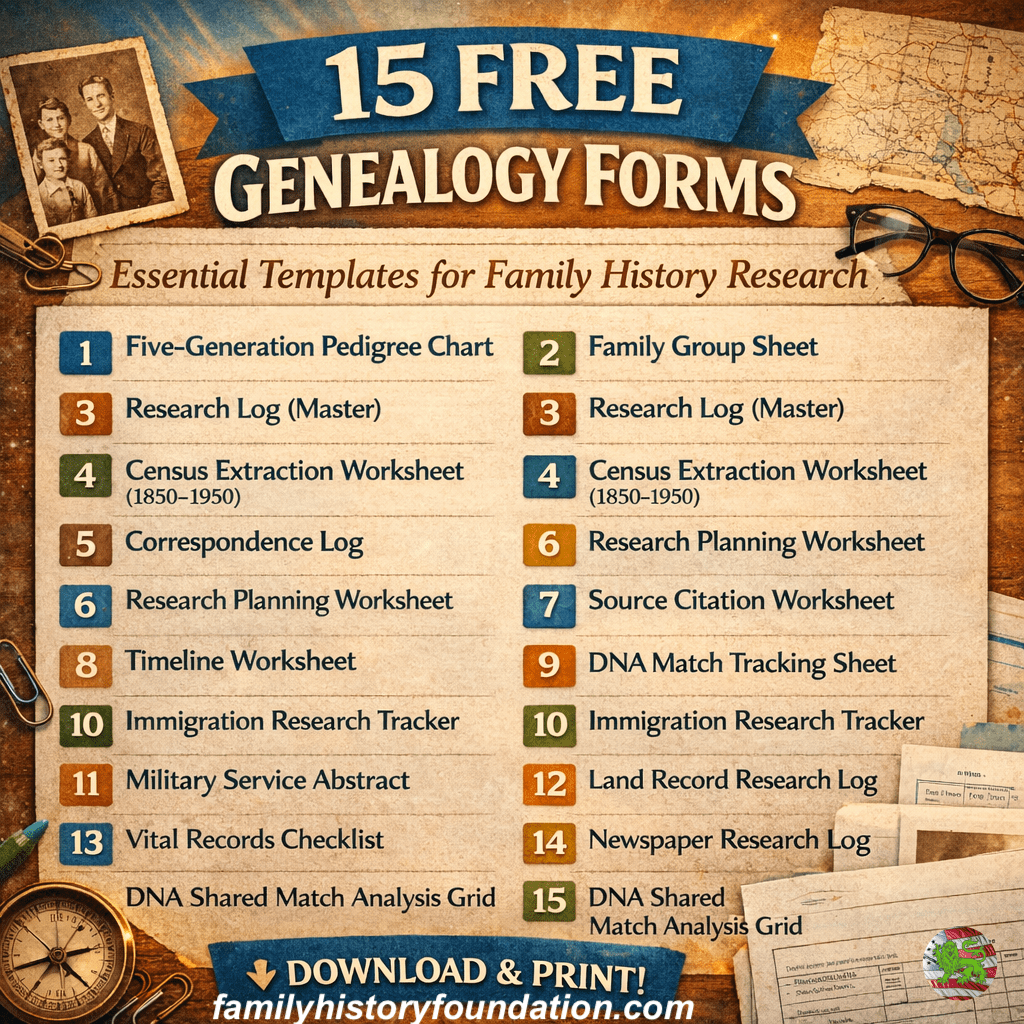
Understanding the 15 Free Genealogy Forms in Your Bundle 📚
Let me walk you through each template in this collection of genealogy forms and explain exactly when and how to use it effectively. These aren’t just pretty forms to print out—each one solves a specific research challenge I’ve encountered over 20 years of archival work.
Form #1: Five-Generation Pedigree Chart
This is your family tree’s roadmap, showing your direct ancestors across five generations (you, parents, grandparents, great-grandparents, and great-great-grandparents—that’s 31 individuals total).
When to use it: Start every research session by updating your pedigree chart. It shows you at a glance which ancestral lines are well-documented and which need work. I recommend printing a fresh copy quarterly to see your progress visually.
Pro tip: Use different colored pens to indicate confidence levels. Green for fully documented ancestors with multiple verified sources, yellow for probable but not proven, red for “brick wall” ancestors who need intensive research.
The five-generation format is particularly useful because it captures the genealogical sweet spot—recent enough that you might have living relatives who remember these people, but distant enough to require serious archival research. This is one of the most essential free forms in your entire toolkit.
Form #2: Family Group Sheet
This form documents one nuclear family: a couple and all their children. It’s the fundamental building block of genealogical research and one of the most important free genealogy forms you’ll use regularly.
When to use it: Create a family group sheet for every married couple in your tree. This form captures details that pedigree charts miss—like all siblings, multiple marriages, and children who died young.
Why it matters: Family group sheets reveal patterns that solve difficult cases. When you document all children in a family, you might discover that your ancestor had siblings who migrated to the same location, left probate records, or appear as witnesses on crucial documents.
I once broke through a 30-year brick wall by documenting all siblings on a family group sheet and discovering that my ancestor’s younger brother left detailed letters that mentioned the entire family’s immigration story. Without using these forms systematically, I never would have made that connection.
Form #3: Research Log (Master)
This is your research diary, documenting every single source you check, whether you find relevant information or not. Among all the free research forms in this bundle, the research log might be the single most important for preventing wasted time.
When to use it: Fill this out in real-time as you research, not after the fact. Every time you search a database, check a microfilm, or request a document from an archive, record it immediately.
Critical fields: Make sure you record not just what you found, but the specific search terms you used, date ranges you checked, and negative results. “Searched 1850 census for John Smith in Ohio counties—NOT FOUND” is valuable information that prevents you from searching the same source again.
Research logs are especially crucial for genealogy research online when you’re searching multiple databases across different platforms. Without these essential genealogy forms, you’ll forget which Ancestry.com collections you’ve already exhausted and which remain unexplored.
Form #4: Census Extraction Worksheet (1850-1950)
Census records are genealogical gold mines, but only if you extract all the information they contain—not just the obvious details about your ancestor. This is one of the most specialized genealogy research forms that dramatically improves the quality of information you capture.
Why only 1850-1950? Well, that’s because the 1850 census was the first to include biographical information as a part of the enumeration. Information such as, occupation, place of birth, marriage, education, etc. The first US Census was in 1790.
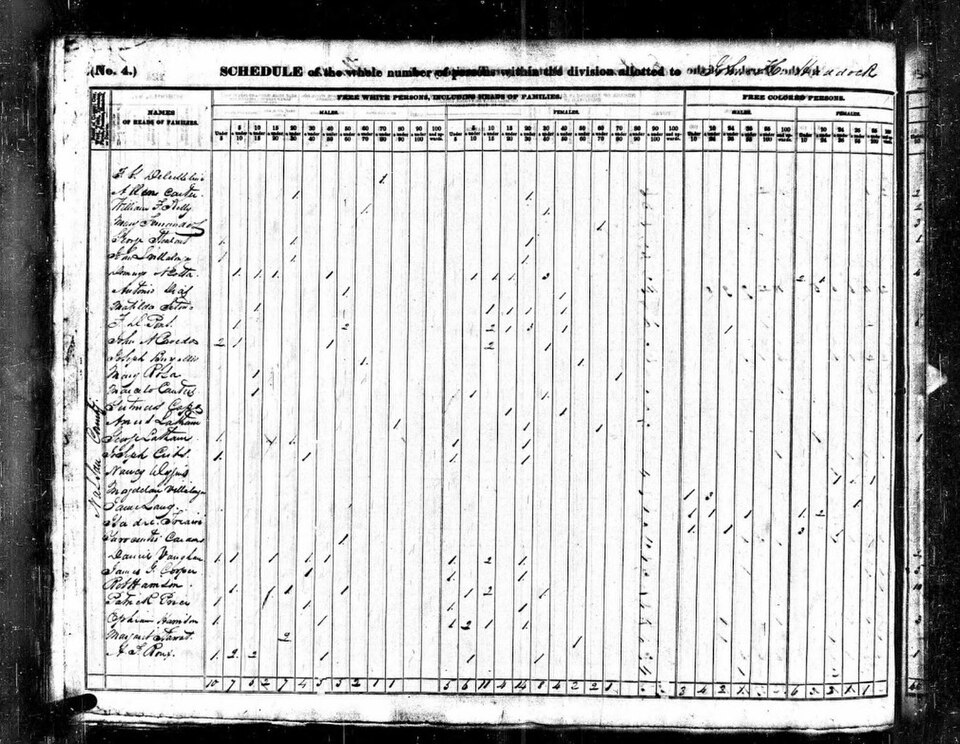
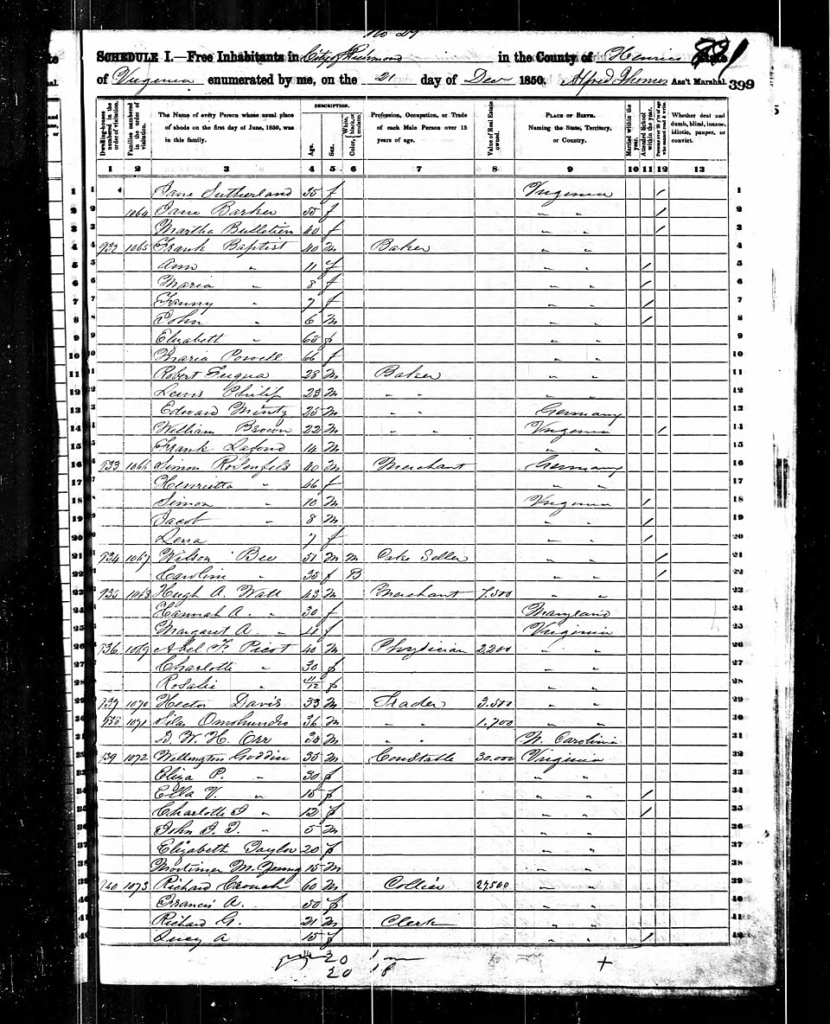
When to use it: Every time you find your ancestor in a census record, print this form and systematically record every single field, including information that seems irrelevant right now.
Hidden gold: The “neighbors” section often reveals relatives who lived nearby but had different surnames (married daughters, in-laws, siblings). The occupation and property values provide socioeconomic context. Immigration and naturalization years narrow your search for arrival records.
One of my biggest breakthroughs came from noting that my ancestor’s neighbor in the 1870 census shared the same rare surname of my great-great grandfather. Further research revealed they were siblings who lived next to one another and because one of the spouses died, they were taking care of each other—a connection I would have missed without systematic census extraction using my genealogy forms.
Form #5: Correspondence Log
When you request records from county clerks, write to distant cousins, or contact archives, you need a system to track who you contacted, when, what you requested, and what response you received. This correspondence tracker is among the most practical of the genealogy forms for managing ongoing research projects.
When to use it: Immediately after sending any genealogical correspondence. I keep a running correspondence log in a binder and reference it weekly to follow up on overdue responses.
Why it’s essential: Archives can take months to respond. Without a correspondence log among your genealogy forms, you’ll forget what you requested, send duplicate requests that annoy archivists, or miss follow-up deadlines.
I maintain separate correspondence logs for document requests and family contacts because they require different follow-up timelines and strategies. This is very important for my records, especially for research requests I’ve made in the “home countries.”
Form #6: Research Planning Worksheet
Before you start randomly clicking through databases, this form helps you formulate a specific research question and identify the most promising sources to answer it. This is one of the strategic forms that transforms haphazard searching into focused investigation.
When to use it: At the start of any new research project or when you’re stuck on a brick wall. Force yourself to articulate exactly what you’re trying to discover and which records are most likely to contain that information.
Example: Instead of “find information about John Smith,” a proper research question is: “What was John Smith’s place of birth, given that the 1870 census lists him as born in Tennessee but the 1900 census says Indiana?”
This focused approach prevents the genealogical rabbit hole where you spend six hours reading about someone else’s ancestor because they shared your ancestor’s name. Among all the free genealogy forms in this bundle, the planning worksheet might save you the most time.
Form #7: Source Citation Worksheet
Proper source citation is what separates professional genealogy from amateur guesswork. This form helps you capture all necessary citation elements while you’re viewing a document, making it one of the most academically important family history forms you’ll use.
When to use it: While viewing any original source, whether online or in an archive. Capture citation details in real-time, because you won’t remember them later.
Essential elements: Author, title, publication information, repository location, specific item information (page, frame, image number), and the date you accessed it. For digital sources, include the full URL and database name.
Many genealogists are shocked to learn that “found on Ancestry” isn’t a valid source citation. Ancestry.com hosts thousands of different collections, each requiring specific citation elements to allow others to verify your work. These citation free family history forms forms ensure you get it right the first time.
Form #8: Timeline Worksheet
This form plots your ancestor’s life chronologically, incorporating every documented event: birth, migration, marriage, children’s births, property transactions, military service, death. Timeline worksheets are among the most analytical of the forms because they reveal logical impossibilities in your research.
When to use it: When you have scattered information about an ancestor but need to see their life story as a coherent narrative. Timelines reveal gaps in your knowledge and impossible scenarios (like a child born before their mother was born—it happens in poorly researched trees).
Pattern recognition: When you map everything chronologically, you’ll spot research opportunities. If your ancestor appears in Virginia in 1845 and North Carolina in 1847, focus your migration research on 1846 specifically. If there’s a 10-year gap between children, search death records for infant mortality or widow remarriage records.
I use timeline worksheets among my research forms for complex DNA research cases where I need to understand whether two people with similar names could be the same individual or are separate people living in different time periods.
Form #9: DNA Match Tracking Sheet
If you’ve taken an autosomal DNA test through Ancestry, 23andMe, or uploaded to GEDmatch, this form helps you organize your closest matches and identify shared ancestors. This is one of the most specialized family history forms for genetic genealogy.
When to use it: As soon as you receive DNA results. Record your top 20-50 closest matches with their usernames, shared centimorgans, predicted relationship, surname lists, and ancestral locations.
Clustering strategy: Group matches who share DNA with each other to identify which ancestral line they connect through. This form includes columns for match clusters, making it easier to spot which matches descend from common ancestral couples.
For adoptees and those with unknown parentage, this DNA tracking sheet is absolutely critical among all the free genealogy forms. It’s the foundation for mirror tree construction and targeted research to identify biological parents through genetic genealogy.
Form #10: Immigration Research Tracker
Finding your ancestor’s immigration record requires checking multiple databases, time periods, and name variations. This form keeps track of what you’ve searched and what remains to explore, making it one of the most comprehensive free forms for immigrant ancestry research.
When to use it: When you know your ancestor was born abroad but haven’t located their specific arrival record. Works for both 19th-century Ellis Island immigration and earlier colonial arrivals.
Search strategy: Document every passenger list database searched, name variations tried, traveling companions checked, and negative results recorded. Include both direct immigration records and alternative sources like naturalization papers that provide arrival information.
One hypothetical researcher spent five years searching for their Italian ancestor’s Ellis Island record under the surname “Romano” without success. Using this systematic form among their genealogy, they discovered the name was transcribed as “Romana” on the ship manifest—a find that took 15 minutes once they methodically documented what they’d already searched. Easy peasy!
Form #11: Military Service Abstract
Military records often contain unexpected genealogical gold: birthplaces, physical descriptions, family members listed as beneficiaries, and service locations that explain migration patterns. This is one of the most information-rich free genealogy templates for ancestors who served.
When to use it: For any ancestor who served in military forces. This form works for Revolutionary War, Civil War, WWI, WWII, and later service records.
Beyond the basics: Record not just service dates and units, but pension applications (which often name wives and children), bounty land applications, disability claims, and military hospital records. Many genealogists check service records but miss the pension files that contain family information.
I discovered my great-great-great-grandfather’s birthplace through his Civil War pension application after his census records gave conflicting information. The pension record required proof of identity and included his exact birth date and location verified by affidavits from family members and his Civil War claims testimonials. Without using these free templates systematically, I might never have triangulated all of these files.
Form #12: Land Record Research Log
Property records reveal wealth, migration patterns, family relationships (who witnessed deeds?), and exact locations where ancestors lived. This is one of the more specialized family history forms but incredibly valuable for pre-census era research.
When to use it: When researching ancestors who owned property or homesteaded land. This form tracks deed searches across multiple counties and time periods.
Hidden relationships: Land records often identify relatives who aren’t obvious from other sources. Who sold the land? Who bought it? Who witnessed the transaction? Property boundaries described as “adjacent to John Smith’s property” might reveal a previously unknown family connection.
Land records are particularly valuable for pre-1850 research when census records didn’t name all household members. A deed listing a wife’s name might be your only documentary evidence of your ancestor’s marriage before state vital records began. These free genealogy forms ensure you capture every relationship detail.
Form #13: Vital Records Checklist
Birth, marriage, and death records are foundational sources, but tracking which jurisdictions you’ve checked and which time periods require more research can become overwhelming. This checklist is one of the most systematic forms for ensuring thorough coverage.
When to use it: At the start of research on any individual to ensure you’ve systematically checked all vital records. Don’t assume that because you haven’t found a record, it doesn’t exist—it might be filed under a variant name or in an unexpected jurisdiction.
Jurisdiction complications: Remember that vital records are filed at different governmental levels depending on time period and location. Some states didn’t require statewide registration until the 1900s or later, making county-level searches essential for earlier time periods.
This checklist among your free genealogy forms prevents the common mistake of searching only state-level databases when the records you need are maintained by individual counties or cities.
Form #14: Newspaper Research Log
Historical newspapers contain obituaries, marriage announcements, legal notices, society columns, and sometimes unexpected mentions that provide valuable biographical information. This is one of the most underutilized sources but offers tremendous research value.
When to use it: When you need to locate biographical information that doesn’t appear in official records. Newspapers are particularly valuable for the 1880-1950 time period when coverage was extensive.
Strategic searching: Document which newspaper archives you’ve searched (Newspapers.com, Chronicling America, state-specific digitized collections), date ranges covered, search terms used, and whether you’ve browsed obituary pages manually (since OCR often misreads 19th-century typefaces).
I found a detailed obituary for my ancestor that listed all surviving children, a touching biography, as well as his occupation, birthplace, and the reason he ended up in California—information that didn’t appear in any other source and would have remained unknown without systematic newspaper research using these amazing forms.
Form #15: DNA Shared Match Analysis Grid
This advanced form helps you determine how multiple DNA matches relate to each other and identify common ancestral couples through triangulation. This is the most technically complex among the reference forms but essential for serious genetic genealogy.
When to use it: When you have multiple DNA matches at the 2nd-4th cousin level but aren’t sure how they connect to your tree. This grid visualizes which matches share DNA with each other, revealing distinct family lines.
Triangulation technique: List your top matches along both axes of the grid, then mark which ones share DNA with each other. Clusters of matches who all share DNA with each other likely descend from common ancestors, helping you target your research.
For complex cases involving unknown parentage, this form is essential among all the family history forms for separating maternal from paternal matches and identifying specific ancestral lines within each cluster.
Your Family History Legacy Starts With Genealogy Forms 📖
These professionally designed forms are ready to download, print, and use immediately. Each form is formatted as a letter-size (8.5″ x 11″) PDF that prints clearly on standard home printers.
Access options: I’ve made these free genealogy forms available in two formats:
Individual downloads: If you only need specific forms among the free genealogy forms collection, download them one at a time to avoid cluttering your computer with templates you won’t use immediately.
Complete bundle ZIP file: For researchers who want the entire collection of free genealogy forms, download all 15 forms at once in a single compressed folder.
Printing recommendations: For free genealogy forms you’ll use repeatedly (like research logs and census worksheets), print multiple copies and keep them in a three-ring binder organized by ancestor or family line. For structural forms like pedigree charts and family group sheets, print on cardstock or heavier paper—they’ll last longer and feel more substantial.
Digital vs. paper workflow: Many genealogists use a hybrid approach with these free genealogy forms. Keep blank forms on your computer and fill them in digitally using Adobe Reader or Preview for research planning and correspondence logs. Print and handwrite census extraction and timeline worksheets while viewing original documents, then scan completed forms into your digital filing system.
The beauty of genealogy forms is their flexibility. Unlike proprietary software that locks you into specific workflows, these PDF templates adapt to your personal research style.
🎯 Fun Quiz: Which Free Genealogy Forms Do You Need Right Now?
Let’s figure out which templates from your new bundle of genealogy forms should be the first ones you put to work! Answer these questions honestly—no judgment, just strategic insight into your research needs.
Question 1: What’s your biggest genealogical frustration right now?
A) I keep researching the same sources repeatedly because I forget what I’ve already checked
B) I have random names and dates but can’t see how they connect into family groups
C) I found my ancestors in census records but didn’t record all the details
D) I have DNA matches but no idea how to organize them or figure out how we’re related
Question 2: When someone asks about your family tree, you usually say:
A) “I have a lot of information but it’s kind of scattered everywhere”
B) “I know my parents and grandparents, but I’m not sure how to go further back”
C) “I found tons of records but I’m not sure what information is actually important”
D) “I took a DNA test and got hundreds of matches but I’m totally overwhelmed”
Question 3: Your current research organization system consists of:
A) Screenshots in random folders, bookmarks I can’t remember, and notes I can’t read
B) A few names written down but no systematic structure
C) Copies of documents without any notes about why they matter
D) A list of DNA matches with no analysis or context
Question 4: What would make the biggest immediate difference in your research?
A) Knowing exactly what I’ve already searched so I stop wasting time
B) Seeing my family structure clearly so I can identify research gaps
C) Having a system to extract every detail from the sources I find
D) Understanding which DNA matches connect to which family lines
Question 5: How do you currently take research notes?
A) I tell myself I’ll remember later (spoiler: I don’t)
B) I jot down names and dates without much structure
C) I save documents but don’t analyze what they actually prove
D) I screenshot DNA match pages and hope I’ll organize them eventually
Quiz Results: Your Perfect Starting Forms from the Genealogy Forms Bundle
Mostly A’s – Start with Form #3: Research Log
Your biggest challenge is research inefficiency caused by poor tracking. The Research Log among these free genealogy forms will immediately prevent duplicate searches, help you identify patterns in what you’ve found (and haven’t found), and create a searchable record of your entire research process. Begin using this form from the genealogy forms collection TODAY before you search anything else. Within two weeks, you’ll wonder how you ever researched without it.
Mostly B’s – Start with Form #1: Five-Generation Pedigree Chart & Form #2: Family Group Sheets
You need structural organization before anything else. Print a pedigree chart from the genealogy forms bundle and fill in everything you know, using different colors to indicate confidence levels. Then create family group sheets for each couple on your chart. These visual frameworks from the family history forms collection will reveal exactly where your knowledge gaps are and which family lines need priority research. These forms transform scattered information into coherent family structures.
Mostly C’s – Start with Form #4: Census Extraction Worksheet
You’re finding sources but not extracting their full value. The Census Extraction Worksheet in this research forms bundle forces you to record every single detail systematically—including information that seems irrelevant now but might solve a problem later. Going forward, never view a census record without this form from the downloaded collection open beside you. Apply the same thorough extraction approach to every source type, and you’ll discover information you’ve been overlooking.
Mostly D’s – Start with Form #9: DNA Match Tracking Sheet & Form #15: Shared Match Analysis Grid
DNA without organization is just data without meaning. Begin by systematically recording your top 50 closest matches using the tracking sheet from the free genealogy forms bundle, noting shared centimorgans, predicted relationships, and surname lists. Then use the analysis grid from the free genealogy forms to identify which matches share DNA with each other—these clusters point toward specific ancestral couples. For DNA research, systematic documentation using free genealogy forms isn’t optional—it’s the only way to make sense of complex genetic relationships.
Mixed results? You need multiple forms from the free genealogy forms collection working together as a system! Start with whichever category scored highest, then layer in the other free genealogy forms progressively. Most successful genealogists use 5-7 different forms from their free genealogy forms collection regularly depending on the specific research question they’re tackling.
Advanced Strategies: Making These Free Genealogy Forms Work Together as a System 🔄
Now that you understand each individual template among the free genealogy forms, let’s talk about how professional genealogists combine them into an integrated research methodology that produces breakthrough results.
The Research Cycle: How Free Genealogy Forms Build on Each Other
Professional genealogy isn’t random searching—it’s a systematic cycle of planning, searching, recording, analyzing, and planning again. Here’s how these free genealogy forms support each phase:
Phase 1: Research Planning starts with the Research Planning Worksheet from the free genealogy forms bundle. Articulate a specific question (not “find information about John” but “identify John Smith’s parents given that he was born circa 1820 in Ohio”). This focused question determines which sources you’ll search.
Phase 2: Source Identification uses the Vital Records Checklist, Census Extraction Worksheet headers, and Newspaper Research Log from the free genealogy forms collection to identify which specific sources might answer your question. Before searching, list the most promising sources and why you expect them to contain relevant information.
Phase 3: Systematic Searching employs the Research Log from the free genealogy forms bundle to document every source checked, search terms used, and results found (including negative results). This prevents duplicate work and creates a searchable record of your entire research process.
Phase 4: Information Extraction applies source-specific forms from the free genealogy forms like Census Extraction Worksheets and Military Service Abstracts to systematically capture every detail from sources you locate. Use the Source Citation Worksheet from the free genealogy forms to record complete citation information while the document is in front of you.
Phase 5: Analysis and Correlation combines Timeline Worksheets from the free genealogy forms (to spot impossible scenarios or revealing gaps) with Family Group Sheets (to reveal family patterns) and DNA analysis grids from the free genealogy forms (to confirm or challenge documentary evidence through genetic correlation).
Phase 6: Documentation and Conclusions updates your Pedigree Chart from the free genealogy forms and creates comprehensive Family Group Sheets that incorporate all verified information with proper source citations. Your free genealogy forms now tell a complete, documented story rather than displaying random facts.
Then the cycle repeats: your analysis reveals new questions, which triggers new research planning using the free genealogy forms, which identifies new sources to search, which you document systematically, which you analyze for patterns, which reveals more questions…
This isn’t busywork—it’s how professional genealogists make steady progress on even the most difficult research questions using systematic free genealogy forms.
Case Study: Using Multiple Free Genealogy Forms to Break Through a Brick Wall
Let me show you how this system of free genealogy forms works in practice. Using a hypothetical research example, this person had been stuck for five years trying to identify the parents of Sarah Johnson, born circa 1835 in Pennsylvania. She knew Sarah married William Davis in 1853 and had eight children, but couldn’t trace Sarah’s origins.
Step 1: Research Planning Worksheet from the free genealogy forms articulated the specific question: “Who were Sarah Johnson’s parents, given that she was born approximately 1835-1838 in Pennsylvania and married William Davis in 1853?”
Step 2: Timeline Worksheet from the free genealogy forms plotted every known event in Sarah’s life, revealing a crucial gap: Sarah appeared in the 1850 census in Pennsylvania but not with parents—she was working as a domestic servant in another family’s household.
Step 3: Research Log from the free genealogy forms documented systematic searching of Pennsylvania marriage records for Sarah Johnson (found the 1853 marriage to William), census searches for Johnson families in the same township (found three candidate families), and church record searches (found baptism records for several Sarah Johnsons).
Step 4: Census Extraction Worksheet from the free genealogy forms for the 1850 census revealed that Sarah was enumerated just three households away from Thomas and Mary Johnson, ages consistent with being her parents. The extraction form captured this proximity data that casual review would have missed.
Step 5: Family Group Sheet from the free genealogy forms for Thomas and Mary Johnson showed they had a daughter Sarah born circa 1836 according to age progression across multiple censuses. The sheet also documented two sons named John and James.
Step 6: Correspondence Log from the free genealogy forms tracked a letter sent to the county historical society requesting information about the Johnson family. They responded with a family Bible record that definitively connected Sarah to Thomas and Mary.
Step 7: DNA Match Tracking Sheet from the free genealogy forms (the person had tested on Ancestry) revealed several matches who descended from Thomas Johnson through his sons John and James—genetic confirmation that Sarah was indeed their sister.
The breakthrough didn’t come from one form—it came from the systematic use of multiple free genealogy forms working together as an integrated research system. The Timeline Worksheet from the free genealogy forms revealed the gap that needed explanation. The Census Extraction Worksheet from the free genealogy forms captured the proximity data. The Family Group Sheet organized the family structure. The DNA analysis from the free genealogy forms provided genetic confirmation.
That’s a potential five years of frustration solved in three weeks of systematic work using free genealogy forms as an integrated methodology. You get the picture!
Special Section: Free Genealogy Forms for Adoptees and Unknown Parentage Searches 🧬
As someone who found my biological family starting from nothing but a false birth certificate, I want to address how these free genealogy forms specifically support adoptee searches and unknown parentage cases.
Traditional genealogy assumes you know your parents and can work backward through generations. Adoptee search works differently—you’re building your tree forward from DNA matches who are often distant cousins, not immediate family.
Modified Form Usage for Adoptee Search
DNA Match Tracking Sheet from the free genealogy forms becomes your foundation. Instead of supplementing documentary research, DNA matches ARE your primary sources. Record every match with 50+ shared centimorgans, noting their username, shared DNA amount, predicted relationship, surnames in their tree, and ancestral locations.
Shared Match Analysis Grid from the free genealogy forms identifies ancestral couples. Find matches who share DNA with each other (shared matches), cluster them into groups, and build mirror trees for the common ancestors those clusters descend from. These ancestral couples are YOUR ancestors too—you just need to figure out the specific descent path.
Research Planning Worksheets from the free genealogy forms articulate genetic questions. Instead of “who were John Smith’s parents,” adoptee questions are “which ancestral couple in my Match Cluster A connects me to my biological father’s line?” This targeted approach prevents the overwhelming paralysis many adoptees feel when facing DNA results.
Pedigree Charts from the free genealogy forms map possibilities, not certainties. In adoptee research, your pedigree chart might show “Unknown Father” with several hypothetical candidates beneath it, each supported or eliminated by different DNA evidence. Use color-coding extensively to track which lines are proven vs. hypothetical.
Timeline Worksheets from the free genealogy forms establish possible vs. impossible scenarios. If a DNA match’s family tree shows their common ancestral couple died before your birth parent was conceived, they can’t be direct ancestors—they’re collateral relatives pointing toward a sibling line. Timelines from the free genealogy forms keep you grounded in what’s actually possible.
For more detailed guidance on using DNA to find biological family, the forms in this free genealogy forms bundle provide the organizational infrastructure that makes genetic genealogy manageable instead of overwhelming.
How These Free Genealogy Forms Complement Your Existing Software and Subscriptions 💻
Many researchers ask whether they still need these free genealogy forms if they’re using genealogy software like Ancestry, FamilySearch, or dedicated programs like RootsMagic or Legacy Family Tree.
The answer is yes—these free genealogy forms serve different purposes than software and actually make your digital research more effective. Plus, they make great gifts!
What Software Does Well vs. What Free Genealogy Forms Do Better
Genealogy software excels at:
- Storing large amounts of data in searchable databases
- Generating automatic pedigree and descendancy charts
- Identifying potential errors like impossible birth dates
- Sharing trees with other researchers online
- Backing up your research digitally
These free genealogy forms excel at:
- Planning research before you start searching randomly
- Extracting complete information from complex sources
- Tracking negative search results (what you didn’t find)
- Analyzing patterns across multiple sources
- Working in archives without computer access
Think of software as your research storage system and these free genealogy forms as your research process tools. You’ll extract information using free genealogy forms, analyze it on paper or PDF, then enter verified data into your software for long-term storage.
The Optimal Workflow: Free Genealogy Forms First, Software Second
Here’s how experienced genealogists integrate both approaches using free genealogy forms:
At the archive or library: Use printed Research Logs from the free genealogy forms to document what you’re searching, Census Extraction Worksheets to capture every detail from original records, and Source Citation Worksheets to record complete citations. You can’t always access your genealogy software while using microfilm readers or handling fragile documents.
During analysis: Spread out Family Group Sheets, Timeline Worksheets, and DNA analysis grids from the free genealogy forms on a large table to see patterns that aren’t visible on a computer screen. Physical free genealogy forms let you literally see the big picture and make connections that scrolling through software screens would miss.
After verification: Enter your verified information into your genealogy software with complete source citations, attaching scans of your completed free genealogy forms as documentation of your analytical process.
For research planning: Fill out the Research Planning Worksheet from the free genealogy forms before logging into Ancestry.com. This focused approach prevents the subscription time-wasting habit of clicking interesting hints without systematic methodology.
The free genealogy forms don’t replace your Ancestry subscription or FamilySearch account—they make your use of those resources dramatically more effective by imposing methodology on your searching and documentation on your findings.
A Note About Merging Duplicate Ancestors
If you’ve been researching without systematic free genealogy forms, you might have duplicate entries for the same ancestors across your tree or conflicting information from inadequately documented sources. Before you merge duplicates in your genealogy software, use these free genealogy forms to systematically document which sources support which version of events.
Create a Family Group Sheet from the free genealogy forms for each duplicate version, noting every source citation. Build a Timeline Worksheet from the free genealogy forms that plots all events chronologically. This analysis will reveal which version is correct and which information needs to be discarded—preventing you from merging incorrect data and corrupting your tree.
Maximizing Your Research Efficiency with Free Genealogy Forms 📊
Beyond individual form usage, let’s discuss strategic approaches to maximize the value you get from these free genealogy forms in your daily research practice.
Creating a Personal Research Station
Set up a dedicated genealogy workspace where your free genealogy forms are always accessible. Many successful researchers keep a three-ring binder system with tabbed sections for different form types from the free genealogy forms collection.
Section 1: Active Research contains blank copies of frequently-used free genealogy forms (Research Logs, Census Extraction Worksheets, Source Citation forms) that you can grab immediately when starting a research session.
Section 2: Completed Forms by Ancestor organizes filled-out free genealogy forms by family line. All research relating to your paternal grandfather’s family goes in one section, maternal grandmother’s line in another, etc.
Section 3: Reference Materials holds completed Pedigree Charts and master Family Group Sheets from the free genealogy forms that show your current research status at a glance.
This organizational system ensures your free genealogy forms are working tools, not forgotten downloads buried in computer folders.
Weekly Research Routine Using Free Genealogy Forms
Establish a consistent research practice centered around these free genealogy forms:
Monday: Research Planning – Spend 30 minutes with the Research Planning Worksheet from the free genealogy forms identifying this week’s research goal and which sources you’ll check.
Tuesday-Thursday: Active Searching – Conduct database searches, always documenting in your Research Log from the free genealogy forms and using appropriate extraction worksheets when you find sources.
Friday: Analysis and Documentation – Review the week’s findings, update Timeline Worksheets and Family Group Sheets from the free genealogy forms, and identify gaps that suggest next week’s research direction.
Saturday: Correspondence – Send record requests and contact distant relatives, documenting everything in your Correspondence Log from the free genealogy forms.
Sunday: Review and Reflection – Update your master Pedigree Chart from the free genealogy forms to visualize progress and plan next steps.
This systematic approach using free genealogy forms prevents the scattered, unfocused research sessions that waste time and produce minimal results.
Adapting Free Genealogy Forms for International Research
While these free genealogy forms were designed primarily for U.S. research, they adapt easily to genealogical work in other countries.
UK Research: The Census Extraction Worksheet from the free genealogy forms works perfectly for UK census records (which actually contain MORE genealogical detail than U.S. censuses in some years). Simply add fields for “Relation to Head of Household” and parish information.
For researchers working with British ancestry, the Research Log and Family Group Sheets from the free genealogy forms are identical in structure—only the specific sources you’re tracking change.
Canadian Research: The immigration tracking forms from the free genealogy forms adapt well to Canadian border crossing records and naturalization documents. Add fields specific to Canadian archives and provincial jurisdictions.
European Research: Timeline Worksheets and Family Group Sheets from the free genealogy forms are universal. The source-specific extraction forms need adaptation for different record formats, but the methodology of systematic extraction using free genealogy forms remains constant.
The beauty of free genealogy forms is their flexibility—they’re methodology tools, not rigid templates. Adapt them to serve your specific research needs.
Troubleshooting Common Problems with Free Genealogy Forms 🔧
Even with the best free genealogy forms, researchers encounter common challenges. Here’s how to overcome them:
Problem: “I fill out forms but then never look at them again”
Solution: Schedule weekly review sessions where you read through completed free genealogy forms from the previous week. You’ll spot patterns and connections that weren’t obvious during initial data entry. Many breakthrough discoveries come from reviewing old forms from the free genealogy forms collection with fresh eyes.
Problem: “I have too many forms and can’t keep them organized”
Solution: Don’t print every form from the free genealogy forms bundle. Start with 3-4 essential forms and use them consistently for three months before adding more. Quality of use matters more than quantity of forms. Most genealogists need just 5-7 forms from the free genealogy forms collection in regular rotation.
Problem: “I forget to use the forms when I’m excited about a new find”
Solution: Create a research checklist that reminds you to grab the appropriate form from the free genealogy forms before viewing any source. Place this checklist on your computer monitor or in the front of your research binder. Within a few weeks, using free genealogy forms systematically becomes automatic habit.
Problem: “The forms feel like busywork that slows me down”
Solution: You’re not experiencing slowdown—you’re experiencing thoroughness. The “speed” of unsystematic research is illusory because you’ll duplicate work, miss crucial details, and waste far more time correcting mistakes. Using free genealogy forms might take 5 extra minutes per source initially, but saves hours of duplicate searching later.
Problem: “I don’t know which form from the free genealogy forms collection to use for this source”
Solution: When in doubt, use the Research Log from the free genealogy forms to document that you checked the source, and the Source Citation Worksheet from the free genealogy forms to record where you found it. Those two forms work for absolutely any source type. Add specialized extraction forms from the free genealogy forms as you gain experience.
Frequently Asked Questions About Free Genealogy Forms 📌
Q: Do I really need to fill out all these free genealogy forms, or can I just use the ones that seem most relevant?
Start with 3-4 core forms from the free genealogy forms collection: Pedigree Chart, Family Group Sheets, Research Log, and whichever source-specific extraction form matches what you’re currently researching. Add other free genealogy forms as your research complexity increases. The key is using forms systematically rather than trying to implement everything at once.
Q: Should I fill these free genealogy forms out by hand or digitally on my computer?
Both approaches work with free genealogy forms, and most researchers use a hybrid system. Research planning and correspondence logs from the free genealogy forms work well digitally in editable PDFs. Source extraction forms from the free genealogy forms (census, military, vital records) often work better printed and handwritten while viewing original documents—you can’t always bring your laptop into archives, and handwriting while viewing microfilm is faster than typing.
Q: How long do I need to keep these completed free genealogy forms?
Forever, or at least as long as you’re actively researching. These completed free genealogy forms ARE your research documentation. They prove where you found information, what analytical reasoning you used, and which sources you’ve already exhausted. Even after entering information into genealogy software, keep the original free genealogy forms as evidence of your research process.
Q: Can I modify these free genealogy forms to fit my specific research needs?
Absolutely! These free genealogy forms provide a starting framework, but genealogical research varies by time period, location, and record availability. If you’re researching primarily in Canadian records, you might modify the Census Extraction Worksheet from the free genealogy forms for Canadian census formats. The methodology behind using free genealogy forms matters more than rigid adherence to specific form layouts.
Q: What’s the difference between these free genealogy forms and the ones available on FamilySearch or Ancestry?
These free genealogy forms are specifically designed around the source-first methodology I’ve developed over 20 years of professional research. They emphasize complete source citation, systematic tracking of negative results, and integration with DNA analysis—elements often missing from generic forms. Additionally, these free genealogy forms are optimized for modern hybrid workflows where you might be working both digitally and with paper documents.
Q: Do these free genealogy forms work for genealogy research outside the United States?
The research methodology behind these free genealogy forms is universal, though specific source types vary by country. The Research Log, Family Group Sheets, Pedigree Charts, Timeline Worksheets, and DNA analysis forms from the free genealogy forms work regardless of geographic location. The source-specific forms from the free genealogy forms (census, vital records, immigration) might need adaptation for different record formats.
Q: I’m already paying for Ancestry.com—why do I need separate free genealogy forms?
Ancestry is a search platform and database, not a research methodology system. You can spend years clicking on Ancestry hints without developing systematic research skills or building a provably accurate tree. These free genealogy forms impose methodology on your searching—they ensure you’re extracting complete information, documenting what you don’t find, planning research strategically, and analyzing sources critically. Software stores data; free genealogy forms create research discipline.
Q: How do I organize multiple completed free genealogy forms for different family lines?
Use a binder system with tabs for each ancestral surname or couple. Within each section, organize your completed free genealogy forms chronologically by research date or by source type. Some researchers prefer digital organization using folders named for ancestors with scanned PDFs of completed free genealogy forms filed inside. Choose whichever system you’ll actually maintain consistently.
Q: Can I share these free genealogy forms with my genealogy research group or family members?
Yes! These free genealogy forms are designed to be shared freely. If you’re collaborating with cousins on shared ancestral lines, using the same free genealogy forms creates consistency in documentation and makes it easier to compare findings. Research groups benefit from standardized free genealogy forms because they establish common citation standards and analytical frameworks.
Q: What if I’ve been researching for years without using free genealogy forms—is it too late to start?
It’s never too late to implement free genealogy forms! Start by creating Pedigree Charts and Family Group Sheets for what you’ve already discovered, which will reveal gaps in your documentation. Then use Research Logs from the free genealogy forms going forward to track new searches. You don’t need to retroactively document every search you’ve ever done—just begin using free genealogy forms from this point forward.
Q: Are there specific free genealogy forms that work better for researching British ancestors or other international research?
The core organizational free genealogy forms (Pedigree Charts, Family Group Sheets, Research Logs, Timeline Worksheets) work universally. Source-specific forms from the free genealogy forms like the Census Extraction Worksheet can be adapted for UK census formats, which include different fields than US censuses. The methodology of systematic extraction using free genealogy forms applies regardless of which country’s records you’re researching.
Q: How can these free genealogy forms help me avoid duplicate ancestors in my tree?
Timeline Worksheets and Family Group Sheets from the free genealogy forms make it immediately obvious when you’re tracking the same person twice—the events and family relationships will be identical or impossibly similar. Systematic Research Logs from the free genealogy forms prevent accidentally researching the same individual under variant name spellings without realizing they’re the same person.
Q: I found my ancestor in a census but didn’t record complete information—should I go back and use the extraction form from the free genealogy forms?
Yes, if that ancestor is crucial to your research. Census records contain far more information than just names and ages. The occupation, property values, literacy status, years of immigration, and especially the neighbors can provide breakthrough clues. Use the Census Extraction Worksheet from the free genealogy forms to systematically revisit the record and capture everything.
Taking Action: Your First Steps with These Free Genealogy Forms 🚀
You’ve read this far, which means you’re serious about transforming your genealogical hobby into a documented family legacy using free genealogy forms. Here’s exactly what to do next.
Step 1: Download the complete bundle of free genealogy forms right now. Don’t tell yourself you’ll “do it later”—later never comes. Download all 15 free genealogy forms while you’re thinking about it. Save them to a dedicated folder on your computer labeled “Genealogy Forms” so you can find your free genealogy forms easily.
Step 2: Print your starter set of free genealogy forms immediately. Based on the quiz results earlier, print 3-5 copies each of your priority free genealogy forms. Don’t wait until you “need” them—having blank free genealogy forms ready means you’ll actually use them instead of scribbling notes on random paper.
Step 3: Complete one Pedigree Chart from the free genealogy forms before the end of today. Fill in everything you currently know, using different colored pens to show confidence levels. This visual snapshot from the free genealogy forms reveals exactly where you stand right now and which ancestral lines need the most work.
Step 4: Create one Family Group Sheet from the free genealogy forms for your grandparents’ generation. Pick one set of grandparents and systematically document everything you know about them and their children using the free genealogy forms. This exercise will reveal information gaps you didn’t realize existed.
Step 5: Start your Research Log from the free genealogy forms with your very next search. Whether you’re searching Ancestry.com tonight or planning a weekend trip to a local library, document it using the Research Log from the free genealogy forms. Record what you searched, search terms used, what you found, and what you didn’t find using these essential free genealogy forms.
Step 6: Pick one source-specific form from the free genealogy forms and commit to using it consistently. If you’re working with census records, use the Census Extraction Worksheet from the free genealogy forms for every census entry you view for the next month. If you’re tracking DNA matches, systematically record your top 50 matches this week using the DNA forms from the free genealogy forms collection.
Within 30 days of implementing these free genealogy forms systematically, you’ll notice a dramatic change in your research quality. You’ll stop duplicating work, start making connections between sources, and build a documented family history instead of collecting random facts.
Join the Family History Foundation Community: Connect, Share, and Learn Together 🌟
Your genealogy journey using free genealogy forms doesn’t have to be solitary! Thousands of family historians are using these same forms and methodologies to discover their ancestral stories.
📺 Subscribe on YouTube for weekly video tutorials that walk you through every aspect of using these free genealogy forms effectively. I publish new content every Friday for “Family History Fridays”—detailed demonstrations of research techniques using free genealogy forms, case studies showing breakthrough moments, and step-by-step guides to interpreting complex sources.
Head over to the Family History Foundation YouTube channel and click that subscribe button. Turn on notifications so you never miss new videos about using free genealogy forms that can help solve your specific research challenges. The comment section is incredibly active—fellow researchers share their own tips about free genealogy forms, ask questions, and support each other through difficult research problems.
📌 Follow on Pinterest for visual inspiration, quick-reference guides about free genealogy forms, and downloadable templates. I regularly pin infographics about cousin relationships, DNA inheritance patterns, research checklists using free genealogy forms, and historical context information that supports your genealogical work.
Visit the Family History Foundation Pinterest page and follow the boards most relevant to your current research with free genealogy forms. Save your favorite pins to your own boards for quick reference during research sessions. Pinterest is perfect for those moments when you need a quick reminder about which free genealogy forms to use for specific source types.
💬 Comment below and share your biggest genealogy challenge right now. Are you stuck on a brick wall ancestor? Overwhelmed by DNA matches? Struggling to organize years of scattered research that could benefit from free genealogy forms? Tell me in the comments—your question might inspire my next in-depth tutorial about using free genealogy forms or guide.
📧 Subscribe to the Family History Foundation newsletter (form at the bottom of this page) to get new articles about free genealogy forms and research methodology delivered every Friday. You’ll never miss breakthrough tips about using free genealogy forms, case studies, or new downloadable resources. I never spam—just weekly genealogy guidance using free genealogy forms delivered right to your inbox.
📱 Share this article about free genealogy forms with family members who are interested in genealogy. Many families have one “genealogy person” who does all the research—these free genealogy forms can help distribute that work and create family collaboration. When everyone uses the same free genealogy forms documentation standards, it’s easier to combine research efforts.
Your Family History Legacy Starts With Free Genealogy Forms 📖
Let me be honest with you: free genealogy forms won’t magically reveal your ancestors’ stories. These free genealogy forms are tools, not solutions.
What these free genealogy forms will do is provide the organizational infrastructure that makes consistent research progress possible. They transform genealogy from a chaotic hobby into a systematic methodology that produces verifiable results using professional free genealogy forms.
I’ve witnessed many, many researchers over many decades, and the pattern is unmistakable: those who implement systematic free genealogy forms for documentation breakthrough brick walls, while those who work haphazardly stay stuck for years researching the same dead ends repeatedly.
The difference isn’t intelligence or research skill—it’s methodology using free genealogy forms.
You already have the curiosity and passion that drives great genealogical research. These free genealogy forms give you the professional framework to channel that passion into organized, provable family history.
Your ancestors lived full, complex lives worth documenting accurately using free genealogy forms. They deserve better than scattered notes and unsourced claims. They deserve the respect of proper research methodology and systematic documentation that free genealogy forms provide.
More importantly, your descendants deserve to inherit a family history they can trust and build upon—not a collection of maybes and could-bes that require them to start from scratch because you didn’t use free genealogy forms.
Start today. Download the free genealogy forms. Print the starter set of free genealogy forms. Fill out one pedigree chart from the free genealogy forms. Make one research log entry using the free genealogy forms.
Small steps using free genealogy forms, done consistently, create genealogical breakthroughs.
Your family’s story is waiting to be discovered, documented, and preserved using systematic free genealogy forms. These free genealogy forms are your roadmap to making it happen.
Now stop reading and start researching—systematically using free genealogy forms. 🌿
Download all 15 free genealogy forms now and transform your scattered research into a documented family legacy using professional free genealogy forms. Which form from the free genealogy forms collection will you use first? Share in the comments below! 👇

About the Author ✍️
Hi, I’m the founder of Family History Foundation—a one-person blog built from love, legacy, and lengthy research sessions. With a passion for helping others uncover their roots, I write detailed and compelling practical guides for professional family historians and weekend genealogists alike. This site is a space dedicated to making genealogy accessible, emotional, and empowering.
With a penchant for storytelling and a background in research, I help others uncover the lives and legacies of those who came before.
From organizing DNA matches to solving adoptee mysteries to exploring immigrant ancestors, my mission is to make family history a household word.
If you are ready to stop guessing and start knowing, stick around. We have a lot of digging to do. 🕵️♂️📚
I’m here for you, so let’s connect generations, one record at a time. ❤️