Italian Citizenship by Descent has not been abolished — but it has been profoundly reformed, and if you have Italian heritage, what you believed to be true about your eligibility before March 2025 may no longer apply. 🇮🇹
Millions of Americans, Australians, Canadians, and New Zealanders have spent years building their family trees, tracing their Italian great-grandparents and great-great-grandparents, and assuming that an Italian ancestral passport was waiting for them at the end of that research journey. I was one of them!
The introduction of Law 74/2025 changed those assumptions almost overnight. But here is the equally important truth: many people who fear they no longer qualify still do. And many who have not yet explored Italian Citizenship by Descent may be sitting on a valid claim right now.
I will take you through the process as well as share a bit about my Italian story!
This is your complete, current, and honest guide to Italian Citizenship by Descent in 2026 — what the new rules actually say, whether you still qualify, which of the three application pathways fits your situation, and exactly how your genealogy research maps onto the documentation the Italian government requires.
Table of Contents
Note: This post is educational in nature and does not constitute legal advice. For individual eligibility assessments, consult a qualified immigration attorney.
⏱️ Read Time: Approx. 13 minutes
Back to the Pillar: Understanding the Bigger Picture
This post is part of a series on Citizenship by Descent for English-speaking researchers with European ancestry. If you are new to the concept of claiming an ancestral passport through your family lineage, start with the full overview post: Citizenship by Descent: How to Claim Your Ancestral Passport in 2026.
It covers the global landscape, the jure sanguinis legal principle, and all five featured European programs. This spoke post dives deep into Italy specifically — the most complex, most reformed, and most sought-after program in the series.
What Changed — Law 74/2025 Explained Plainly ⚖️
The single most important fact about Italian Citizenship by Descent in 2026 is this: the rules changed on May 24, 2025, and they are now settled law.
Before March 2025, Italian Citizenship by Descent operated without a generational limit. Any descendant of an Italian citizen could apply, provided they could prove an unbroken line of citizenship transmission back to their most recent Italian-born ancestor — who had to have been alive in 1861, the year Italy was unified. Under those rules, great-grandparent and even great-great-grandparent claims were routinely processed and approved.
Decree-Law 36/2025, converted into Law No. 74/2025 and effective from May 24, 2025, ended that era. Automatic recognition of Italian Citizenship by Descent is now limited to the second generation.
The applicant must have at least a parent or grandparent born in Italy who held Italian citizenship. A new Article 3-bis of Law 91/1992 provides that a person born abroad who holds another citizenship is deemed never to have acquired Italian citizenship automatically unless a statutory exception applies.
🎻🎼 Que “The Godfather” violin strings and theme music!
⚠️ March 2026 Constitutional Court Update
On March 12, 2026, Italy’s Constitutional Court published an official communiqué declaring the challenges to Decree-Law 36/2025 “partly unfounded and partly inadmissible.” The restrictions of Law 74/2025 remain fully in force and have now been constitutionally confirmed. This is the final word on the legal landscape. Italian Citizenship by Descent claims filed after March 27, 2025 are assessed under the new rules — without exception.
The transition protection: Applications filed or consulate appointments booked before March 27, 2025 are still evaluated under the pre-reform rules. If you are in this protected category, your great-grandparent or more distant claim remains valid. Do not abandon an in-progress application without legal advice.
The minor-child rule: Children born before May 24, 2025 must be registered by May 31, 2026. Children born after that date must be registered within three years.
Do You Still Qualify? The 2026 Eligibility Test 🧬
Italian Citizenship by Descent in 2026 is available to you if you meet one of the following conditions.
The standard pathway: You have an Italian citizen parent or grandparent who held exclusively Italian citizenship at the time of your parent’s or grandparent’s birth. This is the clearest and most straightforward Italian Citizenship by Descent pathway under the new rules.
The residency exception: You have a parent or adoptive parent who resided in Italy for two consecutive years after acquiring Italian citizenship and before your date of birth or adoption. This pathway is less common but provides an alternative for applicants whose Italian connection runs through naturalisation rather than birth.
The unbroken chain requirement: In every Italian Citizenship by Descent case, the chain of transmission must be demonstrably unbroken. No ancestor in your direct line may have naturalised as a citizen of another country before the birth of the next person in your line.
If your Italian grandfather became a naturalised American citizen before your father was born, the chain is broken at that point and Italian Citizenship by Descent cannot transmit to you through that line.
The naturalization break trap — the most common reason claims fail: Italian Citizenship by Descent is severed when an ancestor naturalised before their child turned 21 — or 18 in some periods, depending on applicable law at the time. The exact naturalization date relative to your connecting relative’s birth date is the single most critical research question in any Italian Citizenship by Descent case.
This is where precise genealogical research, including USCIS Genealogy requests and Certificate of Non-Existence records, becomes legally essential — not just genealogically interesting.
The 1948 rule: Before January 1, 1948, when Italy’s republican Constitution entered into force, Italian women could not transmit citizenship to their children. If your line of Italian Citizenship by Descent runs through a female Italian ancestor whose child was born before that date, the standard pathway is not available to you. You will need the judicial 1948 case route described in Section IV below.
Who no longer qualifies for new applications: If your closest Italian-born direct ancestor is a great-grandparent or further, and your application or consulate appointment was not filed before March 27, 2025, you do not currently qualify for Italian Citizenship by Descent under the standard pathway.
This is the hardest sentence in this post to write — and the most important one to read carefully before investing time and money in an application.
I say this with a bit of self-reflection. My great-grandparents were born c. 1874 in Campania, Italy 🇮🇹 and emigrated into the United States to Connecticut around 1904. My great-grandparents both obtained US citizenship 🇺🇸 via the naturalization process in place at the time. For me, this means, no citizenship by descent for me!
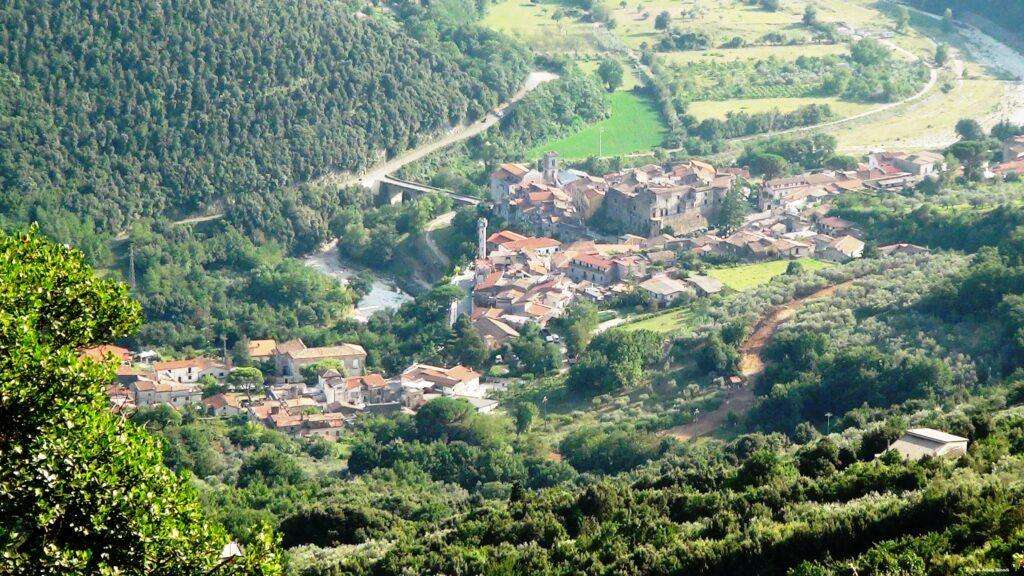
Leave a comment below if you’ve also missed the boat, no pun intended, on this Italian ancestral passport opportunity like I have.
I’m actually quite happy, I’d much rather have had my great-grandparents become citizens and pass down that citizenship to my grandparents than not! That makes me quite happy. 🇮🇹 🇺🇸
Quick Self-Assessment
Before contacting a consulate, work through these questions:
- Was your parent or grandparent born in Italy? → Standard pathway likely available
- Was your closest Italian-born ancestor a great-grandparent or further, and did you have no application filed before March 27, 2025? → Standard pathway closed; explore exceptions with legal counsel
- Does your line pass through a female Italian ancestor whose child was born before 1948? → 1948 judicial case route required
- Did any ancestor in your direct line naturalise before the next person in the line was born? → Chain may be broken; verify exact dates before proceeding

The Family History Foundation Newsletter
Our Family History Is Disappearing Every Day!
Join the quest with 500+ family historians getting Franklin’s Source Hound weekly research breakthroughs — real case studies, source hacks, and the exact strategies that turn brick walls into discoveries.
Free. No fluff. Straight from the Source Hound’s desk to yours.
Your privacy is sacred — almost as sacred as a primary source. Read our Privacy Policy.
The Three Application Pathways 🗺️
Italian Citizenship by Descent can be pursued through three distinct routes. The right choice depends on your eligibility, your timeline, and your willingness to relocate. Each is a legitimate pathway to the same outcome: recognition as an Italian citizen and the right to apply for an Italian ancestral passport.
Route 1 — The Italian Consulate
Best for: Applicants with a parent or grandparent born in Italy who want to apply from their country of residence without relocating.
The consulate route is the most common pathway for overseas applicants pursuing Italian Citizenship by Descent. Under the 2025 reform, all new applications are now centralised in Rome — consulates still receive your documentation and verify your file, but no longer process or decide cases independently. Applications are digitally transmitted to the central authority in Rome for determination.
The Prenot@mi system: Consulate appointments for Italian Citizenship by Descent are booked through Italy’s Prenot@mi digital system. The reality for American applicants is stark — appointment slots at major consulates, particularly New York, are exhausted quickly and the wait to even secure an appointment can stretch into years before the 36-month processing clock begins.
Persistence, preparation, and a flawlessly assembled document file are your best tools. A file returned for missing documentation resets your position.
Timeline: Law 11/2026 sets a statutory maximum processing time of 36 months for adult applications from abroad. Realistically, budget 2–4 years from application to recognition.
Cost: €600/$700 per adult applicant, non-refundable, paid at the consulate appointment. This is in addition to document retrieval, apostille, and translation costs covered in Section V.
Route 2 — The Comune (In-Country Fast Track)
Best for: Applicants who can genuinely relocate to Italy for 1–2 years and want significantly faster processing.
Applying directly through an Italian comune — the municipal office in the town where you establish residency — offers the fastest route to Italian Citizenship by Descent recognition, with processing times of 1–2 years compared to the consulate’s 2–4 years. The trade-off is genuine: you must establish actual residency in Italy, not simply a postal address.
For applicants who have considered living in Italy, have family connections there, or are retired and flexible in their location, the comune route is strategically attractive. The cost of the application itself is lower than the consulate route, though the total cost — including relocation, accommodation, and living expenses — is substantially higher.
This pathway is also the subject of a dedicated spoke post in this series, covering the practical realities of relocating to Italy during the application process. Watch for that post coming soon on this blog.
This is where the fun dreaming about family history and Italian citizenship by descent comes alive for me! I would move to Italy for a few years in a heartbeat! What if I could live in a villa or town in the Campania Region close to where my great-grandparent’s village is and enjoy all of the good food and learn the language?
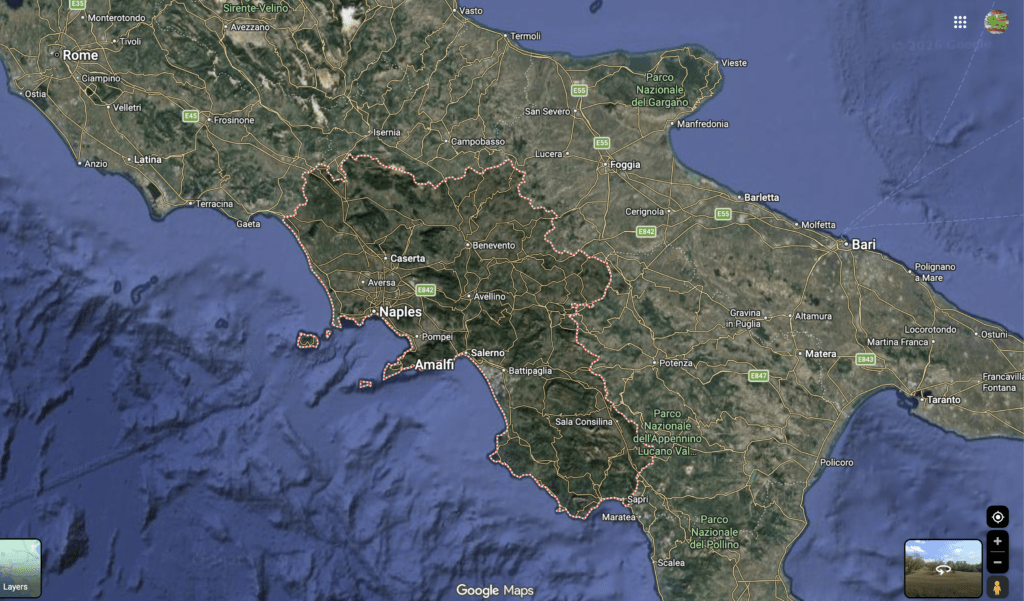
That sounds amazing! This just be my route to my Italian ancestral passport. I mean, imagine walking through my ancestral small village where they have a Medieval Festival each year and find out I have living relatives with my ancestral surnames surviving there. That is heaven for Franklin of The Family History Foundation!
Route 3 — The Judicial Route
Best for: 1948 case applicants whose line passes through a pre-1948 female ancestor, and applicants facing extreme consulate delays that constitute denial of justice.
The 1948 case: Italian Citizenship by Descent through a female Italian ancestor whose child was born before January 1, 1948 requires a court case in Italy, because the pre-republican Italian law did not permit women to transmit citizenship.
This is not a loophole — it is a recognised legal pathway affirmed by Italian courts and available to applicants who initiated judicial proceedings before March 27, 2025. For applications filed after that date, the restrictions of Law 74/2025 apply to judicial proceedings as well.
The denial of justice route: Italian courts now consistently rule in favour of Italian Citizenship by Descent applicants whose cases are stalled by consulate administrative delays exceeding two years. These “against the queue” cases treat excessive consular backlogs as a denial of justice — and provide a judicial alternative for applicants who have been waiting unreasonably.
This route requires legal representation and is not a shortcut, but it is a legitimate strategic tool for applicants already deep in the process.
Timeline: 1–3 years depending on case complexity and court.
Legal representation: The judicial route is the one Italian Citizenship by Descent pathway where professional legal representation is not optional. Retain a qualified Italian immigration attorney before filing.
In all honesty, getting legal representation, that is, hiring an immigration attorney is well worth the price and effort. I say that from people that I know who have done this with their own citizenship by descent applications.
The Document Chain — Every Paper You Need 📋
Every Italian Citizenship by Descent application requires the same foundational document architecture, regardless of which of the three routes you pursue. The 2026 standard is strict — incomplete or non-conforming documents are the primary cause of application delays and rejections.
From Italy — your anchor documents:
- Birth certificate of your Italian-born ancestor (Estratto dell’Atto di Nascita) issued by the comune where the ancestor was born, in the format that includes the parents’ names. This is the document that proves your Italian Citizenship by Descent chain begins with a genuine Italian citizen. Request it directly from the relevant comune in Italy — FamilySearch holds many Italian civil registration records from 1865 onward that can help you identify the exact comune before you write.
- Marriage certificate of the Italian ancestor, if the marriage took place in Italy
From your country — for every generation in the direct line:
- Long-form birth certificates for every person in the line between the Italian ancestor and you
- Marriage certificates for every couple in the line
- Death certificates where applicable
- Naturalization records — or certified proof of non-naturalization — for the Italian ancestor. In the United States this means USCIS Genealogy records or a Certificate of Non-Existence from USCIS. This document is the evidentiary backbone of your Italian Citizenship by Descent claim — it proves the chain was not broken by naturalisation before the next person in the line was born
Certification requirements — applies to every document: All foreign documents submitted for Italian Citizenship by Descent must meet three requirements simultaneously:
- Long-form or certified copy — not a short-form summary, not a genealogy website printout, not a transcription
- Hague Apostille — obtained from the Secretary of State in the US state where the document was issued. Budget 4–8 weeks per document and apply early
- Certified Italian translation — completed by a sworn translator recognised by Italian authorities. Name discrepancies across documents — even minor spelling variations — must be explained and reconciled by the translator or through a separate affidavit. This is one of the most common rejection triggers in Italian Citizenship by Descent applications
The genealogy research connection: Your family tree research is the map that leads you to these documents — but the certified documents themselves are what the Italian government requires. Tools like Ancestry.com are invaluable for identifying and locating records before you request official certified copies.
Our Source Hound Research Methodology — the framework used across all research on this blog — maps directly onto the evidentiary standard Italian authorities expect. And our Free Genealogy Forms Bundle includes a Research Log and Source Citation template that are ideal for tracking document status across multiple archives and countries simultaneously. 📝
The Proving Ancestry ThruLines case study on this blog illustrates precisely the standard of documentation required — verify every claim, source every generation, never accept a name match as a proven identity. That same rigour is what Italian Citizenship by Descent authorities demand.
Ancestry ThruLines can also help you identify living Italian relatives who may hold original documents, photographs, or vital records that are relevant to your application — a DNA match in the ancestral comune may be the research breakthrough your file needs.
Having free forms is cool ~ having 100% FORM-FILLABLE genealogy forms with no fuss is even better! Visit The Family History Foundation Shop for Citizenship tracking forms, as well as 28 editable and fillable genealogy forms!

The Cost Breakdown 💰
Many applicants budget for the application fee and are surprised by the total cost of an Italian Citizenship by Descent application. Here is the honest breakdown.
Consulate application fee: €600 per adult applicant, non-refundable
Italian comune records: Variable — typically €10–€30 per document plus international postage or retrieval service fees US vital records: $15–$50 per certified copy depending on state
USCIS Genealogy / Certificate of Non-Existence: $65 per search, plus processing time of several months
Apostille fees: $10–$20 per document through most US Secretary of State offices, plus expediting fees if needed
Certified Italian translations: $50–$150 per document depending on length and translator
Legal fees: $0 for a straightforward consulate application handled independently; $2,000–$10,000+ for judicial route or specialist agency assistance
Realistic total ranges:
- Consulate route, handled independently: USD $1,500–$5,000
- Consulate route, with specialist assistance: USD $3,000–$8,000
- Comune route including relocation: USD $10,000–$20,000+
- Judicial route: USD $5,000–$15,000+
Many Italian Citizenship by Descent applicants spend more on document gathering than on the consulate fee itself. Budget conservatively and start the document collection process early — some records take months to arrive.
Common Mistakes That Derail Applications ⚠️
These are the eight reasons Italian Citizenship by Descent applications are delayed or rejected — and every one of them is avoidable with thorough preparation.
- Assuming pre-2025 eligibility still applies. Many guides published before May 2025 are now legally incorrect. Verify your eligibility against current Law 74/2025 rules before investing in document collection.
- Submitting a short-form certificate instead of the estratto. Italian authorities require the long-form Estratto dell’Atto di Nascita with parents’ names. A standard short certificate is insufficient.
- Name discrepancies across documents. Even minor spelling variations between your ancestor’s name on the Italian birth certificate and the US immigration manifest can trigger rejection. Reconcile all discrepancies before submission.
- Missing the apostille on any document. Every foreign document needs a Hague Apostille. One missing apostille can return an entire file.
- Filing at the wrong consulate. Italian consulates are territorially competent — you must file at the consulate covering your area of residence, not your preferred consulate.
- Overlooking the naturalization break. The exact date your Italian ancestor naturalised relative to the birth date of the next person in the line is the most critical fact in your Italian Citizenship by Descent case. Confirm it with primary source documents, not family stories.
- Ignoring the 1948 pathway when applicable. If your line passes through a pre-1948 female ancestor, the standard route is not available. Recognise this early and pursue the judicial pathway.
- Not accounting for the minor-child registration deadline. Children born before May 24, 2025 must be registered by May 31, 2026. Missing this window forfeits eligibility for that child.
I know, I know! After reading all of these lists of costs, mistakes, and challenges, you might be thinking: “is this even worth it?” Good grief, maybe it’s just well enough to know that I am Italian!
Well, read on, there’s hope in your genealogy research!
Having free forms is cool ~ having 100% FORM-FILLABLE genealogy forms with no fuss is even better! Visit The Family History Foundation Shop for Citizenship tracking forms, as well as 28 editable and fillable genealogy forms!
How Your Genealogy Research Unlocks the Application 🐕🦺
Italian Citizenship by Descent and genealogy research are not parallel pursuits — they are the same pursuit, measured by the same evidentiary standard.
Every document an Italian Citizenship by Descent application requires is a genealogical record: birth certificates, marriage certificates, death certificates, naturalization records, immigration manifests. The chain of documentation that proves your citizenship transmission is identical to the chain of documentation that proves your family tree.
If you have been building your tree with Source Hound rigour — verifying every claim through independent primary sources, citing every document — you are already building your citizenship application file.
Italian civil registration began in 1865, and FamilySearch holds significant collections of Italian parish and civil records that are freely searchable. Before you write to an Italian comune requesting a certified copy, use FamilySearch to identify the exact record you need, confirm it exists, and note the comune responsible for it. That preparation makes the official request faster, cheaper, and more likely to succeed.
Newspapers.com and Fold3 are valuable for corroborating identity across the American side of the research — emigration-era social columns, naturalization notices in local papers, and military records that confirm an ancestor’s citizenship status at a specific date.
These are not citizenship application documents, but they are the research scaffolding that helps you build an airtight case before you request the official certified records.
I’ve spent years researching my Italian immigrant ancestors who arrived in Connecticut in 1904. They were great people, with an exceptional work ethic and love for their family. 🌿
One of the best places to research your Italian Ancestors is via Antenati Ancestors Portal! It is the best place to search surnames and locations and has access to the Italian Archives to search for BMD information.
For Ship Manifest searches, read my two articles below in which I take you through the process of finding and deciphering Ship Manifests and Passenger Lists!
The work you have already done on your family tree may be worth more than you realised. Not just as a record of the past — but as the key to a second nationality, a European passport, and a living connection to the country your ancestors called home. 🇮🇹
Having free forms is cool ~ having 100% FORM-FILLABLE genealogy forms with no fuss is even better! Visit The Family History Foundation Shop for Citizenship tracking forms, as well as 28 editable and fillable genealogy forms!
🎬 Watch the Full WalkThrough on YouTube
All of the steps covered here in this post are elaborated in this exceptional YouTube walkthrough. Gain a deeper insight with narration from the author and a few fun moments to boot. Like and subscribe to the channel while you are there, and make sure to check out more fresh content.
Frequently Asked Questions ❓
Q: Can I still apply for Italian Citizenship by Descent if my closest Italian ancestor was a great-grandparent?
A: For new applications filed after March 27, 2025, the standard Italian Citizenship by Descent pathway requires a parent or grandparent born in Italy. Great-grandparent claims through the standard route are generally no longer available for new applicants. However, if your application or consulate appointment was filed before March 27, 2025, your claim is assessed under the pre-reform rules and remains protected. See the Citizenship by Descent post for the full context of the 2025 reform.
Q: What is the difference between the consulate and comune application routes?
A: The consulate route allows you to apply from your home country — typically a 2–4 year process with a €600 fee. The comune route requires you to establish genuine residency in Italy and apply through the local municipal office — faster at 1–2 years, but requiring relocation. Both lead to the same outcome: Italian citizenship recognition and the right to apply for an Italian ancestral passport.
Q: What is the 1948 case and do I need it?
A: The 1948 case is a judicial pathway for applicants whose Italian Citizenship by Descent line passes through a female Italian ancestor whose child was born before January 1, 1948. Under pre-republican Italian law, women could not transmit citizenship — the court case remedies this historical discrimination. You need this route if your line of descent runs through such a woman. Legal representation is essential for this pathway.
Q: What does “unbroken citizenship chain” mean in practice?
A: It means that no ancestor in your direct line between the Italian-born ancestor and you formally naturalised as a citizen of another country before the next person in the line was born. If your Italian grandfather became a US citizen in 1920 and your father was born in 1925, the chain is unbroken. If your grandfather naturalised in 1920 and your father was born in 1918, the chain is also unbroken. But if your grandfather naturalised in 1920 and your father was born in 1922, the chain is broken at that point.
Q: How long does Italian Citizenship by Descent take in 2026?
A: The consulate route carries a statutory maximum of 36 months under Law 11/2026, though realistically budget 2–4 years including the time to secure an appointment. The comune route takes 1–2 years. The judicial route takes 1–3 years. None of these timelines include the document gathering phase, which can itself take 6–18 months.
Q: What happens if names are different across my documents?
A: Name discrepancies are one of the most common Italian Citizenship by Descent rejection triggers. Minor spelling variations between Italian and American records — particularly for surnames that were anglicised at immigration — must be explained and reconciled. A certified translator can address some discrepancies; others require a separate affidavit or a nulla osta from the relevant Italian authority. Flag all discrepancies before submission rather than hoping they go unnoticed.
Q: How do I get records from an Italian comune?
A: Write directly to the Ufficio di Stato Civile (Civil Records Office) of the relevant comune, requesting the Estratto dell’Atto di Nascita for your ancestor. Include the full name, approximate birth year, and parents’ names if known. Many comuni respond within 4–8 weeks; others take longer. The Researching Ancestors From Another Country Guide covers international record request strategies in detail, and FamilySearch’s Italy research wiki is an excellent free resource for identifying the right comune before you write.
Q: Does claiming Italian citizenship affect my US, Australian, or NZ passport?
A: No. The United States, Australia, and New Zealand all permit dual citizenship. Claiming Italian Citizenship by Descent and obtaining an Italian ancestral passport does not require you to renounce your existing nationality. You will simply hold two passports. See the Citizenship by Descent Explained post for dual citizenship rules across all five featured European countries.
Your Italian Ancestral Passport Is Worth Pursuing 🌺
Italian Citizenship by Descent in 2026 is more selective than it was a year ago — but it is far from closed. If you have an Italian parent or grandparent, the pathway remains clear, well-defined, and accessible. If you have been researching your Italian family history with care and rigour, you may already have the foundation of a successful application sitting in your document archive.
The genealogy work matters. The records matter. The Source Hound standard of verification and documentation — applied to every generation between you and your Italian-born ancestor — is precisely the evidentiary standard the Italian government requires. Your family tree is not just a record of the past. It may be your ticket to a second nationality, a European passport, and a connection to Italy that goes far deeper than a surname. 🇮🇹🌳
Are you exploring Italian Citizenship by Descent? Have you already begun the application process, hit a wall with the new Law 74/2025 rules, or discovered something unexpected in your Italian family research? Drop your experience in the comments below — this community includes researchers at every stage of this journey, and your story may be exactly the perspective another reader needs to hear. 💬
📺 Watch New Episodes Every Week on YouTube
Genealogy research tutorials, citizenship research strategies, Source Hound methodology in action, and much more — new episodes every week.
👉 Subscribe to Family History Foundation on YouTube
Hit the 🔔 notification bell so you never miss a new episode.
📌 Save Your Favourite Research Tips on Pinterest
Genealogy strategies, citizenship guides, research checklists, and family history inspiration — organised and ready to save.
👉 Follow Family History Foundation on Pinterest
📧 Join the Newsletter
Exclusive research tips, new post alerts, citizenship series updates, and free resources delivered straight to your inbox every week. No spam. Pure genealogy.
👉 Subscribe to the Family History Foundation Newsletter
Let’s make Family History a household word. 🕰️