Newspapers.com Genealogy research changed the way I think about my ancestors — and I say that as someone who has spent decades working through census records, vital records, and DNA matches. 🗞️ Census records tell you where your ancestors lived. Vital records confirm when they were born and died.
But neither of those sources can tell you that your great-great-grandmother won first prize for her apple preserves at the 1903 county fair, or that your grandfather’s brother appeared in a dispute column of the local paper in 1921.
Table of Contents
For that kind of living, breathing detail — the texture of a real human life — you need historical newspapers. Right now, that means you need to understand what Newspapers.com Genealogy searching can do for your research.
If you’re on the fence about Newspapers.com genealogy, just know that I found out that my grandfather was a genuine hero! He stopped a drunk driver after he crashed into the Texaco station he owned in Pomona in 1960! Keep reading to find out the details.
This is my honest, experience-based review of the platform as a paid user. What it does extraordinarily well, where its limits lie, who it is genuinely worth the subscription cost for, and why I now consider it an essential part of the Source Hound research toolkit alongside Ancestry. 🐕
What Is Newspapers.com?
Newspapers.com Genealogy searching begins with the world’s largest online historical newspaper archive, owned by Ancestry — the same platform most of us use as our primary research hub. That ownership connection matters practically: clippings you save on Newspapers.com Genealogy searches can be attached directly to ancestor profiles in your Ancestry family tree without manual transcription. Two platforms, one seamless workflow.
The archive spans over one billion newspaper pages from thousands of publications, covering dates from 1690 through 2025. For the genealogist who has built a solid foundation on Ancestry and FamilySearch, adding Newspapers.com Genealogy to your toolkit is the logical next step — the one that transforms names and dates into actual human lives. 🌳
What Ancestry Can’t Give You — But Newspapers Can
Let me be precise here, because the comparison matters and I want to be fair to both platforms.
Ancestry is extraordinary. Its census collections, vital records, DNA matching, and military record access are unmatched in depth and accessibility. If you have not yet read my Ultimate Beginners Guide to Genealogy Research Online, that is where your research foundation belongs — and Ancestry features heavily there for very good reason.
But Ancestry’s collections are almost entirely structured records — documents created by governments, churches, and institutions at specific life events. A birth. A marriage. A death. An enumeration year. They capture your ancestor at a threshold moment, then fall silent until the next one. 📋
Newspapers captured everything in between. It lies at the heart of what is important about the term FAMILY HISTORY, which is about the STORIES, not just the dates and names. Heck, you can’t spell “HISTORY” without the word STORY. (sounds like Steve Spurrier … for those who know, you know).
My family story I found. On a lazy afternoon in Pomona, CA in 1960 my grandfather Burl thought it was just another day at the Texaco station he owned. Oh no! Down the street came careening a drunk driver that ran into my grandfather’s parked pickup truck. The 16 year old driver tried to get away but my grandfather, the plucky Texan, reached into the vehicle and took his keys away from him.
I would not have known that story were it not for Newspapers.com genealogy! I found this article on Newspapers.com with my subscription. Check out the header of the article.
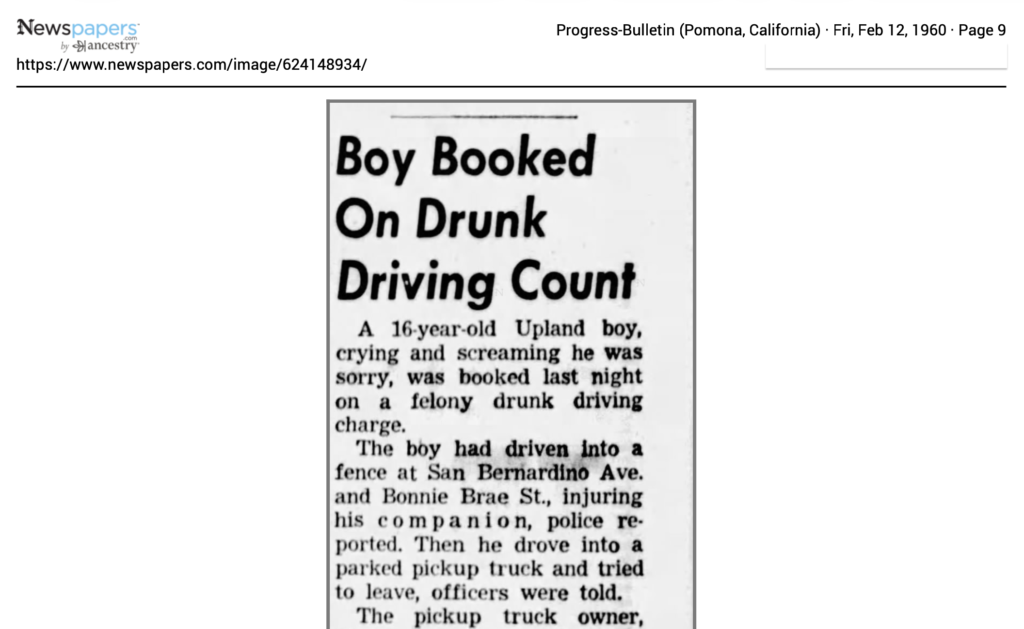
Sufficed to say, the boy got arrested (thank goodness he was safe) and my grandfather saved a life!
The point is that none of those stories exists in any structured record. All of it may be sitting in a historical newspaper — and the platform’s full-text search makes it findable for the first time.
That is the fundamental difference. Not better or worse than Ancestry — complementary, in a way that makes both platforms dramatically more powerful when used together. 🔍
6 Record Types That Will Change Your Research
1. Obituaries 📋
A well-written small-town obituary from the early 1900s can contain a complete family snapshot — surviving children listed by name and current location, birthplace, church affiliation, occupation, and cause of death.
That single document can open four or five new research directions simultaneously. It exists nowhere else. Only in the newspaper that published it, now searchable through Newspapers.com Genealogy.
I found an obituary of my great-grandparents and their family who moved from Tennessee to California, with the help of my cousin with Newspapers.com Genealogy. It was through an obituary that I found where they were laid to rest and even got to visit them – that record was not on Ancestry.com! Well, now it is, thanks to me and Newspapers.com.
2. Marriage Announcements 💍
Before civil registration was universal, the local newspaper was frequently the most detailed marriage record available. Announcements named the bride’s parents, the groom’s hometown, the officiant, the attendants — and who traveled from out of town to attend.
That last detail is genealogical gold for tracing family networks across geographic distances.
I have found so many marriage announcements for my family! The cool part is that you often get a picture to go with it. My mom’s bridal shower picture is in the paper. Awww. Maybe yours is too!
The most powerful part of these articles is looking at WHO ELSE attended these functions. This is where you find new leads and relatives with Newspapers.com Genealogy. It has been invaluable for me.
3. Social Columns 👥
This is the record type most Newspapers.com Genealogy researchers discover last — and the one that most consistently produces jaw-dropping moments. Social columns recorded the everyday movements of ordinary community members: who visited whom, who was traveling, who had returned from a distant relative’s home.
“Mrs. Harriet Moore of Rural Route 4 spent last week visiting her sister, Mrs. Clara Fenton, of Muskingum County.” That single sentence tells you Harriet had a sister named Clara Fenton, in a specific county, in a specific year. No census would ever generate that lead.
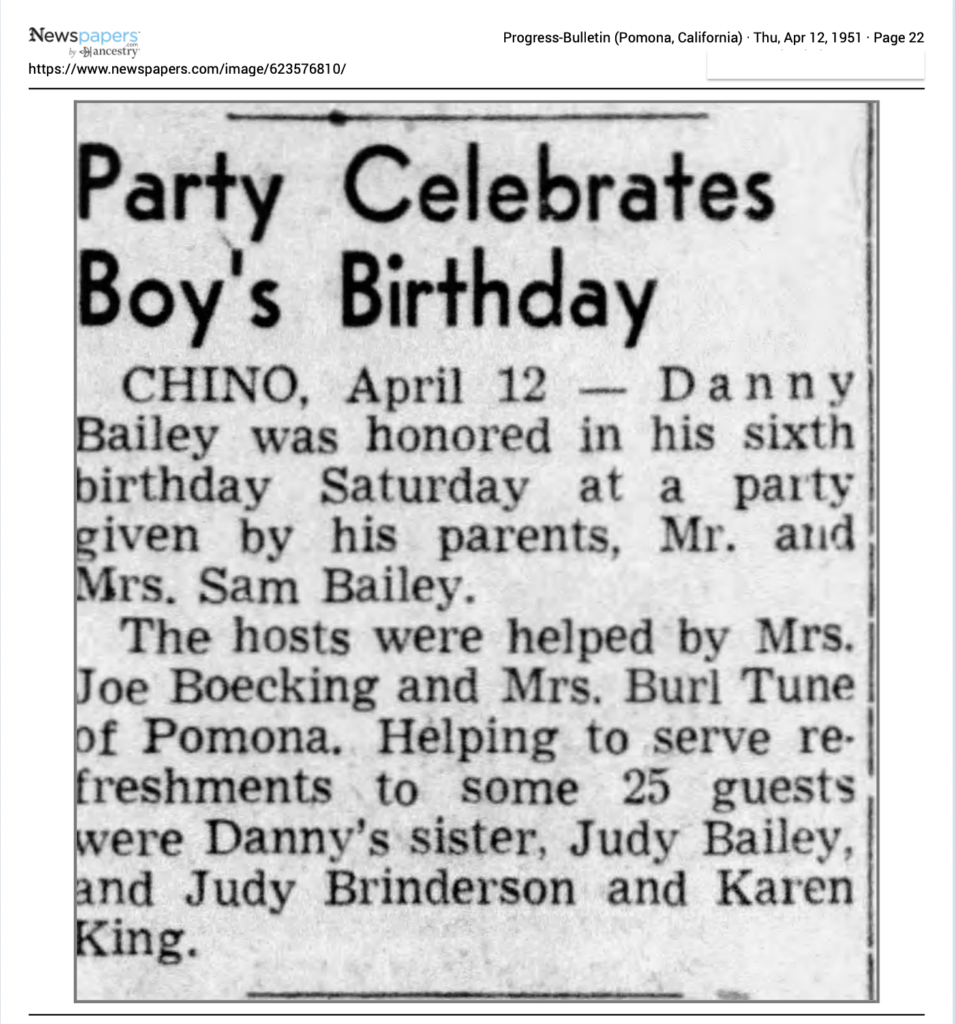
I believe this is the crown jewel of Newspapers.com Genealogy! No joke. I inputted the name of my grandparents maybe expecting to find 1 or 2 newspaper clippings of them, I mean they were just regular folk. Oh no, there are literally HUNDREDS OF ARTICLES in the Pomona newspaper about them – and a lot of that is in the Social Columns.
“Read all about it!” My grandmother went to a party in 1951 🎉
4. Legal Notices and Probate Announcements ⚖️
Estate sales, land transfers, probate proceedings, and creditor notices were required by law to be published in local newspapers. These notices name heirs, creditors, property boundaries, and neighbouring landowners — all potential family connections worth investigating.
5. Birth Announcements 👶
In many communities, birth announcements in the local paper predate or supplement civil birth registration. They frequently include the father’s full name, the mother’s maiden name, and occasionally the names of visiting relatives who came to welcome the new arrival.
There are also wedding showers and “stork parties” for newlyweds expecting. They held parties and the birth announcements were often published. Again, for the family historian, look for the names of attendees for genealogy research . . . Newspapers.com genealogy research!
6. Advertisements and Business Notices 🏪
An ancestor who disappears from the census between two enumeration years may be fully traceable through a sequence of advertisements. Newspapers.com Genealogy searching makes those advertisements keyword-searchable across thousands of titles simultaneously — a capability that simply did not exist for researchers a generation ago.
I mentioned my grandfather who owned a Texaco station, but there is also a grandfather’s brother’s son who was a police officer who arrested a really bad criminal in the 1960s who made headlines. My family member was the arresting officer and you can only find that on Newspapers.com. Riveting stuff!
Search and Tools: An Honest Assessment
What works exceptionally well:
The full-text keyword search is the platform’s greatest strength. You can search by name, location, date range, and keyword simultaneously — and if your ancestor’s name appears anywhere on a page, the search engine can surface it. The interface is clean and intuitive, which matters greatly for researchers who prefer straightforward navigation. 📊
The Clipping Tool is equally impressive. When you find something relevant, you select exactly the portion of the page you want, crop it, tag it, and save it. The platform automatically records the newspaper name, publication date, and page number — generating your source citation the moment you save. No manual formatting. No transcription errors.
Our Free Genealogy Forms Bundle pairs beautifully alongside it — particularly the Research Log template for tracking which newspapers and date ranges you have already covered. 📝
Where it has genuine limits:
OCR quality varies depending on the age and condition of the original newspaper. Very old or degraded papers can produce imperfect text recognition — meaning a search might miss a name the software misread. Browsing pages manually and trying spelling variations is an effective workaround.
Also, if you get over 2 pages of returns on a search, Newspapers.com doesn’t have the most efficacious interface to scroll through returns (kind of like Ancestry). Hey, ever heard of “open in a new tab?” Simple!
The international collection remains primarily American in depth. Australian, New Zealand, and European researchers will find the most value where ancestors had American connections. I cover international record strategies in my Ancestry vs FamilySearch comparison. 🌍
Plans and Pricing For You
Basic Plan — Access to over 311 million pages of pre-1931 content. For most researchers whose primary interest is 19th and early 20th century ancestors, this covers the majority of Newspapers.com Genealogy research territory you will need.
Publisher Extra — Unlocks the complete archive of over one billion pages, including post-1931 copyrighted content, advanced search features, unlimited clipping and sharing, and automated alerts when new content matching your saved searches is added. This is the plan for researchers with 20th century needs — grandparents and great-grandparents whose lives extended into the mid-century newspaper record.
The 7-Day Free Trial — Every new user receives full Publisher Extra access for seven days at no cost. Use those days intentionally: prepare a list of ancestor names, locations, and date ranges before your trial begins. Come ready and those seven days of Newspapers.com Genealogy searching can be genuinely transformative. 🎁
The Ancestry All Access Bundle — The All Access bundle combines Ancestry: Newspapers.com Genealogy access at Publisher Extra level, and Fold3 into a single subscription. If you plan to use all three platforms — and the Source Hound Strategy strongly supports doing so — the bundle represents significant value.
Who Should Subscribe — And Who Might Not Need To
Subscribe if:
You have American ancestors from the 1800s through the mid-20th century and have been researching primarily through census and vital records. The Newspapers.com Genealogy archive almost certainly contains material about your family you have never encountered.
Subscribe if you’re curious about finding your ancestors in ways you may have never dreamed of!
You have hit research walls — places where your ancestor disappears between census years, or where vital records are missing or incomplete. Historical newspaper searching frequently bridges exactly those gaps.
Subscribe if you are looking for the best “family history” thing since sliced bread!
You want to go beyond names and dates and understand who your ancestors actually were. This is where Newspapers.com Genealogy becomes something closer to biography than data collection — and where the research becomes genuinely moving. 📖
My recommendation is to get the Ancestry.com full subscription linked above, which includes not only Newspapers.com, but also Fold3.com the military records clearinghouse. That is what I pay for. I also recommend starting with what you can afford and is reasonable to you, then upgrade. Honestly, I spent years on the basic Ancestry subscription before incrementally moving up from tier to tier. So, get in where you fit in!
You may not need a subscription yet if:
Your research focuses entirely on pre-1800 colonial American ancestors, for whom coverage is sparse. Coverage density increases dramatically after 1850.
You are in the earliest stages of research and have not yet exhausted what Ancestry and FamilySearch offer. Build that foundation first, then add this platform when you are ready to go deeper. Or, just subscribe to The Family History Foundation Newsletter first! 👇🗞️📨

The Family History Foundation Newsletter
It’s Not About You, It’s About Documenting Before It Disappears
Join 500+ family historians getting Franklin’s Source Hound weekly research breakthroughs — real case studies, source hacks, and the exact strategies that turn brick walls into discoveries.
Free. No fluff. Straight from the Source Hound’s desk to yours.
Your privacy is sacred — almost as sacred as a primary source. Read our Privacy Policy.
How It Fits the Source Hound Strategy
Regular readers know that the Source Hound Strategy is built on one foundational principle: every claim needs a source, and every source needs to be independently evaluated.
Seriously, from Franklin, the founder of The Family History Foundation, I have folders upon folders on my hard drive of clippings from Newspapers.com Genealogy, it’s been that pervasive and impactful on my genealogy research. Like, the best days on Newspapers.com is where I go and search for a particular person but get sidetracked by the 100s of UNEXPECTED newspaper articles written about my relatives.
You have to realize that NEWSPAPERS are not the same thing in this day and age. There is a culture about them that is lost in this generation and that is exactly why you and I need to preserve our family history through them. One of my favourite stories is that I found 2 disparate generations of my family line had dined together in my grandfather’s home. That seemingly simple and innocuous story . . . was in the newspaper in 1940!
That fact may seem irrelevant to history, but to my FAMILY HISTORY it connected so many dots that it unlocked a whole new line of research for me. What research will you discover?
Newspapers.com Genealogy produces exactly the kind of independent corroborating evidence that principle demands. When a newspaper obituary confirms the same birthplace and family relationships already documented through census and vital records, you have built a genuinely solid research case. That is the standard we hold ourselves to. 🐕🦺
Newspaper evidence also requires the same critical evaluation you apply to every other source. Names are misspelled. Ages are misreported. The Source Hound researcher uses Newspapers.com Genealogy evidence as one well-documented pillar among several — never a standalone authority.
If you are working through Ancestry ThruLines matches and trying to verify suggested ancestors, newspaper records are among the most effective verification tools available. The full methodology is covered in my post on Ancestry ThruLines Explained. 🧬
Join the Family History Foundation Source Hound Community
Our family history is disappearing every day, join the Source Hound community and join our pledge to be the protector of your family history. The lives and voices of our ancestors are depending on it for our future generations.
Celebrate Family History Fridays with us across our social media and community platforms!
📬 Subscribe to the Newsletter — tips, active challenges, and deep-dive case studies. Never an overloaded inbox, always something you can use this weekend.
 Like & Subscribe on YouTube — every Friday, a video companion to the week’s article. Watch these techniques demonstrated rather than described.
 Pin Us on Pinterest — printable question sheets, research charts, and visual guides to save for your next session.
 Podcasting on Spotify! — podcasting now on Spotify, you can find all of the latest episodes on any of your favourite podcast platforms, starting with Spotify.
 Podcasting on Amazon! — If you are not on Spotify we are also on Amazon Podcasts so you can listen while you drive and work. Every episode is curated just for you to binge your favourite episodes.
 Podcasting on Audible! — Audible is an alternative offshoot of Amazon Podcasts to listen while search for your next favourite book. Ready for your next “audible?” Set, Go!
Let’s make Family History a household word. 🏠
The Family History Foundation Newsletter
Our Family History Is Disappearing Every Day!
Join the quest with 500+ family historians getting Franklin’s Source Hound weekly research breakthroughs — real case studies, source hacks, and the exact strategies that turn brick walls into discoveries.
Free. No fluff. Straight from the Source Hound’s desk to yours.
Your privacy is sacred — almost as sacred as a primary source. Read our Privacy Policy.
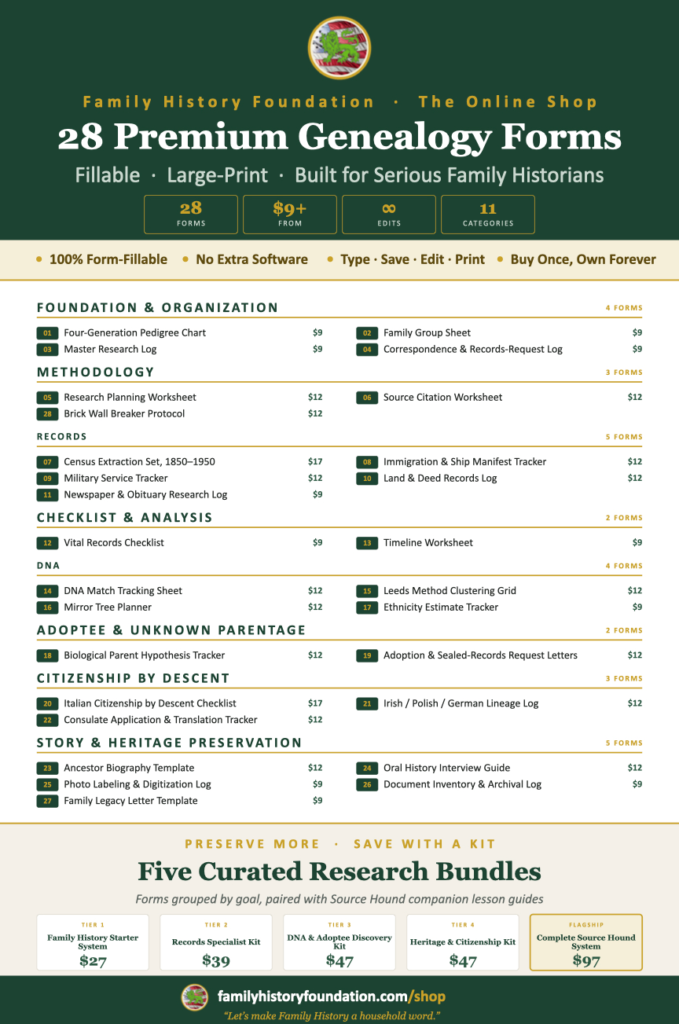
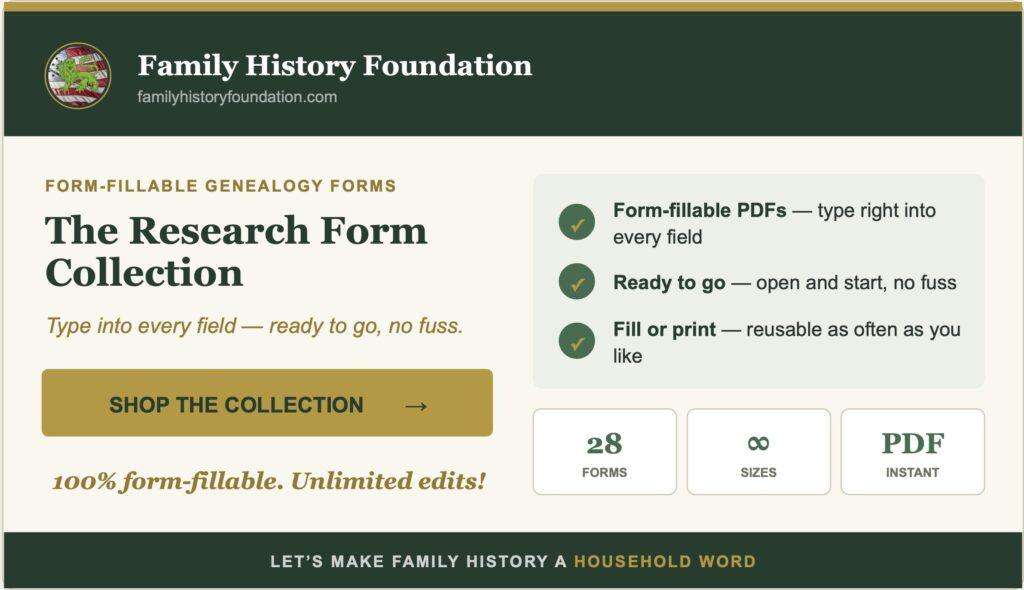
Shop Premium Genealogy Forms

About the Author
Hi there, my name is Franklin, the founder and author of The Family History Foundation.
Our family stories are disappearing every day and it’s crucially important that the next generation is able to learn and appreciate their family history. It is up to you to take up the mantle of responsibility to ensure that how you research today will be passed on tomorrow with the highest standards possible.
I believe that genealogy is not just about names and dates, it’s about your stories and how those stories inform your identity.
With a penchant for storytelling and a background in research, the insights and techniques you learn on The Family History Foundation will help you uncover the incredible stories and identities hidden within the tapestry of your ancestry.
My mission is “Let’s make Family History a household word.”
My motto is “The Past ‘Relative’ to the Future.”
FAQ: Frequently Asked Questions
Q: Is Newspapers.com Genealogy research different from Ancestry’s newspaper records?
A: Yes — significantly. Ancestry includes some newspaper-derived indexes, but Newspapers.com Genealogy gives you access to complete newspaper pages, not just extracted indexes. You can browse the actual page, read the full context of any mention, and discover material that was never indexed. It is a fundamentally different research experience.
Q: Does Newspapers.com replace Ancestry?
A: No — and it is not designed to. Ancestry’s structured records provide the foundational framework of your family tree. The platform fills in the human story between those data points. Used together as part of a systematic Source Hound approach, they are significantly more powerful than either alone.
Q: Is Newspapers.com Genealogy useful for Australian, New Zealand, or European research?
A: The international collections are growing but remain primarily American in depth. Researchers with non-American ancestry will find the most value where ancestors had American connections. For purely non-American research, supplement with dedicated national newspaper archives — many are freely accessible — while using the platform for any American branches of your tree.
Q: What is the fastest way to get value from the 7-day free trial?
A: Come prepared. Write down every ancestor name, location, and approximate date range before your trial begins. Use the Clipping Tool from your very first session so every discovery is automatically saved and cited. Give yourself at least one session of browsing full newspaper pages rather than just keyword searching — you will frequently find material no algorithm would have surfaced on its own.