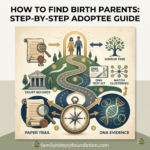
If you want to know how to find birth parents, combining legal documentary evidence with modern genetic genealogy provides a clear, actionable roadmap. For millions of adoptees, Non-Paternal Events (NPEs), and individuals with unknown parentage, uncovering biological roots satisfies a deep human need for personal identity, ancestral heritage, and medical history.
While historical adoption laws often created impenetrable walls of secrecy, modern genomics and digitized archives have transformed cold cases into solvable genealogical puzzles. This is a comprehensive article, skim where you need to; go in depth where you need more support.
FRANKLIN'S STORY
I know the adoptee journey first hand. One of the reasons I started this blog was to aid me in finding my birth parents. If you are an adoptee searching to find your biological parents, I can certainly help as I found my biological mother through records research and my biological father through DNA.
TL;DR Overview: Key Takeaways
Dual-Track Framework: Documentation and DNA! Us documentary paper trails (vital records and Non-ID) in combination with autosomal DNA testing.
Paper Trail Records: Access to sealed adoption records vary across 17 unrestricted states, ~15 compromised states, and 18 restricted states where court orders are required.
DNA Powerhouse Strategy: Begin with AncestryDNA to access its 30-million profile database, then upload raw DNA files to MyHeritage, FTDNA, and GEDmatch.
Cluster and Reconstruct: Use the Leeds Method to group matches into four grandparent lines, then construct mirror trees to identify Shared Ancestral Couples (SAC).
Vetting and Outreach: Cross-reference candidate hypotheses against centiMorgan ranges, timelines, and geography before making privacy-conscious first contact. Charts inside this article!
Table of Contents
Introduction: The Emotional Search to Find Birth Parents
The decision to launch an unknown parentage search carries immense emotional significance, requiring both courage and systematic determination. Understanding how to find birth parents begins with recognizing that modern adoption genealogy is a fact-finding endeavor, but you must also be prepared for any “unwanted” story you encounter!
Historically, institutional confidentiality and statutory barriers obscured biological lineages, leaving individuals with incomplete family medical histories and unanswered questions about their identity.
FRANKLIN'S STORY
Questions about my identity and ethnic origin were the key drivers in me searching to find my birth parents. Everyone around me seemed to know where they came from, my roots were a big question mark. However, I was ultimately successful and I believe you can be too.
Achieving success in unknown-parentage research requires a synchronized Dual-Track Approach. This methodology fuses two distinct investigative disciplines: DOCUMENTS and DNA.
- Paper Trails (Documentary Evidence): Navigating state adoption registries, court petitions, vital statistics, and agency Non-Identifying Information (Non-ID).
- Genetic Genealogy (Biological Evidence): Leveraging autosomal DNA testing, centiMorgan (cM) relationship metrics, match clustering, and speculative mirror trees to triangulate unknown ancestors.
Relying on either track in isolation can create analytical roadblocks. Documentary records may contain omitted details, historical falsifications, or legal seals, whereas genetic data provides raw biological truth but lacks names, dates, and historical context until anchored to documentary records.
Combining both disciplines allows researchers to bridge historical gaps and systematically confirm biological parentage. To learn more about digital archival strategies, explore our master guide on Genealogy Research Online.
Trust Assurance and Research Methodology. This guide is developed using professional adoptive genealogy protocols, state statutory research, and investigative genetic genealogy standards. Our five-step
framework integrates official records administration policies with quantitative centiMorgan analysis to ensure reliable, evidence-based biological parent identification.
| Strategic Step | Actionable Objective | Core Methodology / Tools |
| Step 1: Legal Records | Reclaim historical paperwork and establish baseline facts. | State agency applications, Non-ID requests, unsealed Original Birth Certificate (OBC) petitions. |
| Step 2: Genetic Testing | Generate a broad, high-density net of biological matches. | Primary testing on AncestryDNA; raw data expansion to MyHeritage, FTDNA, and GEDmatch. |
| Step 3: Match Clustering | Group matches into distinct ancestral branches. | The Leeds Method (cM sorting) and speculative Mirror Tree construction. |
| Step 4: Candidate Evaluation | Systematically verify or eliminate biological parent candidates. | Timeline analysis, geographical cross-referencing, and hypothesis tracking tools. |
| Step 5: Ethical Outreach | Establish contact while protecting privacy and managing expectations. | Intermediary consultation, privacy settings adjustment, and non-demanding initial correspondence. |
Step 1: Legal Records and the Paper Trail
2.1 Understanding Closed Records vs. Unsealed Records
When determining how to find birth parents through official paperwork, navigating the legal status of adoption records in your jurisdiction dictates your initial steps.
Beginning in the late 1930s and accelerating through the 1940s, state legislatures systematically enacted laws to seal original birth certificates (OBCs) and adoption court proceedings. The original policy rationale was twofold: to protect adoptive families from outside interference and to shield unwed birth mothers and children from social stigma.
FRANKLIN'S STORY
After reconnecting with them, I found out from my birth mother's side of the family that one of the reasons many children were given up for adoption in the 1960s in states like California, was due to the social stigma. Many pregnant, unwed mothers would travel to adjacent states to give birth and give their babies up for adoption. This is also my story. It might be yours and you are not alone, it does not have to be a stigma anymore.
Upon finalization of an adoption, state vital statistics offices issue an amended birth certificate that substitutes the adoptive parents’ names for the biological parents. The original record is impounded under court seal. This is CRUCIAL to understanding how and which records to access in understanding how to find birth parents today.
There are usually 2 BIRTH CERTIFICATES issued to Adoptees! The first is a CERTIFICATE OF LIVE BIRTH which is the actual birth record which will be sealed away – your adoptive parents will never see this. This is what you must search for, more on that in this article. This Certificate of Live Birth is what your birth mother fills out at the time she gave birth to you. It’s her first-hand testimony!
The second is a general BIRTH CERTIFICATE which is the birth certificate given to the adoptive parents and lists the name of the adoptive parents as mother and father of the child. This is done to protect the identity and privacy of the biological mother, and anyone else associated with the live birth.
Today, statutory access to these vital records varies significantly by jurisdiction, creating a fragmented legislative landscape:
- Unrestricted Access States: Seventeen states affirm the right of adult adoptees (typically upon reaching age 18 or 19) to obtain their unredacted Original Birth Certificate without obtaining a court order. Examples include Alabama, Alaska, Colorado, Connecticut, Delaware, Georgia, Hawaiʻi, Kansas, Maine, Massachusetts, Minnesota, New Hampshire, New York, Oregon, and Rhode Island.
- Compromised Access States: Jurisdictions such as Arizona, Arkansas, Iowa, Indiana, North Dakota, Pennsylvania, and Washington offer conditional access. Restrictions include “donut hole” date parameters, birth parent name redaction options, or specific educational requirements. For example, Pennsylvania provides only a “summary document” rather than the original vital record, conditioning access on high school graduation or GED attainment.
- Restricted Access States: In 18 states (including Florida, Kentucky, Nevada, and North Carolina), adult adoptees must petition a court of competent jurisdiction and demonstrate “good and compelling cause” to unseal birth records.
Complications frequently arise when an individual was born in one state but adopted under the court jurisdiction of another, as vital records departments and family courts may assert conflicting jurisdictional requirements.
FRANKLIN'S STORY
Prior to 2016, I lived in a Restricted Access State and attempting to find my birth mother was incredibly difficult! However, after 2016 those laws were relaxed and we became an Unrestricted Access State. On the very next day the gates opened, my application was in as I anticipated a huge backlog of impending requests. I quickly got my full, unredacted birth files, complete with doctor's notes, nurse's notes, and my Certificate of Live Birth. No moment on this planet has been quite as profound for me.
| Legislative Status Category | State Jurisdictional Characteristics | Primary Access Mechanism |
| Unrestricted Access (17 States) | Full statutory restoration of adoptee vital record access. | Direct application to State Department of Health / Vital Statistics. |
| Compromised Access (~15 States) | Access limited by date cohorts, redaction rights, or parent vetoes. | Agency application subject to birth parent consent registry checks. |
| Restricted Access (18 States) | Complete legal seal maintained past adulthood. | Formal legal petition to court demonstrating “good cause”. |
2.2 Requesting Non-Identifying Information (Non-ID)
Even in states where Original Birth Certificates remain strictly sealed, adult adoptees generally possess the statutory right to request Non-Identifying Information (Non-ID) from the state agency, private adoption service, or court that handled the placement.
Non-ID reports compile historical details recorded by social workers at the time of placement. While stripped of specific surnames and exact street addresses, these documents provide essential contextual clues, including:
- Biological parents’ ages, state or country of birth, and general physical characteristics.
- Ethnic, racial, national, and religious backgrounds.
- Educational levels, occupations, and military service details.
- Extended family details (such as ages and genders of biological aunts, uncles, or half-siblings).
- Medical histories, inherited conditions, and cause-of-death data.
- Circumstances surrounding the pregnancy and placement.
To obtain Non-ID, researchers should submit a formal written application to the state’s central adoption registry or the licensed private agency that facilitated the placement.
The process, which can be somewhat formidable, includes you petitioning, he court having to contact the birth parent, and the birth parent having the right to accept or decline the request. If they say no, that’s it, you move to other methods outlined in this article.
2.3 How to Draft Sealed Record and Vital Record Requests
When navigating agency requests or court petitions, clarity and precise legal terminology are essential. When preparing applications for vital records or agency files, researchers must account for jurisdictional complexities, especially when crossing state boundaries.
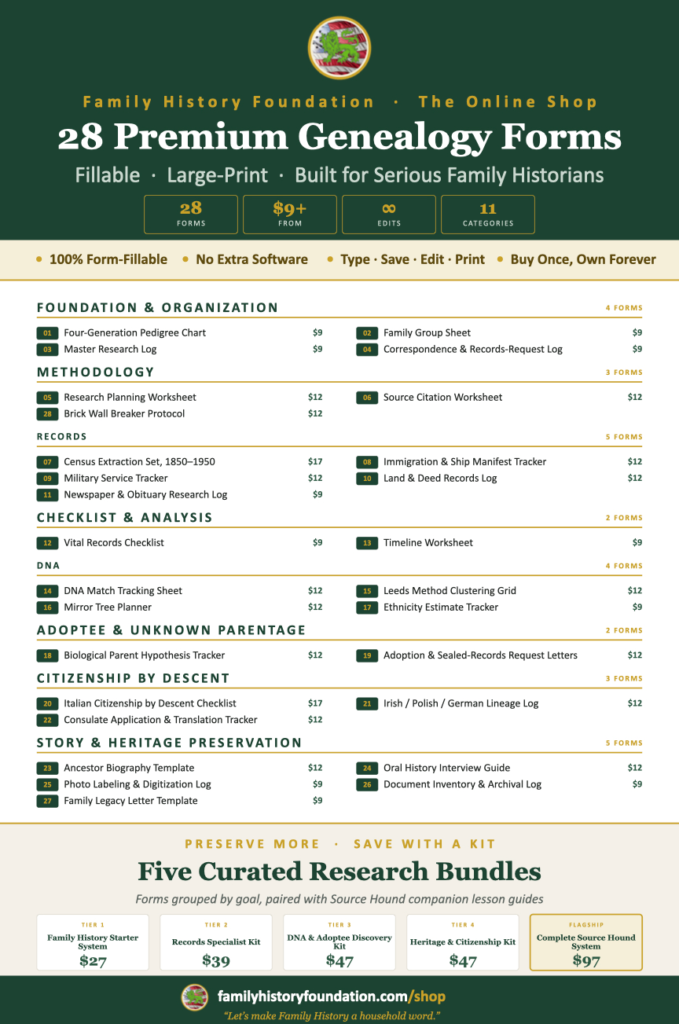
Tool Spotlight: Form 19: Sealed-Records Request Letters
Struggling to write to state agencies? The Family History Foundation Online Shop has Form 19: Sealed-Records Request Letters for pre-formatted, fillable PDF templates designed specifically for adoption record applications, Non-ID requests, and vital statistics requests across varying legal jurisdictions. Explore this and other blank charts in the Family History Foundation Online Shop.
Step 2: Taking and Maximizing DNA Tests
3.1 Why AncestryDNA is the Gold Standard for Adoptees
For searchers evaluating how to find birth parents using genetic testing, AncestryDNA represents the optimal starting point due to its market-leading match pool. When document availability is restricted by state law, autosomal DNA testing serves as the primary tool for identifying biological relatives.
There is a gross misconception out there! And that is that autosomal DNA inherits 50% of its genetic material from the biological mother and 50% from the biological father. It’s absolute rubbish and I wish people would stop saying it, because autosomal DNA is RANDOM beyond 80/20.
When understood properly, autosomal DNA makes it effective for identifying relationships across 4 to 5 generational tiers.
Learn more about Autosomal DNA and how it works in this article using my poker card metaphor. It also contains a link to my article on Understanding Basic Genetics for Genealogy.
In genetic genealogy, database size is the single most critical factor determining success. A larger database increases the probability of matching close biological relatives (such as first cousins, aunts, uncles, or half-siblings) who can quickly reveal an unknown parent’s identity.
The consumer genetic testing landscape shows clear operational differences across platforms:
- AncestryDNA maintains the world’s largest consumer database, reaching 30 million profiles. It is larger than all other genealogical DNA databases combined. Furthermore, Ancestry integrates genetic matches directly with over 30 billion historical records, user-submitted family trees, and automated matching algorithms such as ThruLines and ProTools.
- 23andMe contains approximately 14 million profiles (~11.1 million opted into relative matching). Following a major restructuring and acquisition by a non-profit public benefit corporation, its genealogical utility remains functional alongside FDA-authorized health reports.
- MyHeritage DNA holds 9.6 million profiles and serves as the primary platform for international matching, particularly across continental Europe.
- FamilyTreeDNA (FTDNA) maintains an autosomal matching pool (Family Finder) of nearly 1.8 million kits, while also offering specialized Y-DNA (patrilineal) and mtDNA (matrilineal) sequencing.
FRANKLIN'S STORY
This is where I hit the genetic lottery. I found my biological father sitting at the top my list of YDNA matches on FTDNA. After researching the connection to other shared matches on Ancestry.com, I confirmed that this person was, indeed, my biological father!
3.2 Expanding Your Net: Uploading Raw DNA Data
To maximize reach, researchers should begin by testing directly on AncestryDNA. Because AncestryDNA does not accept raw data uploads from other companies, testing directly on their platform provides access to their 30-million-person match pool.
Once AncestryDNA results are complete, researchers can export their raw autosomal DNA data file (a digital text document containing single nucleotide polymorphisms, or SNPs) and upload it to secondary databases that permit free or low-cost transfers:
- Download Raw Data: Log into AncestryDNA, navigate to DNA Settings, select “Download Raw DNA Data,” and confirm the security prompt to receive the zipped text file via email.
- Upload to Secondary Platforms: Create free user accounts on MyHeritage DNA, FamilyTreeDNA, and GEDmatch, then upload the raw zipped file following each platform’s import wizard.
| DNA Platform | Database Size (2025–2026) | Accepts Free Raw Data Uploads? | Primary Strengths & Geographic Reach |
| AncestryDNA | ~30.0 Million | No (Must take original test) | Largest global database; superior tree integration (ThruLines, ProTools). |
| 23andMe | ~14.0 Million | No (Must take original test) | Strong health/traits reporting; solid match algorithms. |
| MyHeritage DNA | ~9.6 Million | Yes (Free upload / low fee for tools) | Market leader in Europe; advanced chromosome browser. |
| GEDmatch | ~2.2 Million | Yes (Free upload / Tier 1 tools) | Third-party analysis; multi-kit comparisons. |
| FamilyTreeDNA | ~1.8 Million | Yes (Free upload / small unlock fee) | Integrated autosomal, Y-DNA, and mtDNA testing. |
By deploying this cross-platform strategy, an investigator can compare genetic data against an aggregate pool of over 54 million tested kits worldwide without purchasing separate test kits for every service. For a deeper look at managing match lists across platforms, check out our tutorial on analyzing DNA Matches Guide.
Honest truth, you don’t have to submit your DNA to EVERY platform out there. This article gives you an array to choose from and which ones have been successful for me.
If you have to choose one to start with and you are in the United States, go with Ancestry. If you are in Europe, MyHeritage might be a better choice. Research each of these platforms yourself and decide. FTDNA is a great choice as well as their tests are very comprehensive.
3.3 Interpreting Match Metrics: CentiMorgans (cM)
Genetic relationships are quantified using centiMorgans (cM), a unit of measurement that describes genetic distance and recombination along human chromosomes. The total amount of shared DNA between two individuals correlates directly with how recently they shared a common biological ancestor.
If you are scrutinizing shared DNA matches you need to be looking for cM matches between the following values: ~3,400 – 3,700 cM. The values can be slightly outside of this range.
Human beings inherit approximately 6,800 total cM of DNA (~3,400 cM per parental side). When evaluating match lists, higher shared cM values indicate closer biological relationships:
| Shared CentiMorgans (cM Range) | Average Shared % | Typical Relationship Possibilities |
| 3,400 – 3,700 cM | 100% | Parent / Child; Identical Twin |
| 2,200 – 2,800 cM | 50% | Full Sibling |
| 1,300 – 2,300 cM | 25% | Half-Sibling; Grandparent / Grandchild; Aunt or Uncle / Niece or Nephew |
| 575 – 1,300 cM | 12.5% | First Cousin; Half-Aunt/Uncle; Great-Grandparent; Double First Cousin |
| 200 – 600 cM | 3.0% – 6.0% | First Cousin Once Removed (1C1R); Half-First Cousin; Great-Aunt/Uncle |
| 90 – 230 cM | 1.25% – 2.5% | Second Cousin; First Cousin Twice Removed (1C2R); Half-1C1R |
| 30 – 100 cM | 0.4% – 1.0% | Third Cousin; Second Cousin Once Removed (2C1R) |
Note: Because recombination varies naturally across generations, shared cM values fall within statistical ranges rather than fixed numbers. Researchers should use probability calculators (such as the Shared cM Project) to evaluate potential relationship types.
Step 3: Genetic Genealogy Techniques (Mirror Trees and Clustering)
4.1 Grouping Matches via the Leeds Method
When an adoptee receives a list of thousands of genetic matches, the initial dataset can appear overwhelming. The Leeds Method, developed by genealogist Dana Leeds, is a systematic sorting framework that categorizes close-to-moderate matches into four distinct clusters corresponding to the test taker’s four biological grandparent lines.
To perform the Leeds Method:
- Access a match list and filter for matches sharing between 90 cM and 400 cM. Matches higher than 400 cM share too much DNA across multiple branches and can obscure distinct grandparent clusters. Matches below 90 cM introduce distant lineage noise.
- Create a spreadsheet listing these target matches in descending order of shared cM.
- Select the top match on the list and assign a specific color block in an adjacent column.
- View the “In Common With” or “Shared Matches” list for that individual. Assign the same color block to every shared match who appears on that list.
- Move down to the next uncolored match on the master spreadsheet, assign a new color, and mark all shared matches in a second column.
- Repeat this process until all matches within the 90–400 cM window are categorized.
In standard scenarios without endogamy or pedigree collapse, this process yields four clean columns. Each column represents a distinct biological grandparental lineage (Paternal Grandfather, Paternal Grandmother, Maternal Grandfather, Maternal Grandmother), dramatically simplifying the search field.
Master this step by reading the many articles on Ancestry ThruLines and DNA search tools.
4.2 Building Mirror Trees to Reconstruct Unknown Lineages
Once matches are organized into four distinct grandparental clusters, the next step is identifying the specific ancestors within those clusters. This is accomplished by building Mirror Trees (also known as speculative or research trees).
A mirror tree is a temporary family tree constructed in the researcher’s genealogical workspace using the ancestral lineage of a key DNA match. By building out the family trees of two or more unlinked DNA matches within the same Leeds cluster, researchers can identify where those trees intersect. The intersecting point reveals a Shared Ancestral Couple (SAC).
The operational workflow follows a clear sequence:
- Identify Cluster Matches: Select two significant DNA matches within a single Leeds cluster who do not share close immediate surnames.
- Trace Pedigrees Backward: Trace the pedigree charts of Match A and Match B backward in historical records (census, birth, marriage, and death records) until identifying the specific ancestral couple that appears in both of their lineages.
- Isolate the Shared Ancestral Couple (SAC): Once the Shared Ancestral Couple is isolated, build their tree downward across all generational lines to account for all children, grandchildren, and great-grandchildren.
- Identify Candidate Parents: Cross-reference these downward branches against geographical locations, birth dates, and military service records to isolate individuals who were of childbearing age in the correct place and time.
Tool Spotlight: Form 16: Mirror Tree Planner & Form 14 DNA Match Tracking Sheet
Keep multi-generational branches organized using the Form 16: Mirror Tree Planner, a structured workbook for mapping a match’s ancestors back to a common ancestor and tracking downward branches without cross-branch confusion.
Also our Form 14 DNA Match Tracking Sheet. The DNA Match Tracking Sheet keeps your most important matches in one organized place: the match’s name or username, the testing company, the amount of shared DNA in centimorgans, the predicted and confirmed relationship, and your notes on how you connect.
Find this and other premium workbooks in our Family History Foundation Shop.
Step 4: Evaluating Candidates and Testing Hypotheses
5.1 Weighing Evidence: Timeline, Geography, and DNA CentiMorgans
Once research narrows a lineage down to a specific family branch, researchers must evaluate candidates methodically before reaching definitive conclusions.
You should always research each potential birth parent individually! Each of your biological parents encoded you with distinct DNA particular to their own origins, even if they both came from a localized, homogeneous community.
Identifying the specific biological parent requires balancing three distinct categories of evidence:
- Genetic Evidence (cM Validation): Does the shared cM metric between the adoptee and downstream matches fit the expected relationship distances? For instance, if a candidate is hypothesized to be a biological father, known children of that candidate should share ~2,200–2,800 cM (full siblings) or ~1,300–2,300 cM (half-siblings) with the adoptee.
- Chronological Feasibility: Was the candidate of appropriate age at the time of conception? Was the candidate living, active, and biologically capable of reproducing during the required conception window?
- Geographical Proximity: Was the potential parent physically located in the same geographic area as the biological mother during the conception window? Military deployments, college attendance, historical city directories, and employment records serve as essential evidence here.
5.2 Formulating and Testing Biological Parent Hypotheses
A common mistake in unknown parentage research is jumping to conclusions based on a single strong clue, such as assuming a match with a specific surname is automatically a direct line parent rather than a collateral relative.
To avoid assumption traps, researchers rely on structured hypothesis testing frameworks, such as the What Are The Odds? (WATO) probability approach. WATO allows researchers to plot the subject’s DNA match values into a simplified tree structure and mathematically calculate the relative odds of different potential relationship positions.
FRANKLIN'S STORY
In my journey to find my birth parents I kept lists! I used data sheets and forms I created to keep track of potential matches which I would then comb through repeatedly like sifting through a change dish looking for quarters. From my refined list of candidates, I would then attempt contact.
Tool Spotlight: Form 18: Biological Parent Hypothesis Tracker
Systematically document evidence for and against potential candidates using the Form 18: Biological Parent Hypothesis Tracker to evaluate candidate couples against genetic, chronological, and geographical metrics before reaching conclusions.
Step 5: Search Support, Privacy, and First Contact
6.1 Working with Search Angels and Genetic Genealogy Volunteers
Okay, hold the phone! This is where your journey on how to find your birth parents transcends into action. It can be very daunting and overwhelming for some. Proceed with a positive attitude, but be prepared for the possibility of rejection.
Navigating complex DNA match matrices and historical records can be challenging. Adoptees can access free community resources and volunteer networks operated by experienced genealogists:
- Search Angels: Non-profit volunteer networks that offer free assistance to adoptees and NPEs seeking to identify biological origins.
- DNA Angels: Specialized non-profit organizations focused on utilizing autosomal DNA matching and investigative genetic genealogy to solve unknown-parentage cases.
- State Intermediary Programs: In jurisdictions where records remain sealed, state-sanctioned confidential intermediaries may be authorized to access court files, contact biological parents, and seek mutual consent for contact.
FRANKLIN'S STORY
A great technique which fell into my lap was utilizing other expert family researchers to aid you in identifying your birth parent. My first inquiry wasn't directed at a potential mother, but a GEDmatch sub-forum for my maternal surname.

Bingo! Within 2 days I had received a message from a then-unknown cousin that they suspected they knew who my bio mom might be! This "inside job" is what helped me to find and contact my biological mother and confirm her.
6.2 Managing Privacy and Digital Footprints
Navigating an adoption search requires careful attention to digital privacy and boundary management. Identifying biological relatives can bring unexpected emotional dynamics for both the searcher and the biological family.
Researchers should consider the following protective measures:
- Profile Pseudonymity: When initially testing on public DNA databases, consider using initials or a research pseudonym for the kit profile display name to control personal data exposure until candidates are verified.
- Tree Privacy Settings: Keep working mirror trees marked as Private and Unindexed on commercial websites. Public speculative trees containing living individuals can cause confusion or distress if discovered prematurely by biological relatives.
- Digital Footprints: Secure personal social media profiles and avoid sharing unverified candidate names on public forums or search groups.
6.3 Writing Your First Contact Letter
Reaching out to a potential biological parent or close relative is an emotionally significant step that requires clear, respectful, and well-structured communication. The primary goal of initial outreach is to establish an open, non-threatening channel for dialogue.
FRANKLIN'S STORY
I crafted my first contact letters/emails with less narrative emotion and kept it more about verifiable information. This served me well as the last thing you want to do is to scare off your biological parent. The crux of my first contact message was centered around asking if the person in question gave birth to a child on DATE & LOCATION and that I am only seeking confirmation, not reconciliation.

It may seem cold, but my thinking was once a connection is made, you can warm it up eventually. It worked as my biological mother confirmed that she was my mother. Although we never bonded much further, I did confirm my identity and eventually bonded with loads of extended family.
Key guidelines for writing your first contact letter include:
- Keep It Brief, Polite, and Non-Demanding: Avoid aggressive demands, legal claims, or emotional pressure. Acknowledge that the news may come as a surprise.
- Provide Clear Context: State clearly that you were born on a specific date in a specific location, are conducting personal family history research, and matched with the recipient (or a relative) via a direct-to-consumer DNA database.
- Focus on Shared Identity and Health History: Reassure the recipient that you are not seeking financial support or disruptive intervention. Emphasize a desire for biological medical history, heritage context, or basic self-knowledge.
- Offer Flexible Communication Options: Provide multiple low-pressure ways to respond (e.g., an email address, phone number, or physical mail) and respect the recipient’s need for time to process the information.
If I had to offer advice, I would say to not push too hard. You can make repeated contact if the situation warrants; however, you must respect a person’s wishes to maintain their privacy. Timing is everything and you should be mentally prepared for disappointment.
FRANKLIN'S STORY
My emotional range cycled from hopeful to doubtful to pragmatic on a daily basis. I had read a story on a genealogy forum which really hardened my resolve:

Someone struck home the importance of coupling contact with source hound research when they shared a story about a person who had actually made contact with their birth mother, but because the birth mother did not want to initiate a relationship, she lied and told them that she WAS NOT her mother. The poor adoptee then wasted the next 20 years spinning their wheels in futile search.

This is why it took me the better part of a month drafting and crafting my first contact letter! I also enlisted the help of female family members to nuance my communication so that it was empathetic and respectful.

The Family History Foundation Newsletter
It’s Not About You, It’s About Documenting Before It Disappears
Join 500+ family historians getting Franklin’s Source Hound weekly research breakthroughs — real case studies, source hacks, and the exact strategies that turn brick walls into discoveries.
Free. No fluff. Straight from the Source Hound’s desk to yours.
Your privacy is sacred — almost as sacred as a primary source. Read our Privacy Policy.
Conclusion and The Adoptee Search Checklist
Ultimately, learning how to find birth parents involves combining paper documentation with advanced genetic analysis. By following a structured, multi-step workflow, researchers can systematically overcome historical record barriers and verify biological identity:
- Establish the Paper Trail: Submit applications for Non-ID, unsealed vital records, or state registry access to collect historical context.
- Deploy Genetic Tests: Test on AncestryDNA to access the largest match pool, then export raw data to secondary platforms (MyHeritage, FTDNA, GEDmatch) to maximize match reach.
- Cluster and Map Matches: Group matches using the Leeds Method and construct mirror trees to isolate Shared Ancestral Couples.
- Evaluate Hypotheses: Validate candidates by cross-referencing centiMorgan values, geographical proximity, and timeline data.
- Proceed with Ethical Outreach: Secure private trees, consult volunteer networks when needed, and initiate contact using clear, low-pressure correspondence.
Tool Spotlight: The Complete Adoptee Research Bundle
Ready to launch your search today? Get The Complete Adoptee Research Bundle combining Form 19 (Sealed-Records Request Letters), Form 16 (Mirror Tree Planner), and Form 18 (Biological Parent Hypothesis Tracker) into an integrated research workspace available now in the Family History Foundation Shop.
Join the Family History Foundation Source Hound Community
Our family history is disappearing every day, join the Source Hound community and join our pledge to be the protector of your family history. The lives and voices of our ancestors are depending on it for our future generations.
Celebrate Family History Fridays with us across our social media and community platforms!
📬 Subscribe to the Newsletter — tips, active challenges, and deep-dive case studies. Never an overloaded inbox, always something you can use this weekend.
 Like & Subscribe on YouTube — every Friday, a video companion to the week’s article. Watch these techniques demonstrated rather than described.
 Pin Us on Pinterest — printable question sheets, research charts, and visual guides to save for your next session.
 Podcasting on Spotify! — podcasting now on Spotify, you can find all of the latest episodes on any of your favourite podcast platforms, starting with Spotify.
 Podcasting on Amazon! — If you are not on Spotify we are also on Amazon Podcasts so you can listen while you drive and work. Every episode is curated just for you to binge your favourite episodes.
 Podcasting on Audible! — Audible is an alternative offshoot of Amazon Podcasts to listen while search for your next favourite book. Ready for your next “audible?” Set, Go!
Let’s make Family History a household word. 🏠
The Family History Foundation Newsletter
Our Family History Is Disappearing Every Day!
Join the quest with 500+ family historians getting Franklin’s Source Hound weekly research breakthroughs — real case studies, source hacks, and the exact strategies that turn brick walls into discoveries.
Free. No fluff. Straight from the Source Hound’s desk to yours.
Your privacy is sacred — almost as sacred as a primary source. Read our Privacy Policy.
Shop Premium Genealogy Forms
About the Author
Hi there, my name is Franklin, the founder and author of The Family History Foundation.
Our family stories are disappearing every day and it’s crucially important that the next generation is able to learn and appreciate their family history. It is up to you to take up the mantle of responsibility to ensure that how you research today will be passed on tomorrow with the highest standards possible.
I believe that genealogy is not just about names and dates, it’s about your stories and how those stories inform your identity.
With a penchant for storytelling and a background in research, the insights and techniques you learn on The Family History Foundation will help you uncover the incredible stories and identities hidden within the tapestry of your ancestry.
My mission is “Let’s make Family History a household word.”
My motto is “The Past ‘Relative’ to the Future.”
Frequently Asked Questions
Q1: What is the fastest strategy for how to find birth parents using DNA?
Testing with AncestryDNA offers the largest database match pool (~30 million profiles), followed by uploading your raw data to MyHeritage, FamilyTreeDNA, and GEDmatch to cover all bases across an aggregate pool of over 54 million profiles.
Q2: How can I find my birth parents if my adoption records are sealed?
Request Non-Identifying Information (Non-ID) from your adoption agency or state department, register with mutual consent registries, and use autosomal DNA testing on AncestryDNA combined with raw data uploads to secondary databases to identify genetic relatives and build mirror trees.
Q3: What is a mirror tree in adoption genealogy?
A mirror tree is a temporary family tree built using a DNA match’s ancestry to identify where their lineage intersects with yours at a Shared Ancestral Couple (SAC), allowing you to trace downward to identify potential biological parents.