The US Federal Census is the single most important resource in American genealogy—yet many of you are not using it to your full potential. I’ll teach you to squeeze the juice from these beloved family history gems.
You’ve probably clicked those green Ancestry hints, assumed the census told you everything, and moved on. Here’s the problem: every US federal census from 1790 to 1950 asked different questions, recorded different details, and contains different genealogical gold. Miss those differences, and you miss critical family information.
Table of Contents
Hi there! I’m Franklin, the “Source Hound” behind Family History Foundation. I’m a real person helping real people solve their family history mysteries! My mission is to make ‘family history’ a household word 🏡.
After many years of archival research—including finding both my biological parents as an adoptee with a false birth certificate—I’ve learned that understanding what each US census actually contains is the difference between shallow family trees and deep ancestral knowledge.
This guide breaks down all 17 federal census records, showing you exactly what information each decade recorded, which censuses answer which genealogical questions, and how to maximize every record you find. Let’s go get ’em, one by one.
Why Every US Federal Census Is Different (And Why It Matters)
The US Federal Census changed dramatically between 1790 and 1950—and those changes determine whether you’ll find the answers you’re seeking. Each form is different.
Here’s a key fact: the 1850 federal census is the first to name every person in a household. Before that, only the head of household appears by name. Your 3rd-great-grandmother? She’s a tally mark in the “females under 10” column.
You should know this when you’re trying to:
- Prove a specific birthplace for naturalization records
- Establish family relationships for lineage societies
- Find maiden names through household composition
- Track migration patterns across decades
- Identify occupations for social history
The stakes? Miss the wrong census year, and you miss the only record that proves your immigrant ancestor’s exact arrival year. Use the 1790 US census expecting birthdates, and you’ll waste hours searching for information that doesn’t exist.
Understanding US federal census evolution isn’t trivia—it’s the foundation of effective genealogical research.
How to Use This Guide
This US Federal Census guide serves as your reference framework for all 17 census records from 1790 to 1950. “Why is the 1950 Census the latest one available? Heck, that was centuries ago!” you might be asking… well, that’s because of the Rule Of 72 – read on to find out more!
Here’s how to navigate these census forms:
📌 Quick Reference: Scan the era sections to see what information each federal census decade contains
🎯 Research Planning: Use the decision guide at the end to identify which census years will answer your specific question
🔍 Deep Dives: Look for links to detailed guides on individual US census years (coming soon) for platform-specific search strategies
This can be your go-to resource. Bookmark it. Reference it every time you’re planning census records research. The information doesn’t change—but knowing what to look for transforms how you use these records.
The Evolution of the US Federal Census
Let’s start with the big picture! The US Federal Census wasn’t designed for genealogists—it was designed to count people for congressional representation and taxation.
A census is a snapshot in time! I know, I actually worked for the 2000 Census. I did enumeration and followed up on tough refusal cases. It was an honor and a privilege to do this work – I did it on the side as I have a full-time career.
That’s why early federal census records contain so little detail. The government needed headcounts, not family stories. As the nation grew and government needs evolved, so did census questions. However, it is these genealogical stats that provide us the family history stories.
Three major shifts changed everything:
1850: Individual enumeration begins
Before 1850, only heads of household were named. After 1850, every person in every household appears by name, age, and more in federal census schedules.
1880: Relationships documented
The 1880 US census is the first to explicitly record each person’s relationship to the head of household—”wife,” “son,” “daughter,” “boarder.”
1940: Modern detail emerges
By 1940, the US federal census included residence five years earlier, educational level, and income—details that paint complete pictures of ancestors’ lives.
Understanding these shifts helps you set realistic expectations for census records. Don’t expect 1820 to give you what 1920 provides.
1790-1840: The Head-of-Household Only Era
The early US Federal Census years from 1790 through 1840 can be frustrating to modern genealogists—but they still contain valuable information if you know what to look for.
What These Censuses Share
All federal censuses from 1790-1840 follow the same basic format:
✅ Name of head of household (that’s it for names)
✅ Tally marks for household members by age ranges and gender
✅ Location (county, township, sometimes ward)
✅ Number of enslaved persons (in slaveholding states)
What’s missing: Individual names, relationships, birthplaces, occupations, immigration details.
1790 Census
Available for: CT, ME, MD, MA, NH, NY, NC, PA, RI, SC, VT, VA
Lost: DE, GA, KY, NJ, TN, VA (partial)
Categories:
- Free white males 16+ (including head)
- Free white males under 16
- Free white females (all ages)
- All other free persons
- Slaves
Genealogical value: Establishes family location and approximate household size. Gender ratios can suggest sons vs. daughters.
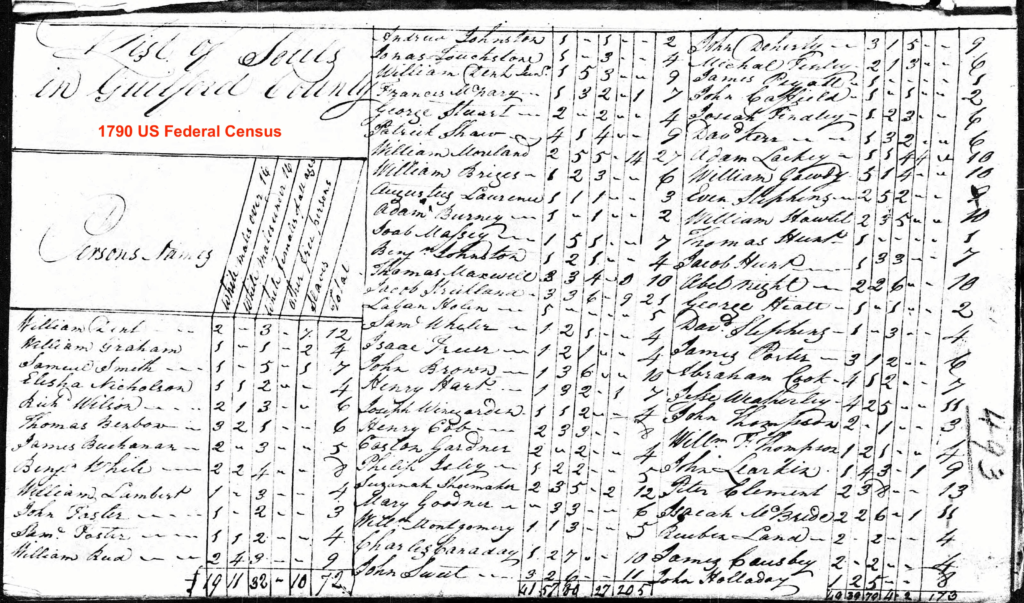
Below is an example of the 1790 Federal Census and what it looked like. It’s pretty busy! The column headers are not listed on each page and it is mostly hand-drawn lines. Also remember that each census form looked slightly different from state to state, county to county.
1800 & 1810 Censuses
Expanded age brackets:
- 0-10, 10-16, 16-26, 26-45, 45+
Genealogical value: Slightly more precise age estimations. Better for tracking household composition changes over time in census records.
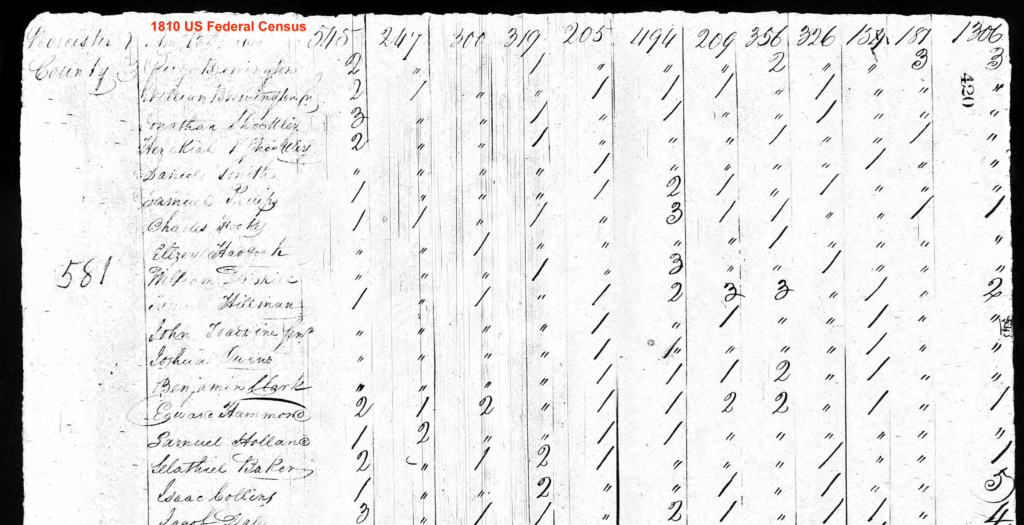
In the 1800 census you can see below that with the expanded categories came a better layout as you would no longer try and squeeze two columns onto a single page – hey, paper was a valuable commodity back then! You sill need a ruler or some straight object to effectively find information for a respondent.
The 1810 census started to expand categories as well as carry the headers over to each page, which makes it astronomically easier to read and keep track of data on the research guide. Thankfully, sites like Ancestry and FamilySearch have PDF guides to help you. Link to those at the end of the article 👍.

1820 Census
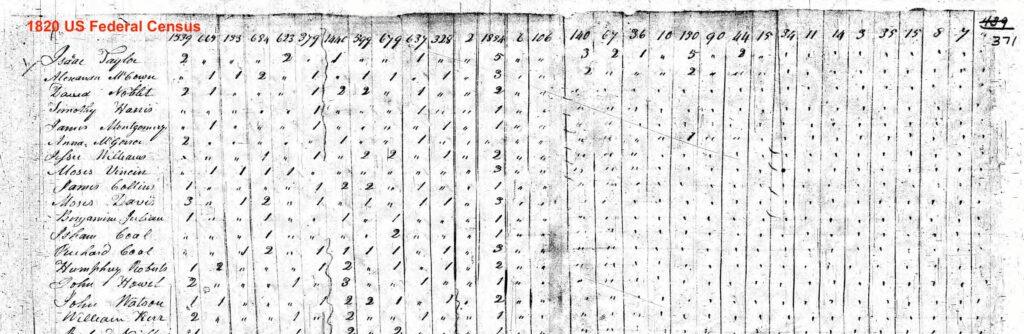
Even more age categories:
- 0-10, 10-16, 16-18, 16-26, 26-45, 45+
New questions:
- Number of foreigners not naturalized
- Number engaged in agriculture, commerce, or manufacturing
Genealogical value: First occupation-related data in US federal census schedules. Immigration status hints with a “foreigners not naturalized” column.
1830 & 1840 Censuses
Further refined age brackets (10-year increments for most ages). Interesting fact, the 1830 census included categories for people over the age of 100!
1840 additions:
- Revolutionary War pensioners (name and age if in household)
- Questions about schools, literacy, occupations
- Information about deaf, blind, and insane persons
Genealogical value: Revolutionary War pensions are crucial for DAR applications. Occupation and literacy data add social context.
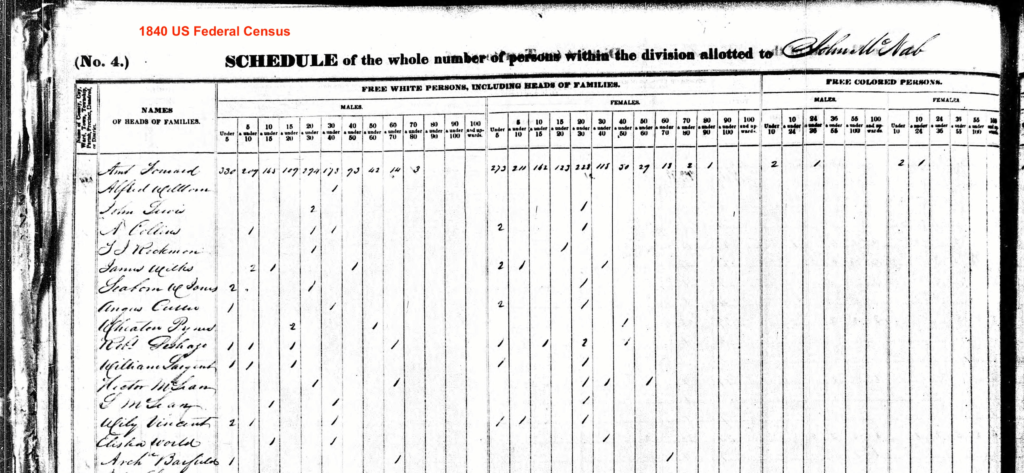
How to Use 1790-1840 Censuses
These early US Federal Census records work best when combined with other sources:
Strategy 1: Track household composition
Compare 1810 → 1820 → 1830 census records to see children aging up or leaving home
Strategy 2: Estimate birth years
If a female child appears in “0-10” range in 1820 federal census, she was born 1810-1820
Strategy 3: Identify unmarried daughters
Adult females in father’s household often indicate unmarried daughters in census enumeration
Strategy 4: Use Revolutionary War pensions
The 1840 note about pensioners can break brick walls for colonial families
Don’t expect these federal censuses to solve your mystery alone—but they establish critical timelines and locations for finding better records.
1850-1870: The Genealogical Goldmine Begins
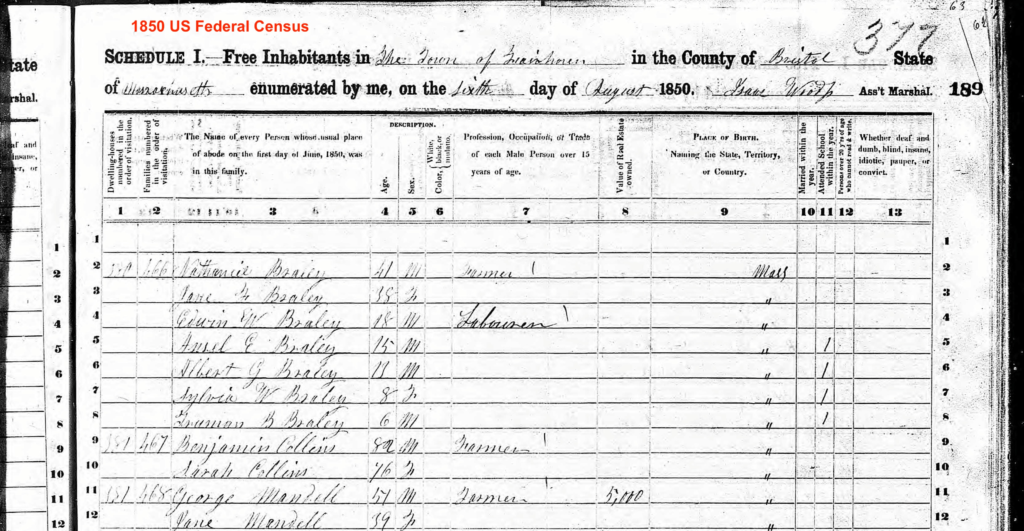
The 1850 US Federal Census changed everything. For the first time, every person appears by name. Welcome to the genealogical promised land! 😁
This is where modern genealogy really starts. Yeah buddy!
1850 Census: The Game-Changer
Revolutionary features:
- ✅ Every person enumerated by name
- ✅ Age (exact or estimated)
- ✅ Sex
- ✅ Color (White, Black, Mulatto)
- ✅ Birthplace (state, territory, or country)
- ✅ Occupation
- ✅ Value of real estate owned
- ✅ Whether married within the year
- ✅ School attendance
- ✅ Literacy (can read/write)
- ✅ Whether deaf, blind, insane, or pauper
Still missing: Relationship to head of household, parents’ names, immigration details. However, knowing where someone was born is still an immigration clue.
Why it matters: You can now more or less prove an ancestor existed at a specific location with a specific age and birthplace. This can unlock naturalization records, land records, and vital records research.
Source Hound tip: The “birthplace” column in census records is your key to breaking through immigration brick walls. If it says “Ireland,” you know to search Irish records—but you still don’t know where in Ireland until later US federal censuses.
1860 Census: Minor Additions
What’s new:
- ✅ Value of personal estate (in addition to real estate)
- ✅ Month of birth if born within the census year
- ✅ Month of marriage if married within the census year
What stayed the same: No relationship to head of household yet in US federal census schedules
Genealogical value: Personal estate values help identify wealth levels. Birth/marriage months narrow timeline research. Use this census to verify genealogical research techniques you learned earlier.
1870 Census: Post-Civil War America
Critical additions: “Constitutional Relations” category (column) regarding citizenship. Also, “if born within the years” subcategories of enumeration.
- ✅ Month of birth if born within census year
- ✅ Month of marriage if married within census year
- ✅ Father foreign-born (checkbox)
- ✅ Mother foreign-born (checkbox)
- ✅ Male citizens 21+ (voting rights column)
What’s different: The forms are getting more complex as the country is evolving. It must have taken a lot of time for each family to answer all of these questions. I know, as federal census enumerator for the 2000 census, I had to go door to door and ask and wait for answers to an array of intimate and personal questions. It was fun, though.
Genealogical value: Foreign-born parent checkboxes help identify second-generation immigrants in federal census records. There were also new ethnic categories added to the “Description” column.
Using 1850-1870 Effectively
These three US federal censuses form a powerful research trio:
The Name Matching Challenge:
Same person across decades may have different name spellings, age discrepancies, or even birthplace variations in census records. Always verify with multiple sources.
The Birthplace Clue:
“Ireland” or “Germany” in 1850 census becomes “County Cork” or “Bavaria” in later federal census years. Track this progression.
The Real Estate Connection:
Property values in 1850-1870 US census correlate with land records. If your ancestor owned $2,000 in real estate, search deeds.
1880-1910: Relationships and Immigration Details
The 1880 US Federal Census through 1910 provides the most detailed immigration and relationship information for the pre-WWI era.
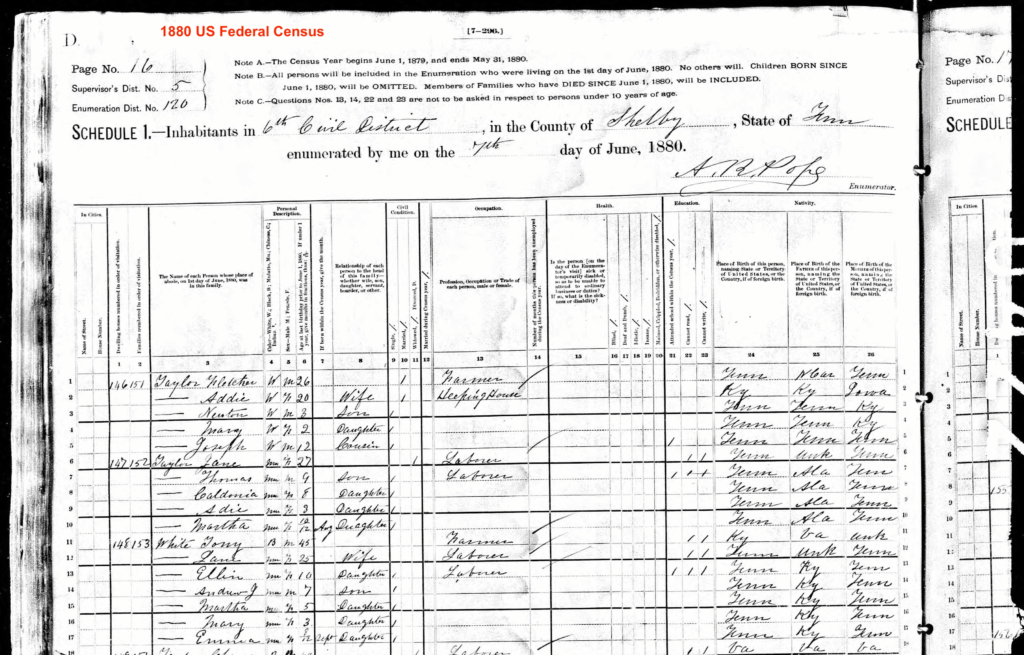
1880 Census: Relationships Documented
Game-changing additions:
- ✅ Relationship to head of household (wife, son, daughter, boarder, servant, etc.)
- ✅ Marital status (single, married, widowed, divorced)
- ✅ Married within census year
- ✅ Occupation more detailed
- ✅ Health information (sick, temporary disabled, maimed/crippled, blind, etc.)
- ✅ Street address in cities
- ✅ Birthplace of father
- ✅ Birthplace of mother
Why this matters: You can now “prove” family relationships in US federal census schedules, not just infer them. Mother’s and father’s birthplaces help identify origins before immigration. I say that with a grain of salt as nothing is “proven” until it is “source hound” proven 📚.
Critical note: The 1890 US census was almost entirely destroyed by fire. Only fragments survive. This creates a 20-year gap between 1880 and 1900 for tracking families.
1900 Census: Immigration Gold
New immigration details:
- ✅ Month and year of birth
- ✅ Year of immigration to the United States
- ✅ Number of years in the United States
- ✅ Naturalization status (natural-born, naturalized, alien, papers filed)
- ✅ Mother tongue if foreign-born
- ✅ Number of years married
- ✅ For women: number of children born and number still living
Other additions:
- Rented or owned home
- If owned: free or mortgaged
- Occupation more specific (employer, employee, self-employed)
- Months unemployed
- School attendance months
- Literacy in English
Why it matters: This US federal census is the record for establishing immigration timelines. “Year of immigration” points you directly to passenger lists and naturalization records.
Source Hound warning: Immigration years in census records are often incorrect by 5-10 years. Verify with ship manifests and naturalization papers.
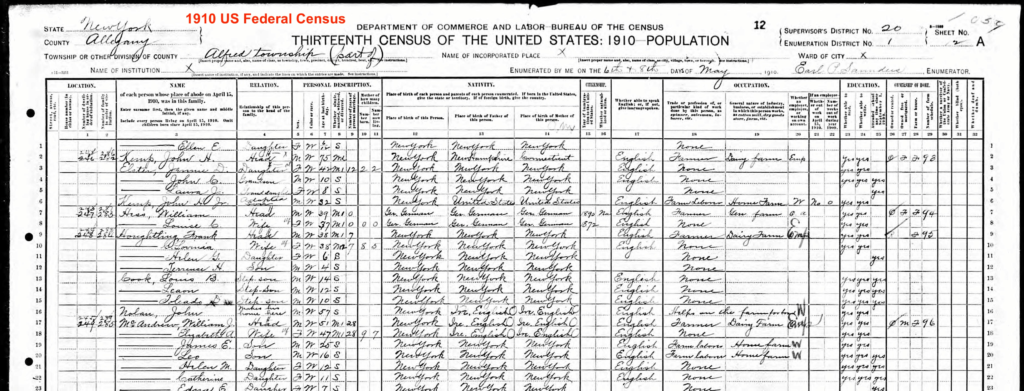
1910 Census: Language and Marriage Details
What’s new:
- ✅ Whether able to speak English (or language spoken if not)
- ✅ Year of immigration (repeated from 1900)
- ✅ Naturalized or alien (with year of naturalization if applicable)
- ✅ Mother tongue
- ✅ Trade/occupation more specific
- ✅ Civil War veteran (Union or Confederate)
What’s refined:
- Number of children born to mother and number living
- Years married (if married)
- Unemployment data
Why it matters: Language information in US Federal Census helps identify ethnic communities. Civil War veteran data connects to military records.
Using 1880-1910 Censuses for Immigration Research
These three federal censuses are your immigration research toolkit:
Strategy 1: Narrow arrival windows
1900 census says “immigrated 1892” → search ship manifests 1890-1894
1910 census records say “naturalized 1897” → search naturalization records 1895-1899
Strategy 2: Identify second generation
Parents foreign-born + child US-born in federal census = second generation immigrant
Mother tongue reveals ethnic heritage even after Americanization
Strategy 3: Find maiden names
Mother’s birthplace + “number of children born/living” data in census + years married = maiden name clues through the FAN Club Principle
Strategy 4: Track name changes
“Mother tongue: Yiddish” + “Born Russia” in US census + American name = likely name Americanization
The 1890 loss means you’ll often see dramatic changes between 1880 and 1900 US federal census records—children born, marriages, migrations. Don’t assume the gap means bad data. Fill it with city directories, vital records, and newspapers.
1920-1940: Modern Census Records
The 1920-1940 US Federal Census records provide unprecedented detail about ancestors’ lives in modern America.
1920 Census: Post-WWI America
New features:
- ✅ Year of naturalization (exact year, not just “naturalized”)
- ✅ Mother tongue (for person and both parents)
- ✅ Whether able to speak English
- ✅ Own or rent home
- ✅ If owned: free or mortgaged
- ✅ Street address in cities
Continued from 1910:
- Year of immigration
- Occupation detailed (industry + specific job)
- Literacy
- School attendance
- All relationship and birthplace data
Why it matters: Exact naturalization year in US federal census eliminates guesswork. Search naturalization courts with precision. Mother tongue for parents helps identify exact European regions.
1930 Census: Depression-Era Details
Critical additions:
- ✅ Age at first marriage
- ✅ Radio ownership
- ✅ Home value or monthly rent amount
- ✅ Whether farm residence
- ✅ Veteran status (which war)
- ✅ Year of immigration more consistently asked
Refined questions:
- Occupation includes industry and class of worker
- Unemployment detailed (whether working yesterday, line number on unemployment schedule if not)
Why it matters: Age at first marriage in census records helps calculate approximate marriage year for vital records. Home values show economic impact of Depression. Veteran info connects to WWI service records.
Research note: This US census falls during the Great Depression. Look for unemployment notation, migration to find work, and multi-family households as economic survival strategies.
1940 Census: The Most Detailed US Federal Census
Revolutionary features:
- ✅ Residence in 1935 (exact address 5 years earlier)
- ✅ Highest grade of school completed
- ✅ Income in 1939 (for those 14+)
- ✅ Number of weeks worked in 1939
- ✅ Social Security number notation (some entries)
- ✅ Usual occupation and industry (even if unemployed)
- ✅ Whether seeking work
Supplemental questions (asked of sample households):
- Children’s birthplace
- Mother tongue of foreign-born
- Citizenship status detailed
- Migration information
- Employment details
- Occupation 5 years ago
- Women’s fertility data
Why it matters: The 1935 residence is genealogical gold in US federal census records—it tracks migration during the Depression and WWII mobilization. Income data provides economic context. Education levels matter for obituary verification and biographical research.
Source Hound strategy: If your ancestor appears on a “sample line” in US Federal Census (every 20th person got extra questions), you hit the jackpot. Those supplemental questions can break brick walls.
Using 1920-1940 Effectively
These modern federal censuses require different research approaches:
Strategy 1: Trace Depression migration
1930 + 1940 census residence data shows Dust Bowl migration, urbanization, job-seeking moves
Strategy 2: Verify stories with data
“Grandma said he was a veteran” → 1930 census records veteran column confirms or debunks
“She claimed college degree” → 1940 federal census education level proves it
Strategy 3: Connect to Social Security
1940 US census + Social Security notation → search SSDI and SS-5 applications
Strategy 4: Build economic narratives
Home values 1920 vs 1930 vs 1940 census show Depression impact
Income 1939 + occupation = complete economic picture
Strategy 5: Find city directories
1935 residence in different city from US federal census → search city directories for that location
Cross-verify with voter registration records
The 1940 US census is the last released federal census (72-year privacy rule). Use it as a bridge to living memory, obituaries, and modern vital records.

1950: The Most Recent Released Census
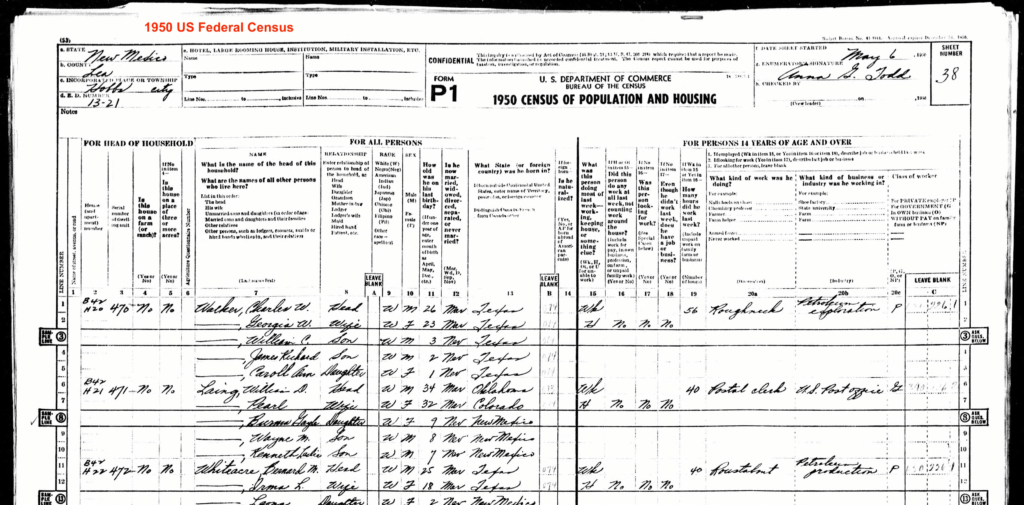
The 1950 US Federal Census was released on April 1, 2022—making it brand new for genealogical research.
What the 1950 Census Contains
Core information:
- ✅ Name, relationship to head of household
- ✅ Race, sex, age, marital status
- ✅ Birthplace (state or foreign country)
- ✅ Residence in 1949 (address one year earlier)
- ✅ Occupation, industry, class of worker
- ✅ Highest grade completed
- ✅ Income in 1949
- ✅ Weeks worked in 1949
Sample line questions (asked of 20% of population):
- Country of birth (if foreign-born)
- Citizenship status if foreign-born
- Year of immigration
- Activity 5 years ago (working, in school, keeping house, etc.)
- Children ever born to women
What’s different from 1940:
- Residence asked for 1949 (1 year earlier) instead of 1935 (5 years earlier)
- Questions simplified compared to 1940’s extensive supplements
- Korean War service too early to appear (war started June 1950)
Why the 1950 Census Matters
This US federal census bridges the gap between traditional genealogy and living memory:
Connection to living relatives: Many people enumerated in 1950 census records are still alive or recently deceased. This census connects to obituaries, Social Security records, and family stories.
Post-WWII migration: Tracks the massive suburban migration after WWII in US census data. See families moving from cities to suburbs, rural to urban areas.
Economic recovery: Income and occupation data shows post-war prosperity or continued struggles.
Cold War America: Captures the moment before the 1950s economic boom fully materialized.
1950 Census Research Challenges
The 1950 US Federal Census presents unique research obstacles:
Privacy complications: Some people you’re researching may still be living. Be respectful of privacy concerns.
Indexing in progress: As of 2024, indexing is still being completed by volunteers. Not all census records are easily searchable yet.
Name variations: Post-WWII Americanization continued. Eastern European immigrants especially may have simplified names in federal census schedules.
Suburban sprawl: New suburbs aren’t well-defined. Street addresses may not match modern locations.
Military absence: Many men were stationed overseas with WWII occupation forces or in the early Korean mobilization.
Using 1950 Effectively
Strategy 1: Bridge to modern records
1950 US federal census → Social Security Death Index → obituary → family connections
Strategy 2: Verify family stories
“They moved to California after the war” → 1950 census residence confirms or contradicts
Strategy 3: Track occupational shifts
1940 farmer → 1950 factory worker in census records = track industrialization
1940 homemaker → 1950 working woman = track women’s workforce entry
Strategy 4: Confirm education claims
“She finished high school” → 1950 US census education level proves it
Education data matters for social history
The 1950 federal census is your bridge from historical genealogy to living family connections. Use it to verify stories while relatives who remember are still available to interview.

The Family History Foundation Newsletter
It’s Not About You, It’s About Documenting Before It Disappears
Join 500+ family historians getting Franklin’s Source Hound weekly research breakthroughs — real case studies, source hacks, and the exact strategies that turn brick walls into discoveries.
Free. No fluff. Straight from the Source Hound’s desk to yours.
Your privacy is sacred — almost as sacred as a primary source. Read our Privacy Policy.
Which Census Answers Your Question?
Different genealogical questions require different US Federal Census years. Here’s your decision guide:
Question: When/Where Was My Ancestor Born?
Best censuses:
- 1900: Month and year of birth (most specific in federal census records)
- 1850-1940: Age + census year = estimated birth year
- 1850-1940: Birthplace column (state or country)
Strategy: Use 1900 census for birth month/year, verify with 1910/1920/1930 US federal census for consistency. Birthplace should be consistent across census records—inconsistencies suggest errors or immigration complexities.
Question: When Did My Immigrant Ancestor Arrive?
Best censuses:
- 1900: Year of immigration + years in US
- 1910: Year of immigration + naturalization status
- 1920: Year of immigration + exact naturalization year
- 1930: Year of immigration verified
Strategy: Check all four federal censuses. Compare years. Most reliable when all four census records agree (±2 years). Use year range to search ship manifests on Ancestry or FamilySearch.
Question: What Was My Ancestor’s Occupation?
Best censuses:
- 1850-1870: Basic occupation
- 1880-1900: More detailed occupation
- 1910-1940: Industry + specific job + employment status in US federal census
Strategy: Track occupation progression across decades in census records. Farmer → farm laborer → factory worker = tell complete story of industrialization’s impact on your family.
Question: What Was My Ancestor’s Maiden Name?
Best censuses:
- 1880-1910: Mother’s birthplace in US census + FAN Club neighbors
- 1900-1940: Number of children born/living
- 1920-1940: Age at first marriage
Strategy: No federal census directly lists maiden names. Use birthplace, children data, and marriage age to identify candidates. Cross-reference with marriage records and neighbors with same surname.
Question: How Are These People Related?
Best censuses:
- 1880-1940: Relationship to head of household explicitly stated in federal census records
- 1850-1870: Infer from age, surname, birthplace patterns
Strategy: 1880+ US Federal Census makes it explicit. Pre-1880 requires inference—same surname + age progression + birthplace = likely parent-child. Different surname + adult female + children = likely married daughter visiting.
Question: When Did My Ancestors Get Married?
Best censuses:
- 1900-1940: Number of years married in census records
- 1850, 1860, 1870: Whether married within census year
- 1930: Age at first marriage
Strategy: Years married in 1900 federal census → subtract from 1900 = approximate marriage year. Age at first marriage in 1930 → calculate year. Cross-verify with marriage records.
Question: How Many Children Did My Ancestor Have?
Best censuses:
- 1900, 1910: Number of children born + number living (for mothers)
Strategy: This data appears for married women in US census. “6 children born, 4 living” = search for 6 children, 2 died young. Critical for finding all siblings, including those who died in childhood.
Question: Could My Ancestor Read and Write?
Best censuses:
- 1850-1930: Literacy columns (can read, can write) in federal census
- 1890-1940: School attendance data
- 1940: Highest grade completed
Strategy: Literacy affects which records exist—illiterate ancestors rarely left letters or journals, but may have used mark signatures on deeds.
Question: Where Did My Ancestor Live Before This?
Best censuses:
- 1940: Residence in 1935 (5 years earlier) in US Federal Census
- 1950: Residence in 1949 (1 year earlier)
Strategy: Only 1940 and 1950 federal census records ask this directly. For earlier migration, compare census to census—1920 Ohio + 1930 California = migration in 1920s.
Next Steps: Building Your Census Research Strategy
You now understand what every US Federal Census from 1790 to 1950 contains—and which federal censuses answer which genealogical questions.
Here’s your action plan:
✅ Identify your research question (birthplace? immigration year? maiden name?)
✅ Choose the optimal census years based on what data they contain
✅ Search systematically, not randomly—start with the federal census most likely to answer your question
✅ Verify across multiple censuses—inconsistencies in census records reveal stories, not errors
✅ Connect census to other records—use US census clues to find vital records, naturalization papers, land deeds
Your first action: Pick one ancestor. List what you want to know. Identify which federal census years (using this guide) will answer those questions. Search those specific census records.
Within the next research session, you’ll have targeted answers instead of random clicking.
Need more genealogy forms? Check out this article! “The 10 Best Free Family Tree Templates to Download!”
The past doesn’t hide in census records—it waits for researchers who know what questions each US Federal Census can answer. You’re now one of those researchers.
Want to see more detail on the US Federal Census forms? Head on over to Ancestry.com, they have all of the forms reproduced and available for download!
Join the Family History Foundation Source Hound Community
Our family history is disappearing every day, join the Source Hound community and join our pledge to be the protector of your family history. The lives and voices of our ancestors are depending on it for our future generations.
Celebrate Family History Fridays with us across our social media and community platforms!
📬 Subscribe to the Newsletter — tips, active challenges, and deep-dive case studies. Never an overloaded inbox, always something you can use this weekend.
 Like & Subscribe on YouTube — every Friday, a video companion to the week’s article. Watch these techniques demonstrated rather than described.
 Pin Us on Pinterest — printable question sheets, research charts, and visual guides to save for your next session.
 Podcasting on Spotify! — podcasting now on Spotify, you can find all of the latest episodes on any of your favourite podcast platforms, starting with Spotify.
 Podcasting on Amazon! — If you are not on Spotify we are also on Amazon Podcasts so you can listen while you drive and work. Every episode is curated just for you to binge your favourite episodes.
 Podcasting on Audible! — Audible is an alternative offshoot of Amazon Podcasts to listen while search for your next favourite book. Ready for your next “audible?” Set, Go!
Let’s make Family History a household word. 🏠
The Family History Foundation Newsletter
Our Family History Is Disappearing Every Day!
Join the quest with 500+ family historians getting Franklin’s Source Hound weekly research breakthroughs — real case studies, source hacks, and the exact strategies that turn brick walls into discoveries.
Free. No fluff. Straight from the Source Hound’s desk to yours.
Your privacy is sacred — almost as sacred as a primary source. Read our Privacy Policy.
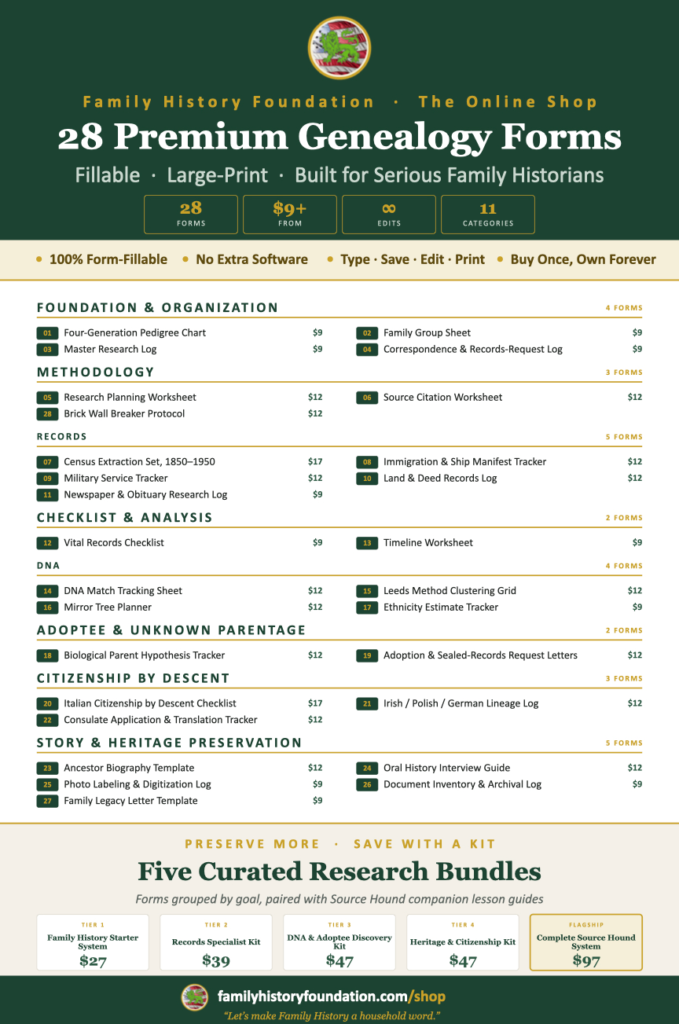
Shop Premium Genealogy Forms

About the Author
Hi there, my name is Franklin, the founder and author of The Family History Foundation.
Our family stories are disappearing every day and it’s crucially important that the next generation is able to learn and appreciate their family history. It is up to you to take up the mantle of responsibility to ensure that how you research today will be passed on tomorrow with the highest standards possible.
I believe that genealogy is not just about names and dates, it’s about your stories and how those stories inform your identity.
With a penchant for storytelling and a background in research, the insights and techniques you learn on The Family History Foundation will help you uncover the incredible stories and identities hidden within the tapestry of your ancestry.
My mission is “Let’s make Family History a household word.”
My motto is “The Past ‘Relative’ to the Future.”
FAQ: US Federal Census Questions
Q: Why are ages different in different censuses for the same person?
A: Age inconsistencies are the norm, not the exception in federal census records. Informants (whoever answered the census taker’s questions) often guessed ages, rounded, or simply didn’t know exact birthdates.
In immigrant families, exact birthdates were often unknown—especially for those from countries without civil registration. Some people deliberately changed ages to appear younger or older (military service, employment, remarriage).
Never reject a census record because the age is off by 2-5 years. Look for patterns: same name, same birthplace, same family members, same location. If four factors match and age is off by 3 years, it’s still your ancestor.
Q: The census shows my ancestor in two different places in the same year. Which is correct?
A: Both might be correct. Census enumeration took months, and families moved during enumeration periods.
The US Federal Census was taken on a specific “census day” (usually June 1 for early censuses, April 1 for later ones), but enumerators spent weeks or months collecting data. A family visiting relatives on census day might be counted at both locations—or missed entirely.
Verify with city directories, land records, and tax lists to determine actual residence. The federal census provides a snapshot, not a yearlong record.
Q: Why can’t I find my ancestor in the 1890 census?
A: The 1890 US Federal Census was almost entirely destroyed in a 1921 fire at the Commerce Department.
Only fragments survive for a few counties. This creates a 20-year research gap between 1880 and 1900 census records. Don’t waste time searching—the records don’t exist.
Fill the gap with: City directories, voter registration lists, tax records, land deeds, newspapers, church records, and death certificates that list age at death.
Q: What if the census says my ancestor was born in “Germany” but Germany didn’t exist yet?
A: Birthplace entries in federal census records reflect political boundaries at the time the census was taken, not when the person was born.
“Germany” in 1900 US census could mean Prussia, Bavaria, Saxony, or any German state before unification. “Austria-Hungary” could mean modern Austria, Hungary, Czech Republic, Slovakia, or several other countries.
Research strategy: Look for more specific information in naturalization records, obituaries, or later federal censuses. Mother tongue in 1920+ census records helps narrow regional origins.
Q: Why does the census show my female ancestor with a different surname than I expected?
A: She likely married between censuses, remarried after being widowed, or you’re tracking the wrong person.
Compare birthplace, age, and children’s names across federal census records. A “Mary Smith age 25” in 1900 becomes “Mary Jones age 35” in 1910 with children “John Smith age 8” and “Sarah Jones age 2″—she remarried after her first husband died.
Track by consistency of data: birthplace, approximate age, children’s names/ages, and location matter more than surname alone in US census research.
Q: What’s the 72-year rule, and when will the 1960 census be released?
A: Federal law requires census records remain private for 72 years to protect living individuals’ privacy.
Release schedule:
1950 US Federal Census: Released April 1, 2022
1960 federal census: Will release April 1, 2032
1970 census: Will release April 1, 2042
You cannot access unreleased census records even for deceased individuals. The law makes no exceptions.